By Abdullahi Alhassan, Kaduna
Stakeholders drawn from religious, policy, and development circles have identified structured wealth redistribution mechanisms as critical to strengthening social cohesion and reducing poverty in Kaduna State, amid clarifications that the institutionalisation of Zakat and Waqf is neither coercive nor sectarian.
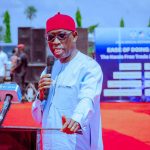
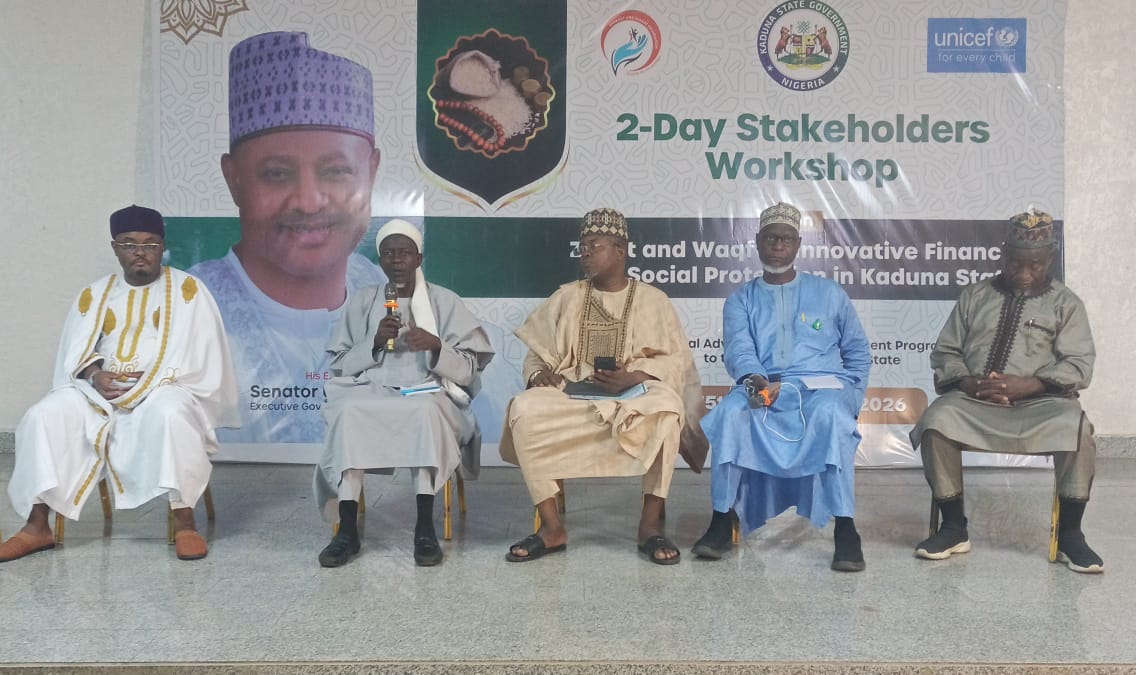
The position emerged at a two-day high-level workshop on “Zakat and Waqf as Innovative Financing for Social Protection,” convened by the Office of the Special Adviser to Governor Uba Sani on Social Investment Programmes, with support from UNICEF and technical input from the Zakat and Waqf Foundation.
Participants at the forum emphasised that the initiative is rooted in inclusivity, constitutional compliance, and the broader objective of addressing socio-economic vulnerabilities across communities, regardless of religious or ethnic affiliations.
In his remarks, Malam Tahir Buba of the Kaduna Bureau of Interfaith Relations said deliberations at the workshop reflected a shared understanding that humanitarian concerns cut across all divides.
He noted that the current administration is committed to inclusive governance, ensuring that policy frameworks respond to the needs of all citizens.
Buba further stressed the importance of sustained dialogue between government and the public, describing it as a vital pathway to achieving collective development goals and reinforcing unity in a historically sensitive environment.
Delivering goodwill on behalf of the Christian Association of Nigeria (CAN), Reverend Joel Madaki underscored that poverty alleviation and support for vulnerable groups remain core tenets of Christian doctrine.
He affirmed that initiatives aimed at uplifting disadvantaged populations align with universal moral values and faith-based responsibilities.
Madaki reiterated CAN’s longstanding involvement in humanitarian interventions, including education support, healthcare outreach, and vocational programmes, while acknowledging Zakat and Waqf as established Islamic instruments for social welfare.
He advocated transparency, accountability, and continued interfaith engagement to sustain trust and peace in the state.
Also speaking, Engineer Muhammad Lawal Maidoki pointed to Kaduna State’s track record of accommodating religious diversity, citing policy adjustments such as flexible working hours during Ramadan.
He explained that Zakat and Waqf are globally recognised social finance tools designed to combat poverty and improve living conditions.
Drawing parallels with international practices, Maidoki noted that similar ethical financing models are operational in several non-Muslim-majority countries, where they serve purely developmental purposes.
He emphasised that such frameworks are not vehicles for religious propagation but inclusive systems targeted at supporting vulnerable populations.
He further referenced domestic examples, stating that interventions supported by international development partners have benefitted states like Imo and Anambra without religious undertones.
In Kaduna, he added, projects spanning education and water supply have been implemented on a non-discriminatory basis, serving diverse communities.
Maidoki also highlighted broader humanitarian initiatives funded by global organisations, including large-scale public health campaigns, noting that beneficiaries are selected strictly on need rather than religious identity.
On the legal dimension, Justice Nasir Siri assured participants that the proposed institutional framework for Waqf aligns fully with the Constitution of the Federal Republic of Nigeria.
He clarified that all administrative and jurisdictional considerations are being handled within established legal provisions, dismissing concerns over illegality.
He described Zakat and Waqf as sustainable, complementary mechanisms capable of strengthening existing social protection systems when properly institutionalised.
According to him, the initiative should be viewed through the lens of global best practices in development financing, rather than as a religious project.
Overall, stakeholders expressed optimism that outcomes from the workshop would translate into practical interventions targeting widows, orphans, and unemployed youth, while reinforcing social harmony and inclusive growth across Kaduna State.