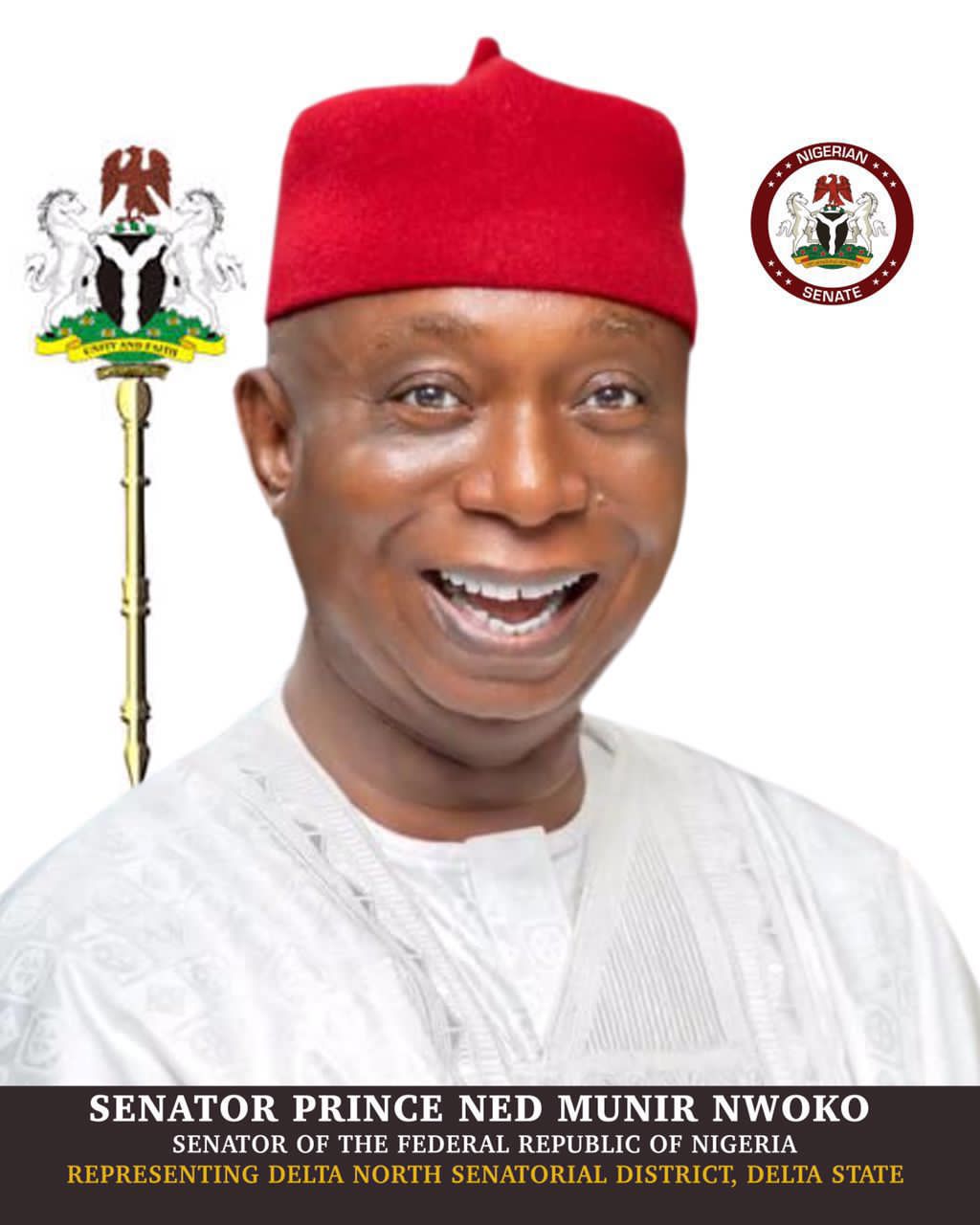
Representing Delta North Senatorial District in Nigeria’s 10th National Assembly, Ned Nwoko has continued to distinguish himself through an expansive legislative agenda, strategic constituency interventions, and advocacy on issues of national importance.
Since his inauguration into the Senate, Senator Nwoko has emerged as one of the most vocal and proactive lawmakers in the red chamber, championing reforms across governance, healthcare, security, education, environmental protection, youth development, and constitutional matters.
Widely regarded as a strong voice for the Anioma people, the senator’s two years in office have been marked by an emphasis on purposeful representation, institutional reform, and people-focused governance.
His growing influence within the Senate is reflected in his leadership responsibilities, including his role as Chairman of the Senate Committee on Reparations and Repatriation, as well as Deputy Chairman of the Senate Committees on Environment and Sports Development.
One of his most prominent interventions was the motion calling for a full-scale investigation into crude oil theft in the Niger Delta, which led to the establishment of an ad-hoc Senate committee now chaired by Senator Nwoko.
The initiative reinforced his reputation as a legislator committed to translating debates into actionable outcomes.
Over the last two years, Senator Nwoko has sponsored and co-sponsored more than 30 bills and over 25 motions addressing pressing national and regional concerns.
Among his landmark legislative proposals is the bill seeking the creation of Anioma State, which has successfully passed first and second readings and advanced through zonal public hearings.
Other major legislative initiatives include bills to establish the National Agency for Malaria Elimination, mandate physical offices for social media companies operating in Nigeria, create a Federal College of Agriculture in Idumuje-Ugboko, upgrade the Federal College of Education (Technical), Asaba to a Federal University of Technology, and provide for diaspora voting.
He has also introduced bills targeting local government autonomy, youth entrepreneurship, indigenous participation in mining, ranch development, mandatory emergency medical training, and reforms in national security and public administration.
Beyond legislation, Senator Nwoko’s motions on the Senate floor have consistently focused on issues affecting ordinary Nigerians.
These include calls for stronger action against kidnappings in the Federal Capital Territory, enforcement of anti-gas flaring regulations in the Niger Delta, improved healthcare infrastructure, reforms in the fintech sector, protection of Nigeria’s monetary sovereignty, and emergency interventions for flood victims in Delta North communities.
His advocacy has equally extended to international and historical justice issues, including motions on reparations for Africa, the need for reconciliation over the 1967 Asaba Massacre, and the push for African representation with veto powers at the United Nations Security Council.
A major legislative milestone recorded during his tenure was the successful restoration of the Aniocha North II State Constituency.
Senator Nwoko sponsored and moved the motion compelling compliance with the Supreme Court judgment affirming the constituency’s restoration, leading to concurrence by both chambers of the National Assembly and paving the way for implementation by the Independent National Electoral Commission.
In the area of peacebuilding and security intervention, Senator Nwoko played a notable role in securing the release of His Royal Majesty, King Clement Ikolo of Ewu Kingdom, following the Okuama crisis.
Through sustained engagement with defence authorities, he advocated a measured approach that ultimately contributed to the monarch’s release and the restoration of calm within affected communities.
Similarly, his intervention following the discovery of an illegal arms factory in Onicha-Olona reflected a broader approach to national security and rehabilitation.
While supporting lawful enforcement, Senator Nwoko also advocated rehabilitation pathways for technically skilled individuals involved in illicit activities.
This position inspired his proposed National Talent Rehabilitation and Integration framework, aimed at redirecting technical talents into productive sectors of the economy.
At the constituency level, Senator Nwoko’s development footprint spans healthcare, education, agriculture, rural electrification, water supply, road infrastructure, youth empowerment, and women-focused economic programmes across the nine local government areas of Delta North.
His constituency projects include the construction and renovation of classroom blocks, establishment of ICT centres, medical outreach programmes, provision of solar-powered streetlights and boreholes, rehabilitation of healthcare centres, agricultural empowerment schemes, installation of transformers, construction of roads and drainage systems, as well as water supply projects in multiple communities.
Other ongoing interventions include mini sports stadium projects for youths, mechanised farming initiatives, erosion control works, police station renovations, market construction, and the development of critical infrastructure under the Renewed Hope Agenda.
Political observers say Senator Nwoko’s legislative activism and grassroots engagement have continued to reinforce his standing as one of the prominent voices from the South-South region in the National Assembly.
As he marks two years in office, supporters and stakeholders across Delta North describe his tenure as one defined by visibility, accessibility, and a deliberate commitment to advancing both Anioma interests and broader national development priorities.