The condition of Isian-Anwai Primary School in Otulu, Aniocha south local government area of Delta State, has raised fresh concerns over the state of public primary education infrastructure in communities across Nigeria’s oil-producing Delta State.
A visit to the school on Sunday June 14, 2026, revealed a facility struggling under the weight of apparent neglect, despite past interventions and the state’s reputation as one of the country’s major oil-producing regions.
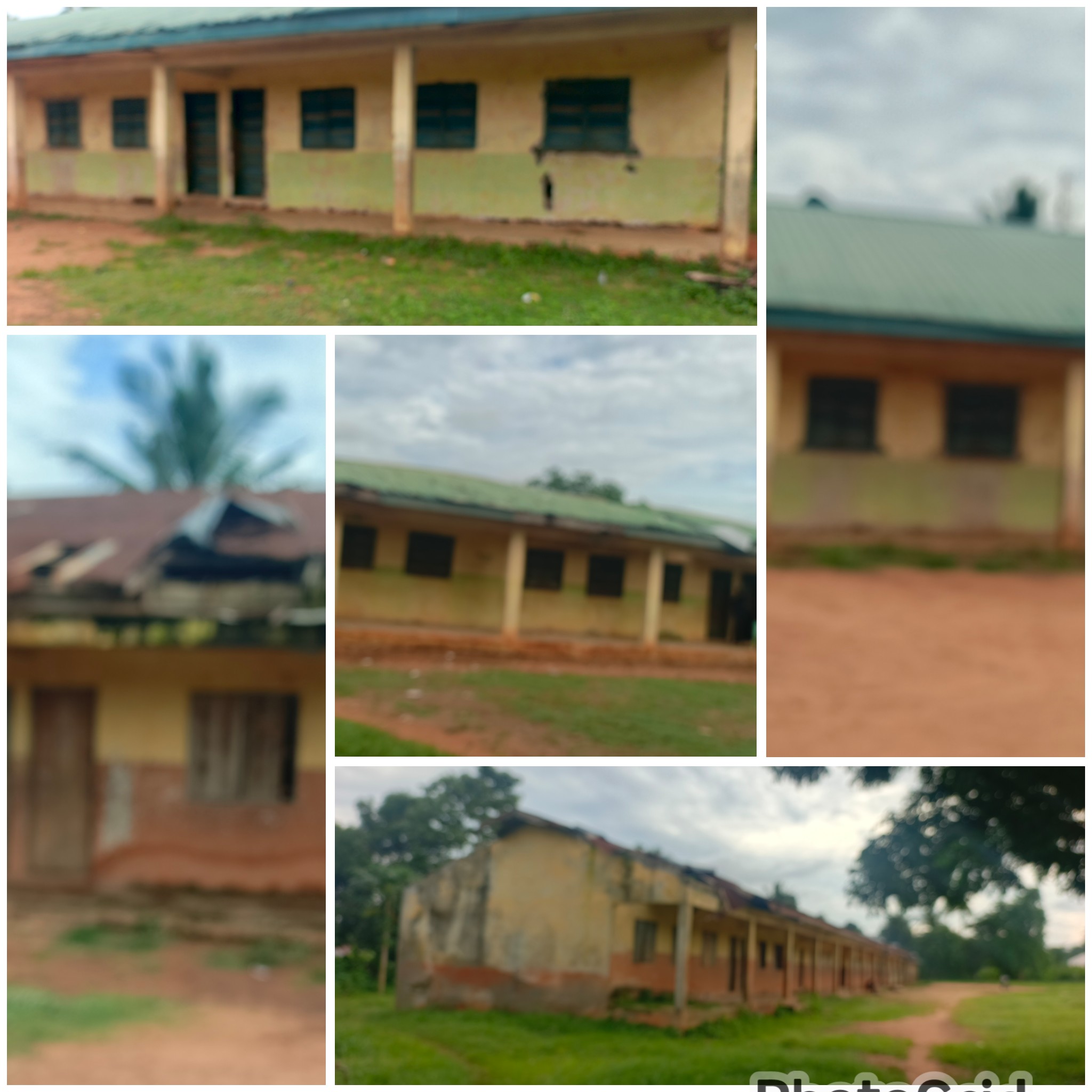
The school comprises three classroom blocks, each reflecting varying degrees of deterioration and maintenance challenges.
Despite being a Universal Basic Education Commission (UBEC) 2008 intervention project, one of the classroom blocks has not been spared the effects of deterioration, as sections of its roof reportedly leak during rainfall.
During the visit, human faeces were observed within parts of the classrooms, a development that not only poses health risks to pupils but also raises questions about the level of supervision, maintenance and overall dedication to preserving the facility.
However, signs of wear and poor maintenance remain visible around the facility.
More troubling is the condition of another classroom block, where portions of the roof have collapsed, leaving gaping holes that expose classrooms to rain, wind and other elements.
The damaged structure raises concerns about the safety of pupils and teachers, particularly during the rainy season.
Few classrooms were found locked during the visit. Residents who spoke on condition of anonymity said the locked classrooms are currently the most functional learning spaces available in the school, although they reportedly suffer from leaking roofs.
Beyond the deteriorating infrastructure, residents also expressed concern over the welfare and availability of teaching personnel in the school.
According to community members, most of the teachers posted to Isian-Anwai Primary School do not reside in Otulu but commute from neighbouring towns and cities, including Issele-Uku, Issele-Azagba, Asaba and other surrounding communities.
The residents argued that the absence of resident teachers affects punctuality, supervision and effective engagement with pupils, especially during periods of bad weather or transportation challenges.
“The classrooms that are still being used have roofing problems whenever it rains,” one resident alleged, adding that learning activities are often disrupted by weather conditions.
The school’s surroundings also reflect the need for greater attention, with open grounds and signs of inadequate maintenance around some of the buildings.
Also threatening, is the fact that the school has no fencing especially at a time of serious insecurity that has plaque the nation with kidnappers abducting teachers and pupils in parts of the country
The situation has renewed calls for urgent intervention by relevant authorities, including the Delta State Government, the Universal Basic Education Commission, the Delta State Universal Basic Education Board (SUBEB), corporate organisations and community stakeholders.
Some residents argue that the provision of safe and conducive learning environments remains critical to improving educational outcomes, particularly in rural communities where public schools serve as the primary source of formal education for hundreds of children.
They urged the authorities to undertake a comprehensive assessment of the facility, rehabilitate damaged classroom blocks, repair leaking roofs and ensure that pupils are not exposed to unsafe learning conditions.
For many residents of Otulu, the state of Isian-Anwai Primary School stands as a stark reminder that while access to education remains a constitutional right, the quality of the environment in which children learn remains a pressing challenge requiring immediate attention.