Nigeria’s fragile oil-dependent economy faces a significant threat following the shutdown of 13 major oil flow stations in Delta State by protesting youths and women over the delayed implementation of the Independent National Electoral Commission’s (INEC) ward delineation report for the Warri Federal Constituency.
The affected facilities, operated by Shell Petroleum Development Company (SPDC), Chevron Nigeria Limited (CNL), and NESTOIL/NECONDE, are estimated to account for approximately 400,000 barrels of crude oil production daily, raising concerns over potential revenue losses and disruptions to national output if the standoff persists.
Industry sources identified the impacted facilities as Odidi 1 and 2, Batan, Ogbanabou, Jones Creek, Otunana, Egwa 1 and 2, Abiteye, Makaraba, Olero Creek, Dibi Field, and Opuekeba Flow Station.
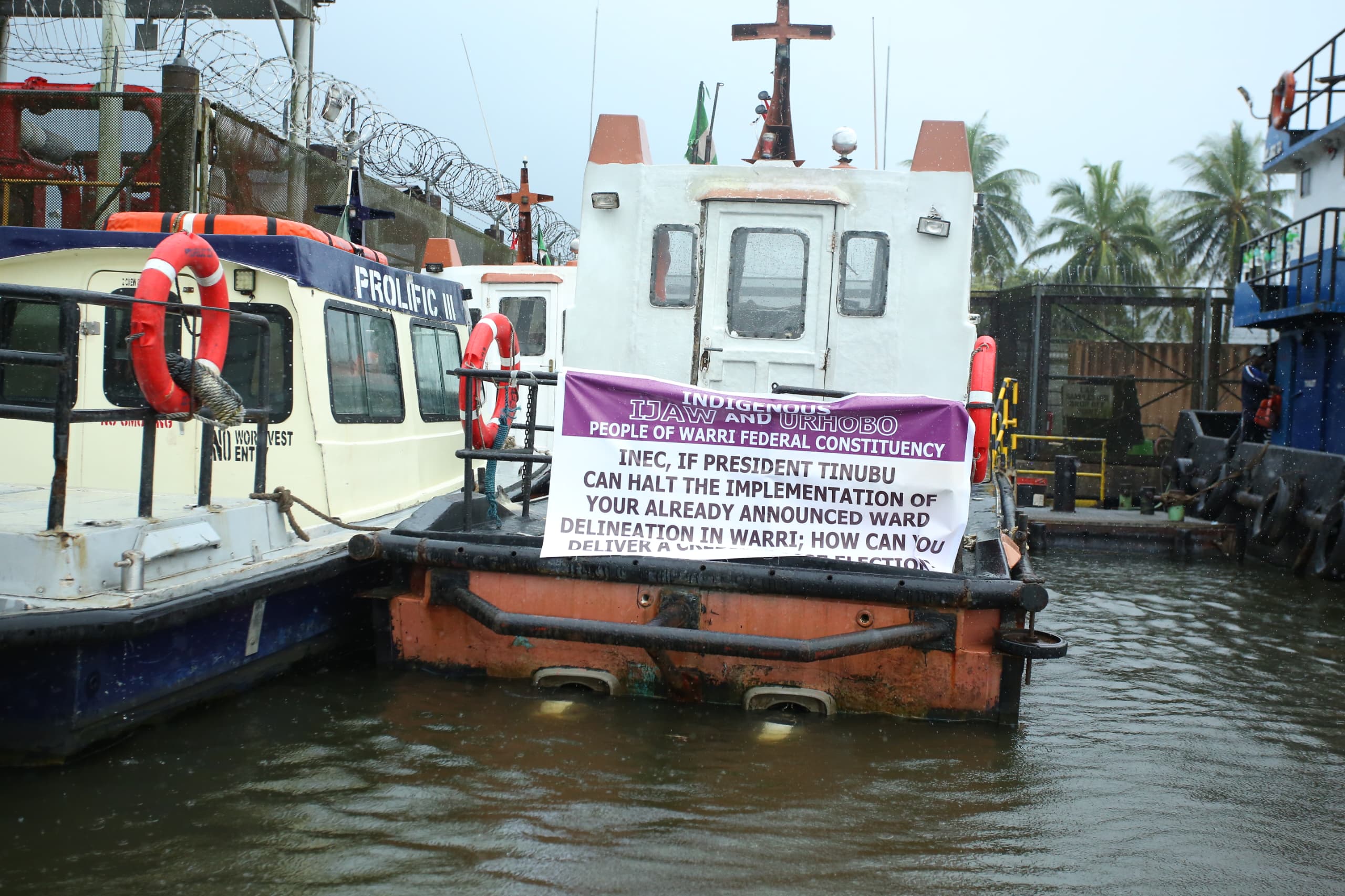
The shutdown was reportedly carried out by hundreds of protesters drawn from Gbaramatu, Ogbe-Ijoh, Isaba, Egbema, and Diebiri Kingdoms in Warri South, Warri South-West, and Warri North Local Government Areas. The demonstrators are demanding the immediate implementation of the ward and polling unit delineation exercise conducted by INEC pursuant to a Supreme Court judgment.
Sources within the affected companies disclosed that protesters not only occupied the facilities but also disrupted logistics operations by blocking supply routes along critical waterways servicing Chevron, Shell, and NESTOIL/NECONDE installations.
The development marks a significant escalation in the dispute surrounding the controversial delineation exercise and underscores the growing frustration among communities that believe the implementation process is being deliberately delayed despite the completion and presentation of INEC’s final report.
The protesters, largely of Ijaw extraction, insist that the delineation exercise was lawfully conducted and reflects the realities on the ground. They accused unnamed political interests of attempting to frustrate the implementation of the report and vowed to sustain their action until INEC fully enforces its recommendations.
The shutdown came less than 24 hours after Ijaw and Urhobo stakeholders publicly warned that oil production across parts of the Warri Federal Constituency could be halted if the electoral body failed to act on the report.
Placards displayed by the protesters carried messages such as: “Implement Warri Delineation Report,” “Court Ordered Judgment on Wards and Polling Units Delineation,” and “No Implementation, No Production.”
Speaking on behalf of the demonstrators, Chief Mrs. Maria Ebike accused INEC of failing to act despite completing consultations and producing a final report intended to address longstanding concerns over political representation in the constituency.
“We have waited patiently for the authorities to do the right thing. Since our concerns continue to be ignored, we have no option but to press for justice through peaceful protest. No implementation of the ward delineation, no oil production,” she said.
The crisis traces its roots to a 2022 Supreme Court judgment directing INEC to conduct a fresh ward and polling unit delineation exercise in the Warri Federal Constituency. Following the exercise, the electoral commission presented its final report to stakeholders in Asaba on May 20, 2026.
However, rather than settling the longstanding dispute, the report has triggered fresh controversy among the Ijaw, Urhobo, and Itsekiri ethnic groups, exposing deep-seated disagreements over representation, demographics, and political influence within the constituency.
Political observers warn that the continued delay in resolving the matter risks undermining confidence in democratic institutions and could further inflame ethnic tensions in one of Nigeria’s most strategically important oil-producing regions.
With hundreds of thousands of barrels of crude production now reportedly affected, attention is increasingly turning to the Federal Government, INEC, and security agencies to prevent the dispute from degenerating into a broader security and economic crisis capable of impacting national oil output and investor confidence.