
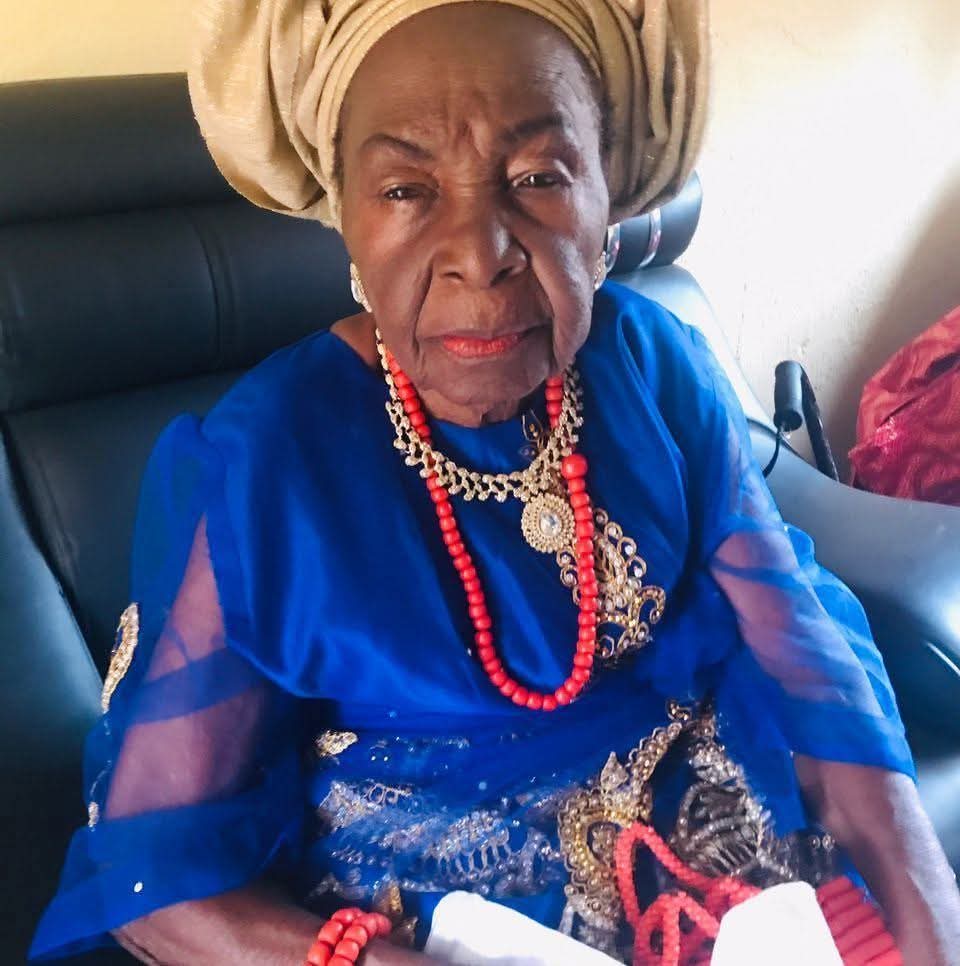
By Patrick Ochei
There are people who pass through our lives and leave behind memories. There are others whose influence quietly shapes the person we eventually become. For me, one of such remarkable persons was Mama Egbede Okolie Nwaolai, the wife of my grand-uncle, whose confidence in my ability to write began when I was still a primary school pupil.
Long before I understood the significance of what I was doing, Mama Egbede had made me her personal letter writer.
Whenever she wanted to communicate with her children in Lagos — Auntie Vicky, Uncle Emma and Uncle Onyeisi — she would send for me. My assignment was simple: listen to what she wanted to say and put it down in writing.
It was a different era.
Mobile phones, social media and instant messaging were unknown. Even telephone communication was a rarity. The village had, perhaps, only one analogue telephone set, while letters remained one of the most dependable means of communicating with family members living far away.
Sometimes, letters were sent through the postal service. On other occasions, they were entrusted to transporters and travellers such as the late Omeh, Paul Ukwadiamor, Baby-Face and others who regularly moved between the village and the cities.
My mother had nicknamed me “Brother”, and that was the name Mama Egbede proudly used whenever she called on me.
“Brother,” she would say, summoning me to perform yet another writing assignment.
She had grandchildren who could have written the letters for her, but she preferred me. I became her unofficial correspondent, happily undertaking the task without expecting anything in return.
Interestingly, the letters became more than mere communication between a mother and her children. Her children appreciated the way I wrote and looked forward to receiving the letters. Whenever they had comments about the quality of a letter, Mama Egbede would faithfully relay their observations to me.
And she never failed to tell them who wrote the letters.
“It was Brother who wrote it,” she would proudly tell them.
At the time, I did not realise that those seemingly ordinary assignments were gradually developing a skill that would become central to my life.
Today, Mama Egbede is no longer with us.
She recently passed away at the remarkable age of 103, having lived a long and eventful life. Her burial is scheduled for December. She leaves behind children, grandchildren and great-grandchildren who are spread across different parts of the world.
Her departure has, however, prompted me to look back at those childhood memories and appreciate the profound, though perhaps unintended, role she played in my life.
Mama Egbede was a disciplinarian and a woman of strong character. More importantly, she was someone who recognised and encouraged an ability in me long before I fully appreciated it myself.
Her persistent demand for letters sharpened my writing. Each letter required me to listen carefully, understand her message and communicate it clearly. Without knowing it, I was learning the fundamentals of effective writing and communication.
Those early experiences eventually became part of the foundation upon which my career was built.
My mentor and father, the late Chief Charles Ochei, had hoped that I would follow in his footsteps and become an accountant. I made efforts to meet that expectation, but life ultimately took me in a different direction.
I became a journalist and writer.
Looking back today, I cannot tell the story of that journey without remembering the woman who, perhaps unknowingly, gave my writing its earliest practical expression.
Mama Egbede did not run a school of journalism. She did not lecture me on the principles of writing. She simply trusted a young boy to help her communicate with the children she loved.
But in doing so, she gave me an opportunity to discover and develop a gift that would later become my profession.
For that, I remain grateful.
Mama Egbede, the woman who made me her letter writer, has answered the call of eternity.
May her soul rest in perfect peace.