
The All Progressives Congress (APC) has lost its lawmaker representing Udu State Constituency in the Delta State House of Assembly, Hon. Collins Egbetamah, to the Nigeria Democratic Congress (NDC), following his defection from the ruling party.
The political development took a dramatic turn on Tuesday when the Delta State House of Assembly declared Egbetamah’s seat vacant, citing his resignation from the APC and subsequent membership of the NDC, a decision that is already generating debate over its constitutional basis.
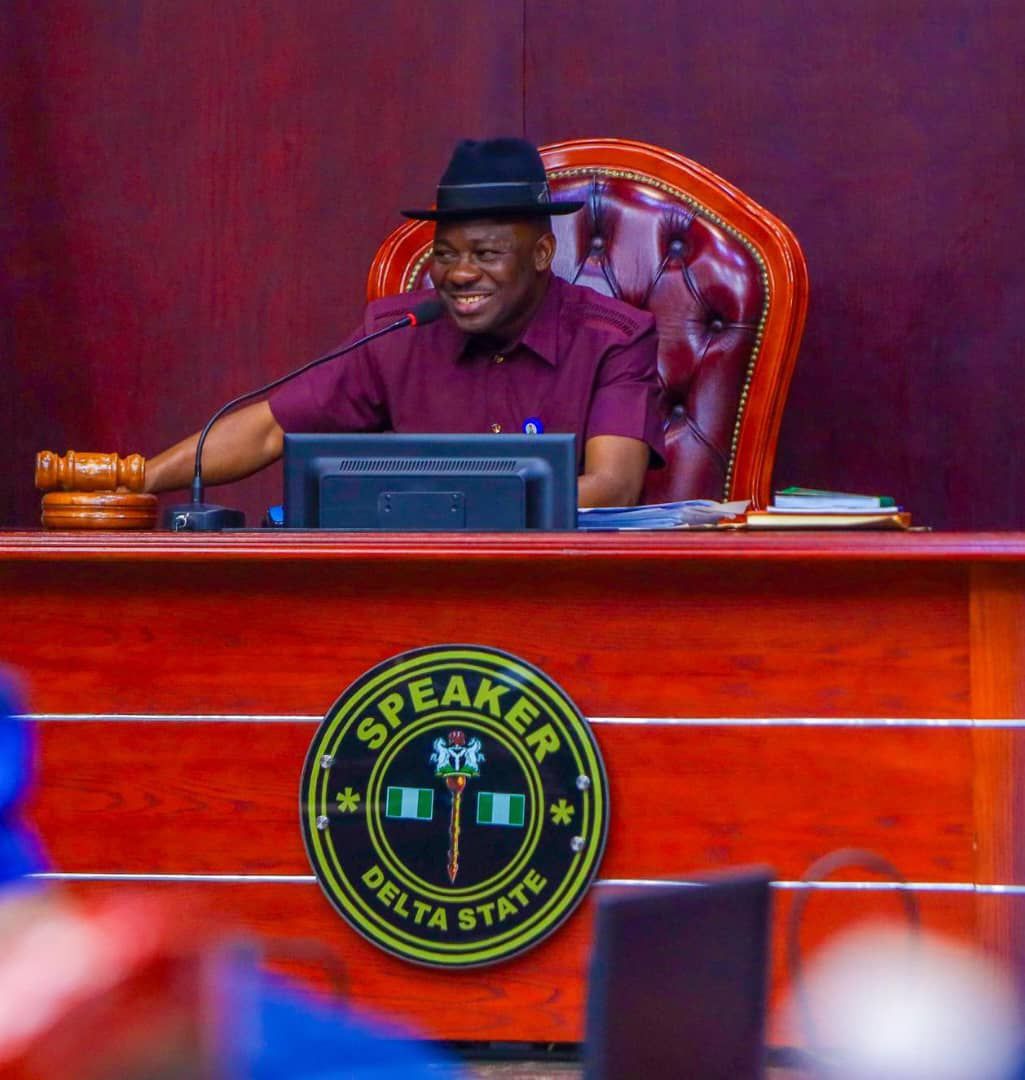
The declaration was made during plenary presided over by the Speaker, Rt. Hon. Emomotimi Dennis Guwor, after the House unanimously adopted a motion moved by the Leader of the House, Hon. Emeka Nwaobi, and seconded by the Deputy Speaker, Rt. Hon. Arthur Akpowowo.
Invoking Section 109(1)(g) and (2) of the 1999 Constitution (as amended), the Speaker ruled that Egbetamah had forfeited his legislative mandate by becoming a member of another political party before the expiration of his tenure.
Guwor subsequently directed the Clerk of the House to notify the Independent National Electoral Commission (INEC) and other relevant authorities, requesting the electoral body to commence the constitutional process for a by-election in line with Section 116(2) of the Constitution.
While the Assembly maintained that its decision was anchored on constitutional provisions governing legislative defections, the declaration has raised questions over whether all the constitutional conditions and established judicial principles applicable to such cases were fully considered before the seat was declared vacant.
Although Section 109(1)(g) provides that a member of a House of Assembly shall vacate his seat upon becoming a member of another political party before the expiration of his tenure, the Constitution also recognises exceptions, including where the defection is occasioned by a division within the political party that sponsored the member or where there is a merger involving political parties.
The Assembly did not indicate during plenary whether it considered the applicability of any of these constitutional exceptions before reaching its decision.
Legal analysts are also expected to examine whether the declaration is consistent with judicial precedents, as Nigerian appellate courts have, in several instances, held that disputes arising from legislative defections and the interpretation of constitutional exceptions are matters ultimately subject to judicial determination.
Presenting the motion titled, “Consideration of the Letter from Honourable Member Representing Udu State Constituency Pursuant to Section 109 of the Constitution,” House Leader Emeka Nwaobi told lawmakers that documentary evidence before the House confirmed Egbetamah’s resignation from the APC and his subsequent membership of the NDC while still serving as a legislator.
Earlier, Speaker Guwor read Egbetamah’s resignation letter dated June 19, 2026, in which the lawmaker disclosed that he had resigned from the APC on April 30, 2026, to pursue his political aspirations.
He also expressed appreciation to the APC and its stakeholders for their support during his membership of the party.
Following deliberations, the House resolved that the constitutional requirements for declaring the seat vacant had been met and directed that its resolution be communicated to INEC for necessary action.
With the Assembly’s decision now formally communicated, attention is expected to shift to whether the declaration will be challenged in court and how the constitutional questions surrounding the defection will ultimately be resolved.
The outcome could have significant implications for legislative defections and party politics in Delta State and beyond.

















Where is democracy in Nigeria hon speaker of the house you and your boss our governor defected to apc from pdp Did u declare your office vacant why do you derive joy in forcing people to loyal to you wen Dey don’t you frustrates their office will hon collins remain a better leader than you guys