By Abdullahi Alhassan, Kaduna
The Kano State Government has unveiled a proposed N1.4 trillion budget, described as the largest in the state’s history, with more than N1 trillion allocated to capital projects aimed at improving infrastructure and essential services.
The state also received a security award from the Institute of Security and Strategic Studies in recognition of its efforts to strengthen community-based security and combat crime.
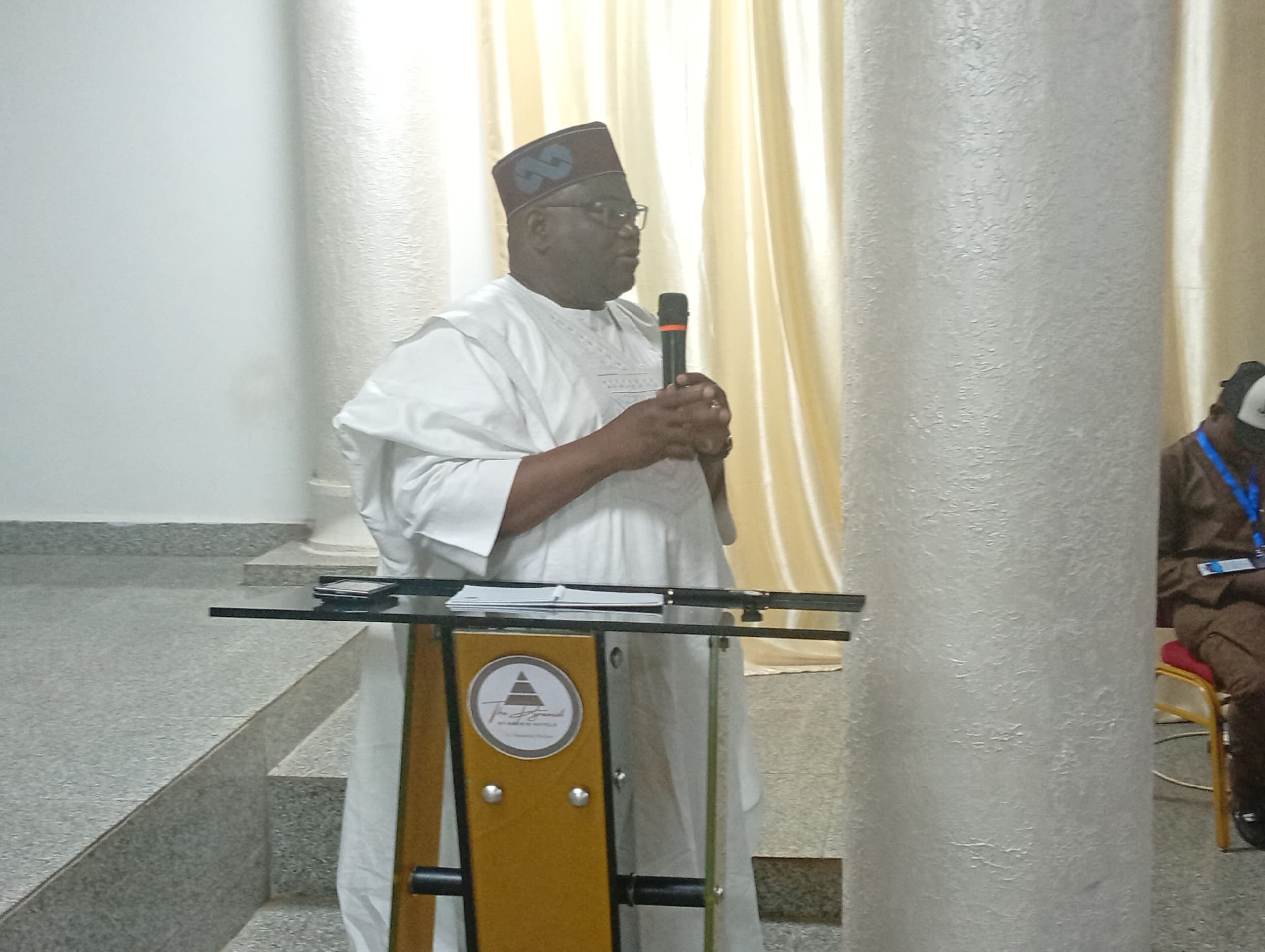
The Commissioner for Information and Internal Security, Comrade Abdullahi Ibrahim Waiya, who represented Governor Abba Kabir Yusuf at the North-West Conference on Community Security Management in Kaduna, described the award as a responsibility to intensify the government’s security interventions.
Waiya said Kano’s size and diversity required an approach that connects security with economic and social development, describing the state as a “mini-Nigeria” with one of the world’s largest urban populations.
He said the administration had introduced several measures to address insecurity, including the recruitment and training of about 2,000 youths under the Neighbourhood Watch programme, with operational offices established across the state’s 44 local government areas.
The government has also established the Anti-Phone Snatching Corps and strengthened community policing through the office of a Special Adviser.
Waiya highlighted the Safe Corridor programme, described as the first of its kind in northern Nigeria, through which 340 youths formerly involved in political thuggery have been registered and profiled.
According to him, more than N500 million has so far been released under the programme, while another 1,000 youths are being prepared for a 40-day rehabilitation and empowerment programme.
He added that the government was supporting community-led security initiatives while strengthening the Hisbah Board to help prevent and resolve social conflicts.
The commissioner said the state had maintained a productive relationship with security agencies through timely funding and the provision of vehicles and other operational logistics.
He further disclosed plans to establish a security forum involving the eight metropolitan local government areas to complement existing security structures.
Waiya stressed that government spending should be directed towards improving the welfare and security of citizens rather than serving the interests of public officials.
He assured that the Yusuf administration would continue to expand its security and development programmes to protect lives and property across the state.
Expert Calls for Unified North-West Security Strategy
A security expert, Hon. Dr. Muhammad Ali, has called on the seven North-West governors to adopt a unified security strategy, arguing that the region could significantly curb banditry, kidnapping, cattle rustling and other violent crimes if the states worked together.
Speaking at the conference in Kaduna, Ali said the region had become one of the country’s most troubled security zones, with rural communities and farmlands increasingly affected by violent attacks.
He noted that Kano and Jigawa had enjoyed relative stability compared with states such as Zamfara and Katsina, but warned that Kano remained exposed to cross-border security threats.
According to him, nine Kano local government areas bordering Katsina State — Bagwai, Gwarzo, Kabo, Karaye, Kiru, Madobi, Rimin Gado, Rogo and Shanono — remain particularly vulnerable.
Ali attributed the relative stability in Kano and Jigawa to the strength of traditional institutions, economic opportunities and proactive community policing, but cautioned that no state could afford to become complacent.
He advocated an integrated community-based security framework built around Early Warning and Early Response mechanisms.
He also recommended that vigilante groups be harmonised and placed under clearly defined operational guidelines while working alongside the police, Nigeria Security and Civil Defence Corps and the military.
The expert called for stronger traditional institutions in resolving farmer-herder disputes and other land-related conflicts, as well as unified command structures, oversight mechanisms and legally backed sub-national security trust funds.
Ali urged governments to formally recognise community security partnerships and establish laws governing the operations, welfare and accountability of local security outfits instead of treating them as temporary arrangements.
He further identified youth empowerment, education, rural infrastructure, joint border patrols and intelligence sharing among neighbouring states as critical measures for addressing the root causes of insecurity.
He said sustainable peace in the North-West would require a shift from an approach focused largely on military and police operations to one driven by effective governance, accountability, prevention and community participation.
“Community security partnerships must be a formal leg of sub-national governance,” he said.