By Abdullahi Alhassan
Nigeria has recorded progress in the recovery of illicitly acquired assets and efforts to curb illicit financial flows, but weak implementation, limited transparency and declining confidence in key institutions continue to undermine those gains, the Civil Society Legislative Advocacy Centre (CISLAC) has said.
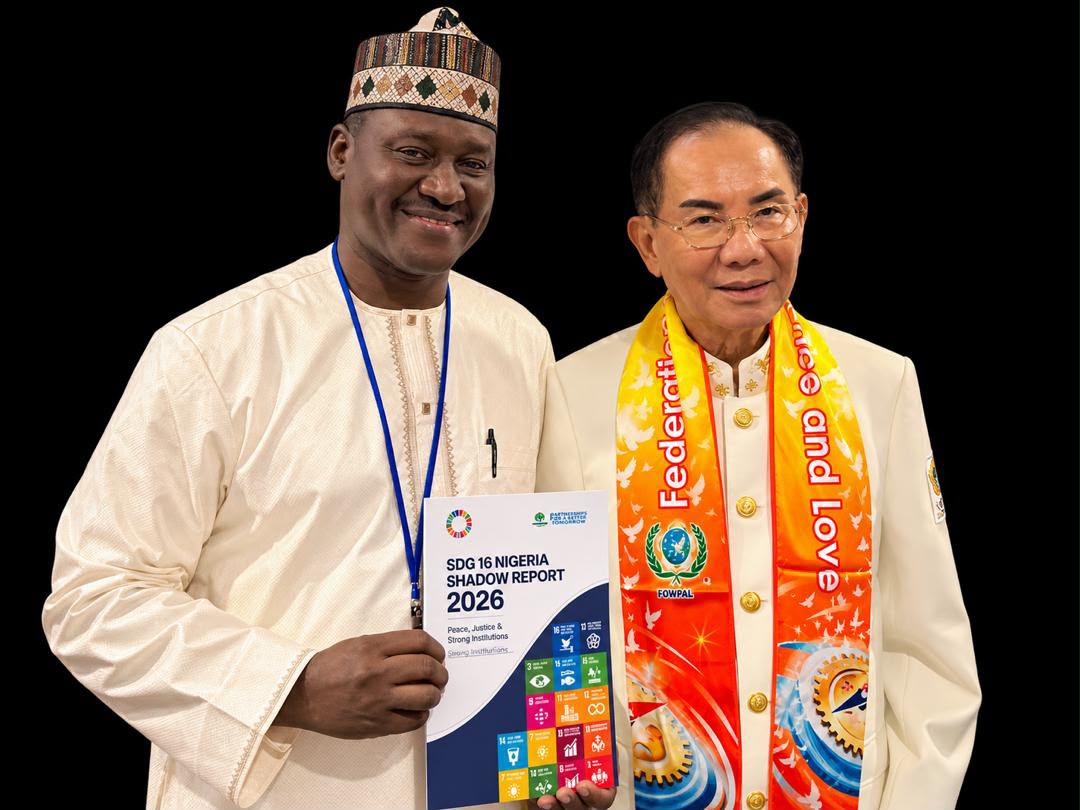
The organisation raised the concerns while unveiling its 9th Nigeria SDG 16 Shadow Report at a side event of the United Nations General Assembly in New York on Tuesday.
The report, which covers developments between July 2025 and August 2026, examines Nigeria’s performance under Sustainable Development Goal 16, which promotes peaceful and inclusive societies, access to justice and effective, accountable institutions.
Presenting the report, CISLAC Executive Director, Auwal Ibrahim Musa Rafsanjani, described Nigeria’s progress as mixed, noting that advances in legislation and public policy had not always translated into effective implementation.
“While Nigeria has made legislative and policy advances, implementation and enforcement remain weak, inconsistent and, in some cases, undermined by political interference,” Rafsanjani said.
Asset Recovery Requires Greater Transparency
Rafsanjani acknowledged recent enforcement efforts in the areas of anti-money laundering and asset recovery but expressed concern over limited transparency surrounding recovered assets.
He said public accountability should extend beyond the recovery of assets to include clear information on how such assets are managed and ultimately utilised.
“We also continue to witness asset recoveries without sufficient transparency about the process and, importantly, what happens to recovered assets afterwards,” he said.
According to him, inadequate post-recovery monitoring could expose recovered assets to mismanagement and potentially undermine the objectives of anti-corruption efforts.
Institutions Facing Credibility Concerns
The CISLAC report also highlighted concerns about the integrity and accountability of key institutions, including the judiciary, security agencies and electoral bodies.
Rafsanjani cited allegations involving senior judicial officials, concerns over electoral processes and weaknesses in the vetting of political appointees as issues requiring stronger institutional safeguards.
He said strengthening oversight mechanisms and ensuring greater accountability were necessary to restore confidence in institutions responsible for upholding the rule of law and democratic processes.
The report further identified political corruption, asset declaration and unexplained wealth as persistent governance concerns, particularly in relation to the management of public resources.
Kidnapping Raises Governance Concerns
Another issue highlighted by CISLAC was the growing commercialisation of kidnapping for ransom.
Rafsanjani said the phenomenon should not be viewed solely through the lens of security, arguing that its wider implications extend to governance, human rights, economic activity and the rule of law.
“When citizens cannot live, work or travel without fear, the foundations of peaceful and inclusive societies are weakened,” he said.
He added that the security situation could have far-reaching consequences for Nigeria’s development efforts and the ability of citizens to fully participate in economic and social activities.
CISLAC Demands Stronger Implementation
With the 2030 deadline for the Sustainable Development Goals approaching, CISLAC said Nigeria must place greater emphasis on implementing existing laws and policies.
“The country does not lack laws, policies or institutions. The greater challenge is ensuring that these frameworks work effectively, consistently and in the public interest,” Rafsanjani said.
He described the 9th SDG 16 Shadow Report as both “a mirror and a roadmap”, providing an assessment of Nigeria’s current position while identifying areas requiring reform.
CISLAC called for stronger collaboration among government institutions, civil society organisations, development partners and the international community to translate policy commitments into measurable action.
Rafsanjani identified stronger institutions, protection of civic space, greater transparency, improved access to information, protection of public resources and respect for the rule of law as key areas requiring sustained attention.
“In closing, let me emphasise that national development cannot be sustained without justice, accountability and strong institutions,” he said.
He added that achieving the Sustainable Development Goals would require Nigeria to move beyond commitments and establish institutions capable of delivering effectively and consistently for citizens.