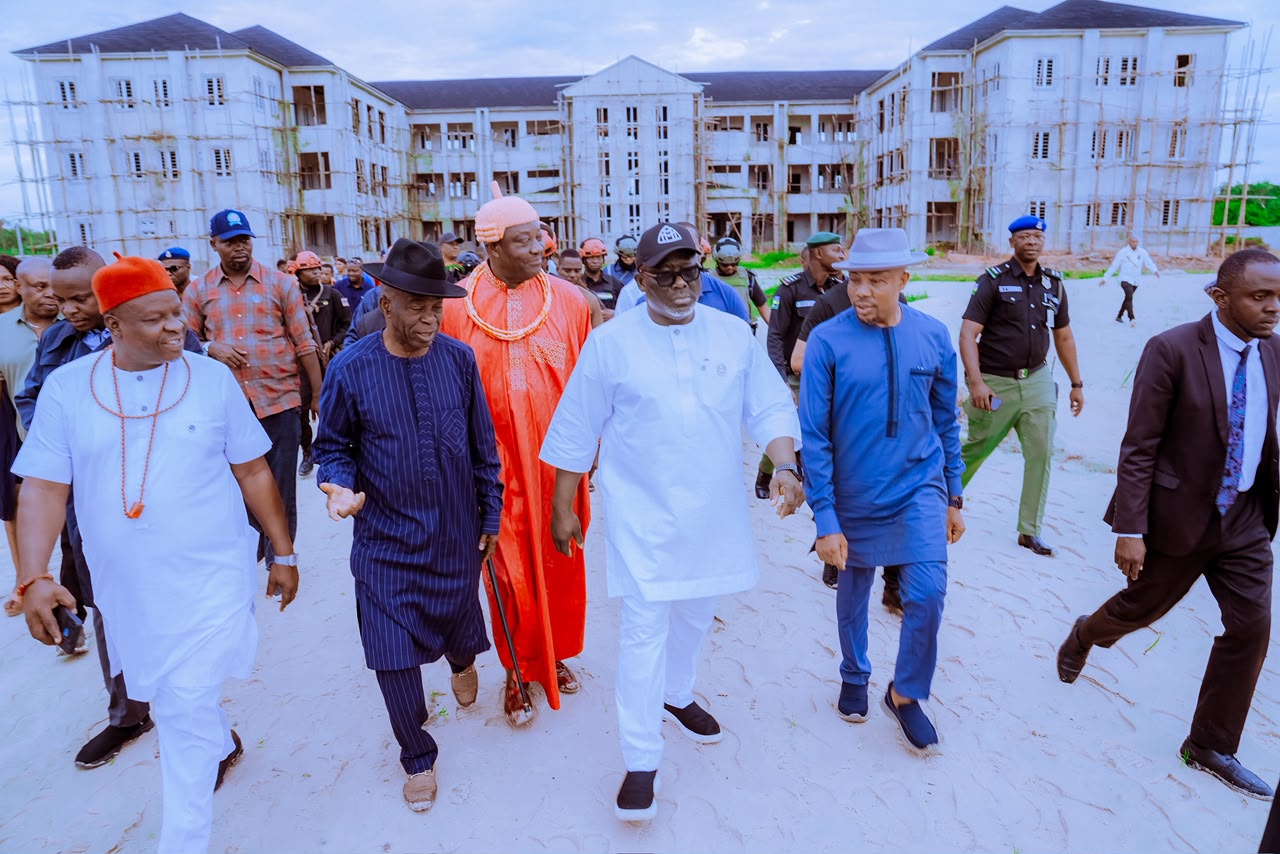
Governor Sheriff Oborevwori’s unscheduled inspection of the Delta State Technical College, Irri, has triggered fresh scrutiny of project supervision within his administration, raising difficult questions about the effectiveness of some members of his cabinet and the quality of oversight on government contracts.
The governor’s visible frustration during Monday’s visit was directed not only at the contractor handling the project but also at the supervising consultant, whom he accused of failing to adequately monitor the work and keep the government informed of its true state.
For many observers, however, the governor’s remarks have reopened a broader debate: how could a major government project awarded in 2019 remain unfinished seven years later without attracting decisive intervention from the relevant ministries and supervising officials?
The Technical College, located in Irri, Isoko South Local Government Area, was conceived to strengthen technical and vocational education in Delta State.
Yet, despite repeated budgetary commitments, the institution has remained incomplete, denying prospective students access to the facility and delaying the government’s educational objectives.
During the inspection, Governor Oborevwori disclosed that he had been informed by the supervising commissioner that the contractor had promised to complete the project by August.
After touring the site, however, the governor said the assurance did not reflect the reality on the ground.
According to him, major components of the project, including the workshop, had not commenced, landscaping had yet to begin, and sections of the roofing remained unfinished.
“I spoke with the commissioner and he told me he had reached out to the contractor, who said the project would be completed by August.
“But from what I have seen here, I am not sure that the timeline is realistic,” the governor said.
His dissatisfaction became even more apparent after discovering that neither the contractor nor construction workers were present during the inspection.
“If people are serious about a project, you will see them actively working on site. That was not the case here. I did not even find the contractor or workers on site. I am not satisfied with the work,” he said.
Perhaps the governor’s strongest criticism was reserved for the project consultant, whom he accused of poor supervision.
“I will invite the contractor and the consultant because the consultant is not doing enough. The consultant is supposed to keep the client informed about the progress of work and ensure proper supervision. From what I have seen, the supervision is very poor and I am not satisfied,” Oborevwori stated.
Those remarks have inevitably shifted attention beyond the contractor to the public officials responsible for monitoring and evaluating government projects.
While the contractor bears direct responsibility for delivering the project, questions are also likely to be asked about the performance of the supervising ministry and officials whose duty includes tracking progress, identifying delays early, and advising the government on corrective measures.
If the governor only discovered the true extent of the delay during an unscheduled inspection, critics may argue that existing monitoring mechanisms failed to provide timely and accurate information.
The governor himself acknowledged that he had hoped the institution would begin admitting students by September.
That expectation has now been dashed, with the prolonged delay threatening to undermine the administration’s commitment to expanding access to technical education.
Although Governor Oborevwori has now summoned the contractor and consultant to account for the project’s slow pace, the development raises broader governance concerns about accountability within the state’s project implementation system.
Whether the delay resulted from contractor inefficiency, weak supervision, administrative lapses, or a combination of all three may ultimately be determined through the governor’s planned review.
What appears increasingly evident, however, is that the Irri Technical College project has become more than just another delayed contract.
It has emerged as a test of accountability within the Oborevwori administration and a reminder that effective governance depends not only on political leadership but also on the competence, diligence and responsiveness of those entrusted with implementing government policies.
As the governor moves to determine responsibility for the seven-year delay, Deltans will be watching closely, not only to see whether the project is completed, but also whether those found to have failed in their responsibilities are held accountable.