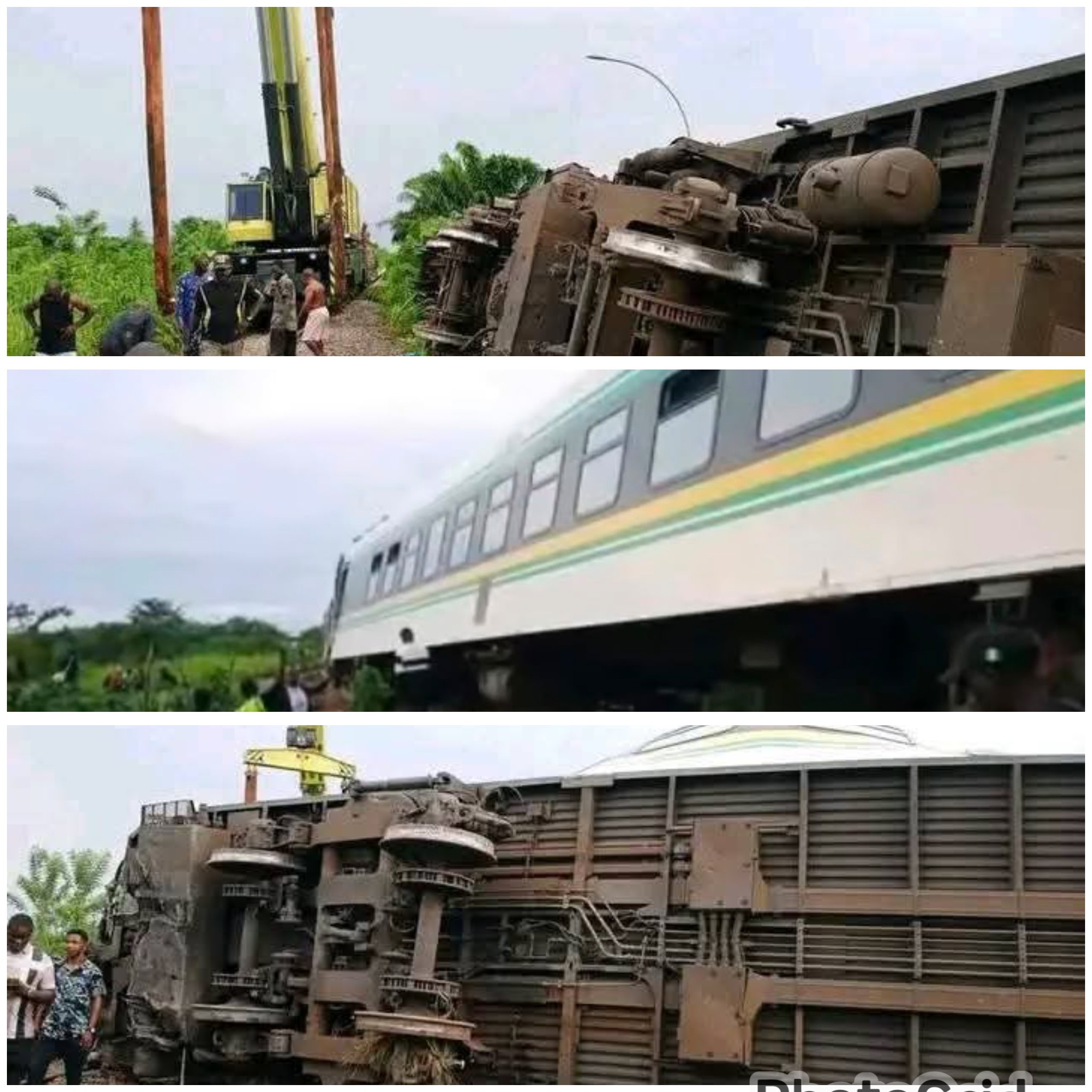
A tragic train accident along the Warri–Itakpe rail corridor near Agbor, Delta State, has reportedly claimed four lives and left several other passengers injured, raising fresh concerns about safety standards on Nigeria’s railway network.
The incident, which involved a passenger train operating on the strategic Warri–Itakpe route, triggered panic among commuters and residents as emergency responders rushed to the scene to rescue victims and provide medical assistance to the injured.
While reports from the scene indicated that four persons lost their lives and several others sustained varying degrees of injuries, the Nigerian Railway Corporation (NRC) said efforts were ongoing to ascertain the full extent of the accident.
In an official statement, the NRC confirmed the occurrence of what it described as a serious train accident at Agbor.
“The Nigerian Railway Corporation (NRC) confirms a serious train accident at Agbor along the Warri–Itakpe Train Service corridor.
“Rescue and emergency response operations are currently ongoing at the scene, while relevant authorities are working to ascertain the full extent of the incident,” the statement signed by the Managing Director and Chief Executive Officer of the Corporation, Dr. Kayode Opeifa, stated.
Although the exact cause of the accident had yet to be officially determined as of press time, the tragedy has reignited public concerns over rail safety, infrastructure maintenance and operational oversight within Nigeria’s transportation sector.
The Warri–Itakpe rail line remains one of the country’s most important transportation corridors, linking communities and supporting economic activities across multiple states.
The latest accident has therefore sparked calls for an immediate and transparent investigation to determine the circumstances that led to the derailment.
Stakeholders have urged the Federal Government, the Federal Ministry of Transportation and railway authorities to conduct a comprehensive safety audit of the corridor and implement urgent measures to prevent similar incidents in the future.
They stressed that every reported loss of life on the nation’s transport infrastructure represents a painful reminder of the need for stronger safety mechanisms, regular maintenance of railway assets and improved emergency response systems.
There have also been calls on the Delta State Government to collaborate with federal authorities in supporting affected victims and ensuring that all necessary interventions are put in place to enhance safety along the rail route.
As rescue operations continue and investigations commence, Nigerians will be expecting not only answers regarding the cause of the accident but also concrete actions capable of restoring public confidence in rail transportation.
For many observers, the reported loss of four lives and injuries to several others should serve as a wake-up call for authorities to prioritize passenger safety and infrastructure integrity before another avoidable tragedy occurs.