By Abdullahi Alhassan, Kaduna
A homegrown technology initiative, Nest Africa AI Innovation Lab, has deployed an artificial intelligence-powered information integrity system to monitor and counter misinformation during the 2026 Osun State Governorship Election.
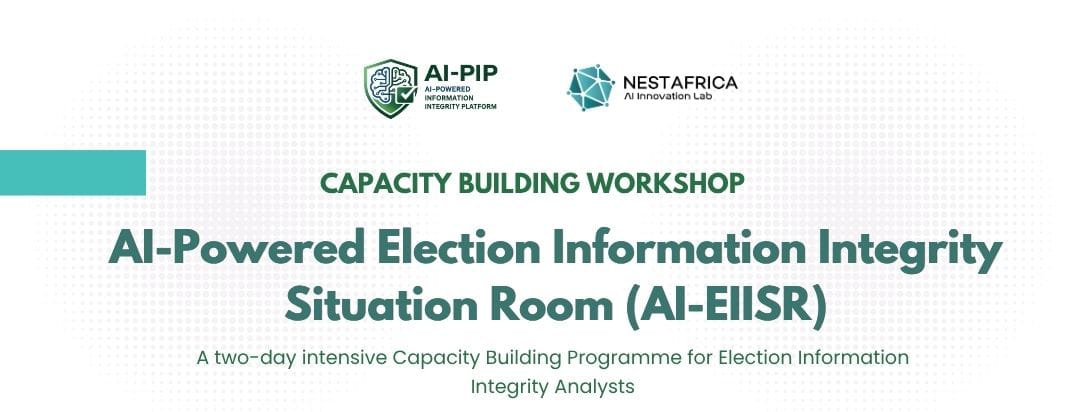
The initiative, known as the AI-Powered Election Information Integrity Situation Room (AI-EIISR), was activated during the August 15 governorship election to identify, verify and respond to misleading information circulating across social media platforms.
According to a statement signed by Ameerah Adamu, Project Lead, Policy, Governance and Public Innovation Associate, the initiative combines artificial intelligence with human analysis to provide rapid verification of election-related claims.
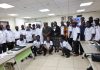
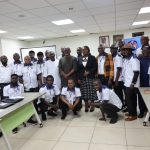
The project was implemented under the Lab’s Policy, Governance and Public Innovation portfolio, with 20 analysts and observers working from the situation room throughout the voting and collation processes.
The team monitored social media platforms for suspicious content, subjected emerging claims to verification using official sources and issued public clarifications where necessary.
The Lab said its review covered several categories of election-related misinformation, including fabricated result sheets, manipulated images, impersonation scams and premature claims of victory.
Among the claims investigated was a widely circulated graphic which purportedly gave the APC candidate 45,456 votes and presented the figure as a final election result.
The situation room classified the graphic as unofficial and misleading, stressing that the Independent National Electoral Commission (INEC) remains the constitutionally authorised body responsible for the collation and declaration of election results.
The team also identified images showing apparent signs of artificial intelligence manipulation, including distorted texts and inconsistencies when compared with authentic photographs from polling units.
In another case, analysts uncovered a WhatsApp message allegedly impersonating a popular Afrobeats artiste and offering recipients a ₦100,000 election cash giveaway.
The message directed users to a suspicious link designed to obtain their banking information and encouraged recipients to share it widely before it could be taken down.
The Lab also debunked a claim that the incumbent governor had established a lead in 13 local government areas while voting and collation were still underway.
At the time the claim circulated, the situation room noted, there were no official result sheets available to substantiate the assertion.
Adamu said the exercise demonstrated the increasingly complex nature of election misinformation, noting that false narratives now extend beyond fabricated results to sophisticated financial scams and digitally manipulated content.
She emphasised that effective information verification requires not only speed but also accuracy and careful classification of claims.
According to her, analysts must distinguish between information that is demonstrably false, content generated or manipulated using artificial intelligence, and claims that are merely unverified or prematurely presented as facts.
The Lab said its rapid interventions helped reduce the period within which fabricated information could shape public perception and potentially influence voter behaviour.
The Osun deployment also marked the first real-world test of Nest Africa’s AI-Powered Public Information Integrity Platform (AI-PIP), which is designed to strengthen public trust and democratic resilience across Africa.
As Nigeria prepares for the 2027 General Elections, the Lab said it plans to expand its network of trained analysts and field observers to achieve broader, nationwide monitoring of election-related information.
Adamu said youth participation would remain central to the expansion, with the Lab focused on training young Nigerians in fact-checking, AI-generated content detection and real-time response to emerging false narratives.
“Election information integrity is not a one-time effort, it is infrastructure,” Adamu said, reaffirming the Lab’s commitment to developing technology-driven systems led by young Africans to protect the integrity of public information.