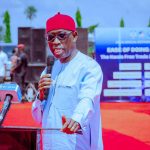

Former Governor of Delta State, Senator Ifeanyi Okowa, has defended President Bola Tinubu’s decision to remove the petroleum subsidy, arguing that the policy was not exclusive to the All Progressives Congress (APC) leader, as other major presidential contenders in the 2023 general elections had equally committed to ending it.
Okowa maintained that all four leading presidential candidates in the 2023 election had recognised the economic implications of the subsidy regime and indicated their willingness to discontinue it if elected president.
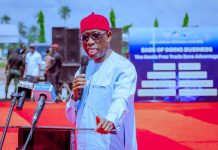
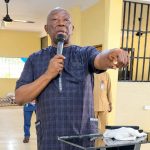
He made the remarks on Tuesday in Asaba when a delegation of the Asaba Branch of the Nigerian Society of Engineers (NSE), led by its Chairman, Mr. Chukwuka Ojei, visited him to express solidarity with his ambition to return to the Senate in 2027.
“Any of the presidential candidates would have removed the subsidy, as they had all made that commitment in their manifestoes. Tinubu only had the opportunity to implement it because he emerged as President,” Okowa said.
The former governor’s position comes against the backdrop of renewed political arguments over the future of petroleum subsidy ahead of the 2027 general elections.
Former Vice President Atiku Abubakar has indicated plans to restore the subsidy if elected president, while Tinubu has criticised politicians making such promises, describing them as liars.
Notably, Okowa was Atiku’s running mate on the platform of the Peoples Democratic Party (PDP) in the 2023 presidential election.
Speaking during the solidarity visit, Ojei said the engineering community had resolved to support Okowa’s senatorial ambition in recognition of his developmental achievements, particularly in infrastructural delivery during his eight-year administration in Delta State.
The NSE delegation, comprising several professional engineers, praised the former governor’s contributions to the state’s development, describing his record in office as worthy of recognition and continued political support.
They pledged to mobilise members of the engineering profession across Delta North Senatorial District to support his aspiration and work towards ensuring his victory in the 2027 elections.
Responding, Okowa described engineers as critical stakeholders in the development process, recalling the productive relationship he maintained with the professional body throughout his tenure as governor.
He particularly acknowledged the contributions of engineers to initiatives aimed at addressing flooding challenges in Asaba, stressing that professional engineering expertise remained indispensable in resolving complex environmental and infrastructural problems.
The former governor appealed to the delegation to support his return to the Senate, expressing confidence that his experience in executive governance and legislative practice would enable him to provide purposeful representation for Delta North.
Okowa, who represented Delta North in the Senate from 2011 to 2015 before becoming governor, also highlighted his legislative contributions to Nigeria’s healthcare system, particularly his role in the passage of the National Health Act.
He explained that the legislation established an important framework for strengthening healthcare financing and delivery, including provisions for health insurance and dedicated funding for primary healthcare services.
The former governor expressed optimism that his experience across the executive and legislative arms of government would place him in a strong position to contribute to national development and effectively articulate the interests of Delta North if elected for another term in the Senate.