By Abdullahi Alhassan, Kaduna
KADUNA — Young farmers in three communities in Sabon Gari Local Government Area of Kaduna State are deploying artificial intelligence (AI) to help residents anticipate flood risks and respond to land degradation before the problems cause widespread damage.
The initiative, led by the Nest Africa AI Innovation Lab, followed the training of 20 young farmers as AI Climate Youth Ambassadors during a one-day workshop held in Zaria.
The participants were drawn from Jushi, Jama’a and Zabi wards and were selected largely because of their practical knowledge of farming and seasonal environmental challenges in their communities.
According to a statement by the Communications Lead of Nest Africa, Muhammed Sani Kabir, the initiative is designed to bridge the gap between emerging technology and the everyday challenges confronting rural communities.
At the centre of the project is AyéMọlẹ AI, a climate intelligence platform developed by Nest Africa to convert complex weather and environmental information into simple, locally relevant guidance accessible through basic mobile phones.
The initiative seeks to move public perception of AI beyond its conventional use for chatbots and academic tasks by demonstrating how the technology can support farmers in making decisions on planting, grazing and flood preparedness.
The project, titled “Demystifying AI in Practice: Community Awareness and Climate Intelligence in Kaduna,” is supported by the Centre for Journalism Innovation and Development (CJID) under the Nigeria AI Collective.
The Nigeria AI Collective was established by the Federal Ministry of Communications, Innovation and Digital Economy and is led by Data Science Nigeria, Lagos Business School and CJID. Nest Africa was among seven civil society organisations selected to translate the national AI agenda into community-level initiatives.
The need for such interventions is underscored by the increasing impact of climate-related challenges on agriculture. ReliefWeb reported that floods in Nigeria in 2022 affected more than three million people and destroyed more than 500,000 hectares of farmland.
In northern Nigeria, farmers also continue to contend with gradual soil degradation, which has contributed to declining agricultural productivity in some communities.
Unlike conventional weather information that may simply indicate the likelihood of rainfall, AyéMọlẹ AI is designed to provide context-specific guidance, helping farmers understand the implications of expected weather conditions for their farms, livestock and communities.
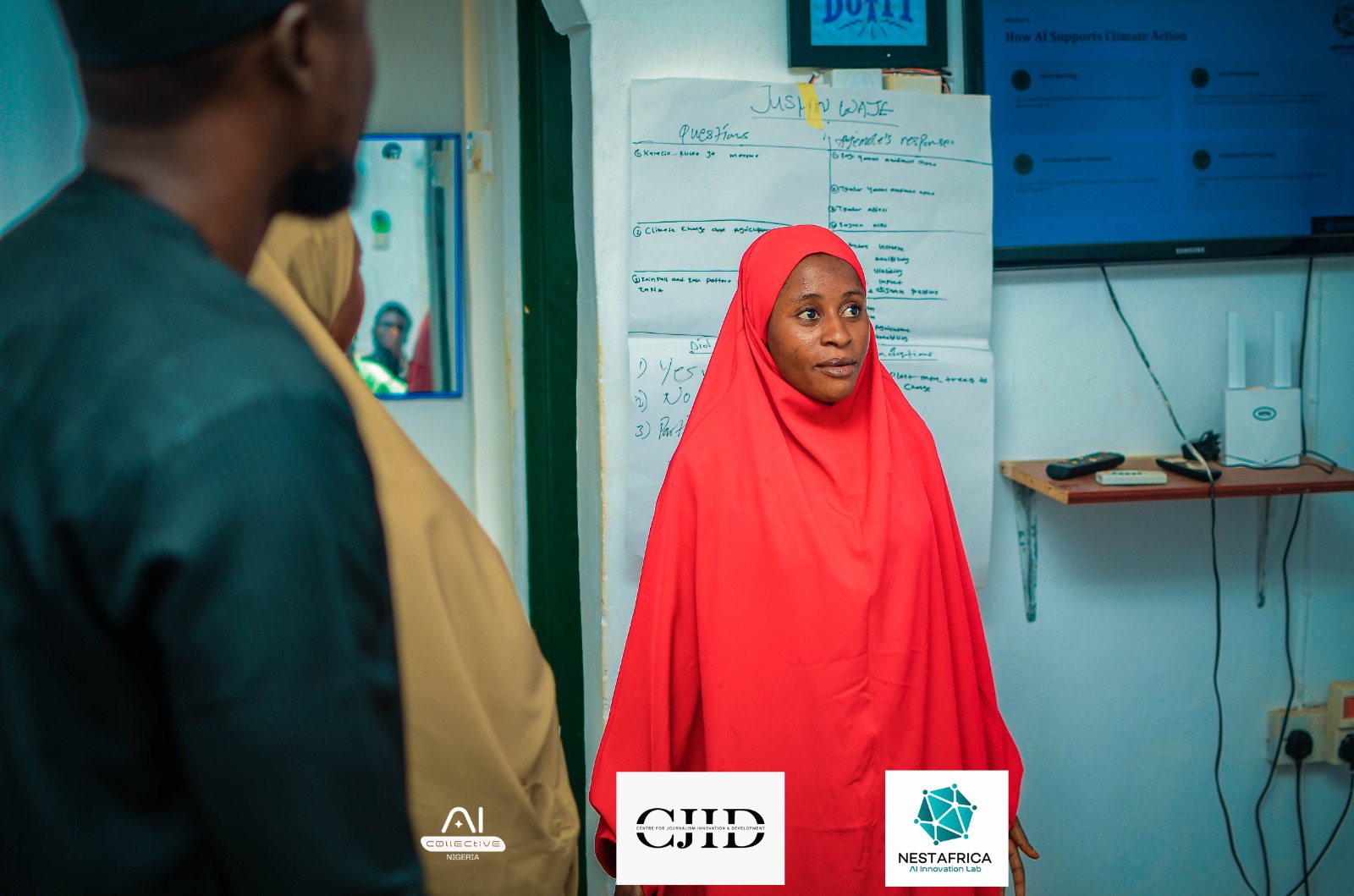
During the training, participants were taken through the fundamentals of AI, climate change and land degradation. Facilitators also used role-playing exercises and ward-based breakout sessions to enable participants test the platform against challenges drawn from their own farming experiences.
The training recorded significant improvement in participants’ knowledge. Average scores increased from 74.3 per cent before the workshop to 94.5 per cent afterwards.
Knowledge of land degradation recorded one of the most notable improvements, rising from 38.1 per cent of participants who could correctly define the concept before the training to 95 per cent afterwards. All the participants were also able to identify ways of reducing land degradation at the end of the exercise.
One of the facilitators, Abubakar Isa Abubakar, attributed the improvement to the effectiveness of community-based sensitisation.
“Awareness gaps are often about vocabulary and framing rather than a lack of lived knowledge,” he said, stressing the importance of engaging farmers and other land users at the grassroots.
To expand the impact of the programme, each of the 20 ambassadors committed to training at least 25 additional farmers in their respective wards.
The organisers expect the peer-to-peer approach to reach at least 150 more people beyond the initial beneficiaries.
Following the training, the project team returned to Jushi, Jama’a and Zabi communities for awareness sessions and live demonstrations of the platform.
An estimated 100 to 150 residents, including farmers, participated in the community engagements and provided feedback on the platform to the technical team.
The discussions also generated broader interest in the potential applications of AI, with residents asking how the technology could be deployed to address other community challenges.
The organisation has subsequently commenced engagement with relevant government agencies, including the Kaduna State Emergency Management Agency.
Further consultations are expected with the state Ministries of Agriculture and Environment as well as local government authorities, while a policy brief is being developed ahead of a planned stakeholder roundtable.
Nest Africa said the Kaduna pilot could provide a model for similar interventions in other parts of the country, particularly communities vulnerable to climate-related risks.
The organisation said the approach combines low-cost technology, mobile accessibility and peer-to-peer learning to make climate intelligence more accessible to rural populations.
Nest Africa AI Innovation Lab is a Kaduna-based organisation focused on developing practical artificial intelligence solutions for underserved communities. It was selected by CJID for an advocacy grant under the Nigeria AI Collective.