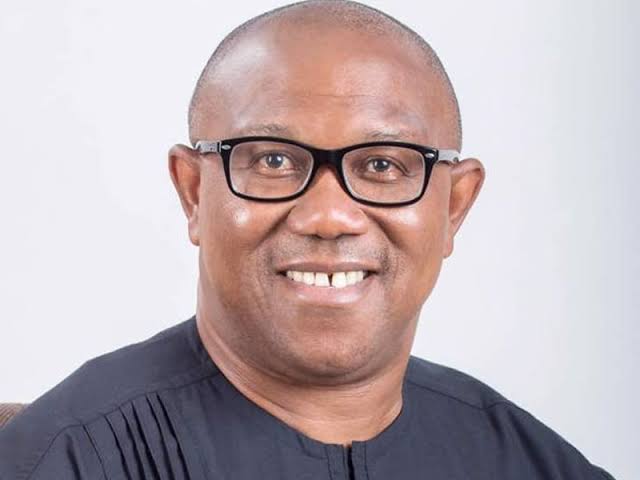
The presidential candidate of the Nigeria Democratic Congress (NDC), Peter Obi, has unveiled what he described as a comprehensive roadmap for rebuilding Nigeria, promising sweeping reforms in education, healthcare, industrialisation and governance to place the country on the path of sustainable prosperity.
In a statement released on Wednesday July 1, 2026, via his X handle, Obi said his vision is anchored on national unity, inclusion, social justice, equity and the protection of every Nigerian’s right to pursue legitimate aspirations, stressing that the country’s current challenges require bold, people-focused leadership.
The former Anambra State governor said that, having emerged as the presidential candidate of the NDC, he would, in the coming weeks and months, present detailed policy proposals aimed at curbing abuse in government, reversing the declining quality of life and restoring confidence in public institutions.
According to him, his administration would prioritise investments in education and healthcare, describing both sectors as the bedrock of human capital development and the foundation for national growth.
Obi argued that no nation can achieve sustainable economic progress without developing its people, noting that Nigeria must urgently reform its education system to harness the immense potential of its youthful population.
As part of his education agenda, the NDC presidential candidate pledged to establish, immediately upon assuming office, a national task force to drastically reduce the number of out-of-school children across the country.
He also promised to reposition Technical and Vocational Education and Training (TVET) as a major driver of industrialisation, saying the programme would be integrated with agriculture and value-addition industries through the establishment of industrial parks across the country’s geopolitical zones.
According to Obi, his administration would strengthen funding for TVET institutions while encouraging strategic partnerships involving government, the private sector and faith-based educational organisations to improve training facilities and create apprenticeship opportunities modelled after Germany’s dual education system.
He said the reforms would address the paradox of high unemployment amid a shortage of skilled labour, a situation he noted has forced many Nigerian entrepreneurs to relocate businesses abroad in search of qualified workers.
Obi maintained that building a skilled workforce is critical to transforming Nigeria from a consumption-driven economy into a productive, manufacturing-led economy capable of creating jobs and expanding wealth.
Beyond technical skills, he said his administration would also introduce stronger character and civic education programmes designed to promote integrity, trust, responsible leadership and shared national values, describing them as essential ingredients for nation-building and economic development.
Reaffirming his optimism about the country’s future, Obi declared that Nigeria possesses the human and natural resources required to achieve rapid development if guided by visionary leadership and disciplined governance.
He concluded with his campaign slogan, insisting that “A New Nigeria is POssible.”