By Abdullahi Alhassan, Kaduna
Residents, farmers and fishermen living around Kangimi Dam in Igabi Local Government Area of Kaduna State have dismissed social media reports alleging that the facility had collapsed or was facing imminent structural failure.
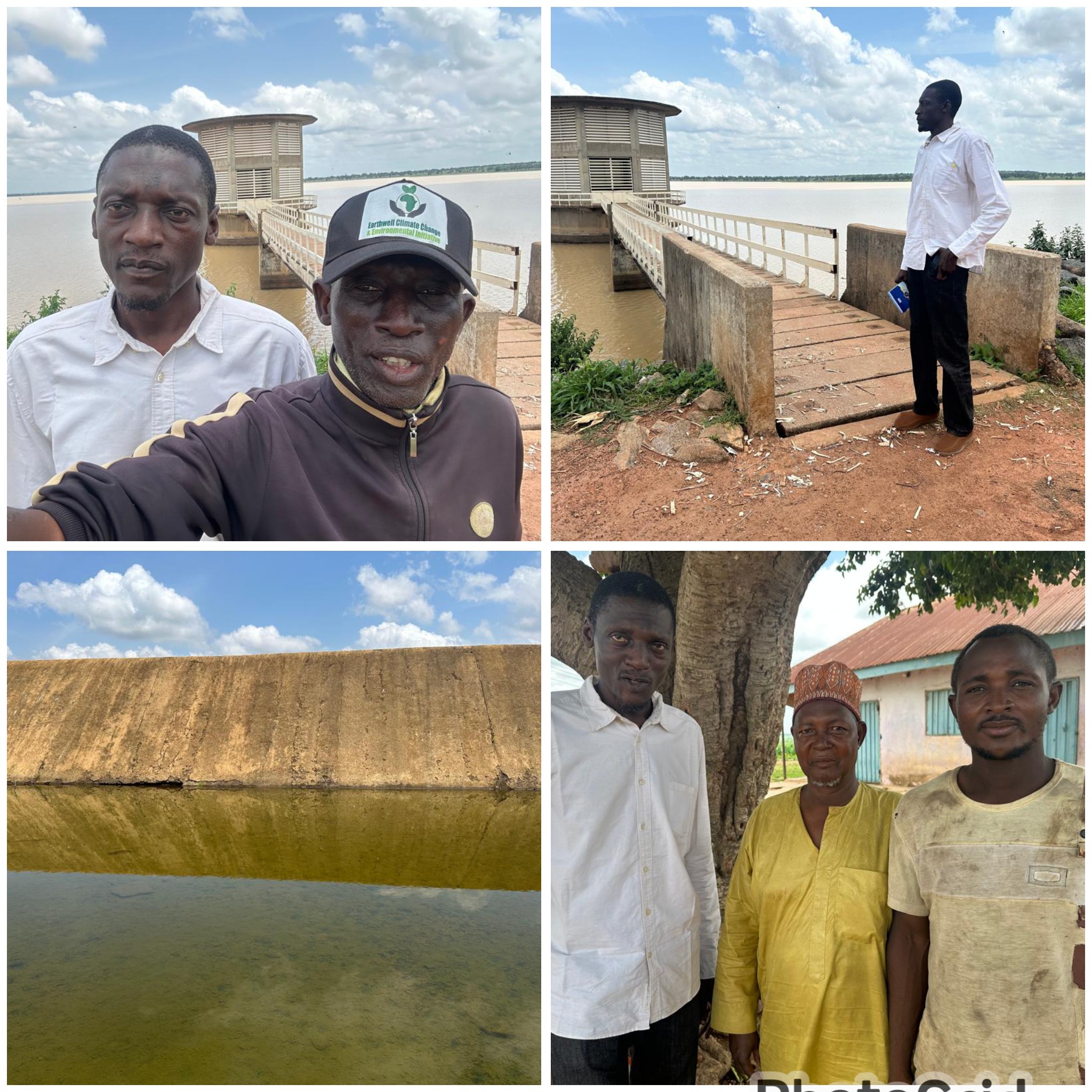
The clarification followed an on-the-spot assessment of the dam by investigative journalists on Monday, August 24, 2026, after photographs and claims concerning the facility circulated on social media.
During the visit, normal farming and fishing activities were observed around the dam, while residents said their immediate concern was the poor condition of the road connecting their communities to major towns and markets.
The approximately 14-kilometre road from Maraban-Jos to Kangimi Dam was described by residents as severely degraded, making the movement of farm produce, fish and other commodities difficult and costly.
A farmer and fisherman resident near the dam, Mallam Shamsu Abubakar, said he was aware of the reports circulating online but had not been alarmed by them.
Abubakar, who said he had farmed and fished around the facility for several years, described the dam as an important source of livelihood for residents.
He, however, called for the dredging of the dam to increase its water-storage capacity, while urging the government to rehabilitate the access road.
According to him, improved road infrastructure would reduce transportation costs, minimise losses and enable farmers and fishermen to take their products to larger markets.
He recalled that a minor crack had developed at the dam about eight years ago during the administration of former Governor Nasir El-Rufai, but said the defect was subsequently repaired.
Abubakar added that several government officials had visited the facility following the emergence of the recent reports on social media.
Another farmer from Gwauro community, Mallam Jibril Isa, said residents continued to engage in both dry-season and rainy-season farming around the dam.
Isa described the facility as important to agricultural activities in the area and advocated regular dredging to improve its water-retention capacity.
He said the social media reports had not disrupted farming activities but urged the government to combine maintenance of the dam with rehabilitation of the road network.
For Mallam Adamu Galadima, a resident of Rugugi-Gwauro community, the major challenge confronting residents was poor access to markets and essential services.
Galadima said many households depended on the cultivation of rice, maize, sweet potatoes and other crops, but poor roads often made transportation difficult.
He said residents sometimes resorted to tipper trucks, machines and bicycles to move agricultural produce, urging the Kaduna State Government to rehabilitate the road.
He noted that better road access would not only improve agricultural transportation but also ease residents’ access to hospitals, schools and other essential services.
Similarly, 29-year-old Mallam Usman, a resident of Ruhugi-Gwauro, said the reported dam collapse had not generated significant concern among residents because the condition of the access road remained their more pressing challenge.
He described Kangimi Dam, which he said had served surrounding communities for decades, as beneficial to the local population and called for sustained government intervention.
Kaduna Government Dismisses Collapse Report
Meanwhile, the Kaduna State Government has assured residents that Kangimi Dam has neither collapsed nor shown evidence of an active structural failure.
The government’s position followed the circulation of reports and photographs on social media alleging that the facility had collapsed or was at risk of imminent failure.
In a statement signed by the Permanent Secretary, Ministry of Public Works and Infrastructure, Alhaji Ashiru Abdu Na Abdu, the government explained that some of the images being circulated were connected to structural concerns previously identified at the facility in 2015/2016.
According to the statement, the concerns were linked to ageing infrastructure and pressure associated with heavy rainfall and were subsequently addressed through emergency remedial works undertaken by the Ministry.
The government said the dam had remained subject to routine monitoring and maintenance, stressing that there was currently no evidence of active structural failure.
It added that plans were underway to strengthen the facility’s monitoring system through additional safety measures, including automated water-level gauges, early-warning sirens and telemetry systems.
The government further disclosed that a joint technical inspection involving the Federal Ministry of Water Resources and Sanitation and the Kaduna State Government was scheduled for August to assess the facility and determine additional measures required to enhance its safety.
ACR Clarifies Fact-Finding Mission
African Climate Reporters (ACR) has also clarified that its fact-finding visit to Kangimi Dam was conducted on Monday, August 24, 2026, after the reports concerning the facility had already circulated on social media.
The organisation rejected claims suggesting that its visit preceded the emergence of the reports, describing such claims as inaccurate.
ACR commended the Kaduna State Government for responding to concerns surrounding the condition and safety of the dam.
It also acknowledged the clarification issued by the Kaduna State Ministry of Public Works and Infrastructure on August 20, which addressed reports alleging that the facility had collapsed.
The organisation said the government’s response provided useful context on the historical structural concerns at the dam and helped reassure residents that there was no evidence of an active structural failure at the time of the assessment.
ACR urged journalists, bloggers and media organisations to prioritise verification, field reporting and evidence-based journalism when reporting issues capable of generating public anxiety.
It warned that the circulation of unverified information could cause unnecessary panic and confusion, stressing that responsible journalism requires claims of public interest to be subjected to proper fact-checking before publication.