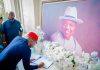
The tragic death of Unity Ekpevbughe Adeda, a Deputy Director in the Delta State Ministry of Secondary Education, should trouble every Deltan.
But for the Urhobo people, it also brings to the surface much deeper questions that have been accumulating under the administration of Governor Sheriff Oborevwori.
Police have said that allegations surrounding Adeda’s death involve aides associated with Commissioner Kingsley Ashibogwu. One suspect has reportedly been arrested, others are being sought, and the Homicide Section is investigating.
We must allow that investigation to establish the facts. No commissioner, aide or other individual should be pronounced guilty without evidence and due process.
But there is another question that cannot simply be brushed aside:
Will the same standard of justice be applied here that has been applied when an Urhobo public official is involved?
Consider the recent case of Hon. Reuben Izeze, Commissioner for Works (Highways and Urban Roads).
Following allegations arising from an altercation, Izeze was suspended from office, arraigned and remanded in a correctional facility.
The machinery of government and justice moved.
That history makes the present case particularly important.
The question is not whether Commissioner Ashibogwu is guilty. That must be determined by evidence.
The question is whether the same urgency, transparency and institutional accountability will apply regardless of the ethnicity, political connections or position of those involved.
Urhobo people are entitled to ask that question.
And Adeda’s death brings us to a much bigger question:
Has the Urhobo nation been receiving equal respect, protection and consideration under the government of one of its own sons?
THEN THERE IS OKUAMA
We cannot discuss the treatment of the Urhobo people without remembering Okuama.
Following the horrific killing of 17 Nigerian soldiers in March 2024, the people of Okuama experienced devastation and displacement.
Governor Oborevwori did intervene.
His engagement contributed to the withdrawal of the military from the community in May 2024, and his administration established an IDP response and undertook reconstruction efforts.
Those actions should be acknowledged.
But they do not erase what followed.
Urhobo community leaders were detained by the military beginning in August 2024 and remained in custody without trial for an extraordinary period.
Families protested.
The community appealed for help.
Urhobo leaders demanded intervention.
Two detained community leaders were reported to have died in military custody.
Eventually, in June 2026, a Federal High Court in Warri ordered the unconditional release of the surviving detained leaders.
That history leaves a painful question:
How could leaders of an Urhobo community remain in military detention without trial for so long while Delta State was governed by an Urhobo son?
Governor Oborevwori did not order those military arrests, and it would be inaccurate to say that he personally imprisoned the Okuama leaders.
But leadership is also advocacy.
Leadership is influence.
Leadership is standing up forcefully when your citizens’ fundamental rights are at stake.
And Urhobo people have every right to ask whether everything politically, constitutionally and publicly possible was done to secure justice and due process for Okuama.
WHAT HAS POLITICAL “ALIGNMENT” WITH ABUJA DELIVERED?
This question became even more important when Governor Oborevwori moved from the PDP to the APC and aligned his administration politically with President Bola Tinubu’s Federal Government.
We were told about the importance of political alignment.
Very well.
What has that alignment delivered when fundamental Urhobo interests are at stake?
Where was its influence during the prolonged detention of the Okuama leaders?
How has it strengthened the voice of Delta Central in Abuja?
How has it translated into greater protection, justice and federal attention for Urhobo communities?
Political alignment should mean more than politicians belonging to the same party.
It should produce tangible results for the people.
WHAT ABOUT THE TREATMENT OF URHOBO LEADERSHIP?
There is another uncomfortable question.
Whatever our individual political affiliations, Urhobo has produced leaders who have occupied some of the highest positions in Delta State and Nigeria.
They will not always agree.
They should not always agree.
But disagreement should not require the destruction or humiliation of one another.
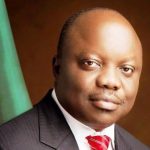
Former Deputy Senate President Senator Ovie Omo-Agege is an Urhobo son who occupied one of the highest legislative offices in Nigeria.
Governor Oborevwori has publicly said that Omo-Agege “cannot be trusted” and accused him of betraying former political benefactors. Omo-Agege and his allies, in turn, have accused the governor’s political camp of marginalising established APC stakeholders.
These are political accusations from opposing sides, not established facts.
But the larger question for Urhobo remains:
Are we building our collective political strength—or systematically tearing down every alternative centre of Urhobo leadership?
Today it may be Omo-Agege.
Tomorrow it may be Senator Ede Dafinone.
Another day it may be another respected Urhobo leader.
No governor should expect every Urhobo leader to surrender his independent political voice simply because the governor is also Urhobo.
Our present leaders deserve respect.
Our past leaders deserve respect.
And our political diversity should be a source of strength—not an excuse for political elimination.
OUR ROYAL FATHERS MUST REMAIN ABOVE PARTISAN POLITICS
The same principle must apply to our traditional institutions.
The Forum of Urhobo Traditional Rulers recently endorsed Governor Oborevwori for another term and reportedly indicated that other Urhobo governorship aspirants would not receive royal blessings.
Our royal fathers have every right to engage government on the welfare of their kingdoms.
But the Urhobo traditional institution is bigger than any governor and bigger than any election.
Our kings are fathers to APC members.
They are fathers to PDP members.
They are fathers to those belonging to no political party whatsoever.
Their palaces must remain places where every Urhobo son and daughter can enter without first presenting a political membership card.
We must therefore be extremely careful about anything that creates the appearance that our revered traditional institutions have become extensions of Government House.
Our royal fathers should unite Urhobo—not become instruments through which legitimate political alternatives are closed off.
THIS IS NOT ABOUT ATTACKING OTHER ETHNIC NATIONALITIES
Let nobody misunderstand this message.
This is not an attack on our Anioma, Ijaw, Isoko or Itsekiri brothers and sisters.
They are our fellow Deltans, and their rights and dignity deserve exactly the same protection we demand for ourselves.
This is about equal treatment.
If an Urhobo commissioner is accused of wrongdoing, investigate him.
If an Anioma commissioner is implicated by credible evidence, investigate him.
If an Ijaw, Isoko or Itsekiri official is implicated, apply exactly the same standard.
No selective justice.
No ethnic favouritism.
No political protection.
One Delta. One law. One standard of justice.
And that brings us back to Unity Ekpevbughe Adeda.
His death must not become another political story that dominates the news for a few days and then disappears.
Let the investigation be thorough.
Let the evidence determine responsibility.
Let anyone found culpable face the law.
And, most importantly, let the people of Delta State see that the standard of justice does not change according to someone’s ethnicity, political connections or relationship with Government House.
Adeda’s death has opened the door to questions that go far beyond one commissioner.
Okuama.
The treatment of Urhobo leaders.
Our relationship with the Federal Government.
The independence of our royal institutions.
And the broader question of whether Urhobo interests are being adequately protected under the present administration.
These questions deserve answers.
Not because Governor Sheriff Oborevwori is an Urhobo son.
Precisely because he is an Urhobo son.
Leadership does not require preferential treatment for one’s people.
But neither should one’s people feel politically expendable under the government of their own son.
Urhobo deserves respect.
Urhobo deserves protection.
Urhobo deserves equal justice.
And Delta State belongs to all of us.
Olorogun (Dr.) Abel Dafiaghor