By Patrick Ochei
The Palace of the Obi of Issele-Uku, HRM Agbogidi Obi Nduka, JP, MNSE, has intensified efforts to promote preventive healthcare by encouraging residents to undergo regular medical checks for hypertension, diabetes, high cholesterol and other health conditions.
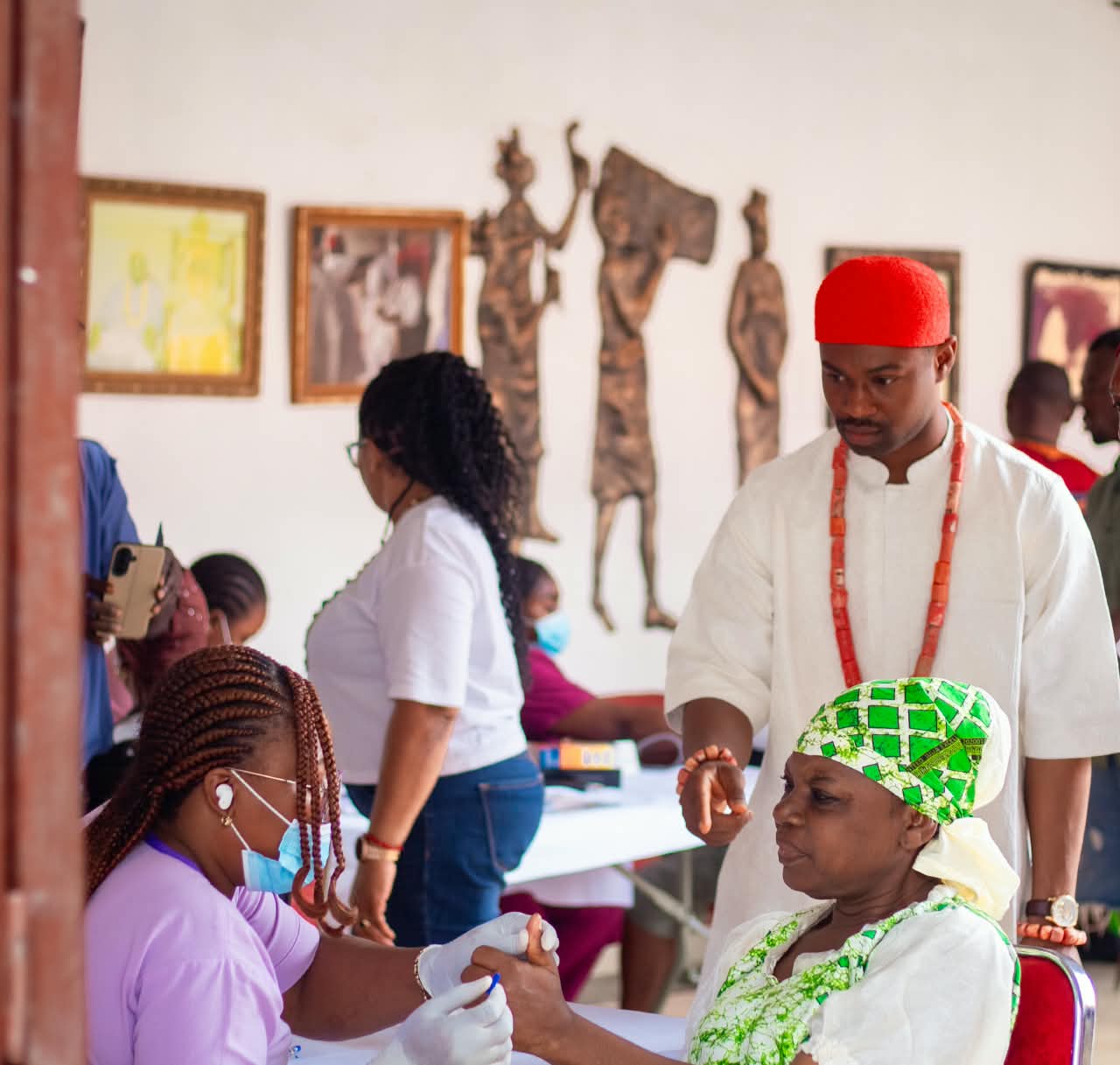
The monarch made the call during a free medical outreach held at the Issele-Uku Royal Palace on Friday, August 21, 2026, where residents were screened and educated on the importance of early detection and proper medical management of illnesses.
Obi Nduka said the initiative was designed to deepen health awareness within the community and encourage residents to seek professional medical attention whenever they experience health challenges.
While acknowledging that evil exists in society, the monarch cautioned against attributing every illness to spiritual causes without first seeking medical evaluation.
He stressed that proper examination and diagnosis were essential to determining the actual causes of health conditions and ensuring that appropriate treatment was administered.
The medical outreach featured a United States-based medical expert, Dr. Augustine Nwabueze, as Chairman. He was represented at the programme by Dr. Ezieke.
Speaking during the health talk, Dr. Ezieke urged residents to make routine health screening part of their lifestyle, particularly by monitoring their blood pressure and blood sugar levels.
He also advised participants to undertake relevant laboratory tests as recommended by medical professionals, noting that regular checks could facilitate early detection and effective management of potentially serious health conditions.
The exercise was supervised by the Welfare Officer of the Issele-Uku Development Union (IDU), Ms. Ebele Isebor, and attracted a large number of residents who participated in the screening exercise.
The outreach also provided residents with an opportunity to ascertain their health status, particularly in relation to hypertension and diabetes.
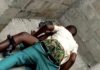
The initiative was partly informed by concerns surrounding “Acha-Ele” (leg wound), which had previously generated considerable anxiety in Issele-Uku and was sometimes attributed to spiritual attacks.
Through the medical intervention, the palace sought to promote a more informed approach to health challenges by encouraging residents to undergo appropriate medical examinations before drawing conclusions about the causes of illnesses.
The programme ultimately highlighted the importance of preventive healthcare, early diagnosis and timely medical intervention in safeguarding the health and wellbeing of the Issele-Uku community.