By Abdullahi Alhassan
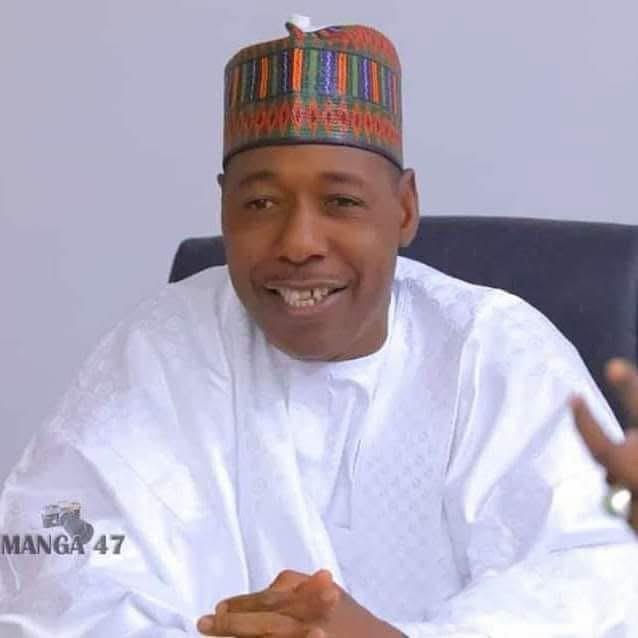
Borno State Governor, Professor Babagana Umara Zulum, has called for a stronger partnership with the African Union (AU) to address the challenge of out-of-school children, with about 800,000 children still requiring access to formal education in the state.
Zulum made the appeal on Thursday when he received a delegation led by the African Union Chairperson’s Special Envoy for Children Affected by Armed Conflict, Ambassador Jainaba Jagne, during a courtesy visit to the Government House in Maiduguri.
The governor disclosed that the number of out-of-school children in Borno had declined from more than two million approximately seven years ago to about 800,000, attributing the progress to sustained interventions while stressing the need for additional support to reach more vulnerable children.
He described education as a critical pillar of development and called on the AU to deepen its involvement in expanding access to learning opportunities for children affected by insurgency and other socio-economic challenges.
“Education is the bedrock for any meaningful development, and therefore one area that we need support from the African Union is to increase access for out-of-school children to be enrolled in schools,” he said.
Zulum explained that education remained central to his administration’s efforts to move Borno from emergency humanitarian interventions towards sustainable recovery, stabilisation and long-term development.
He noted that his government had invested in the reconstruction of schools, recruitment of teachers and expansion of educational opportunities, particularly for girls and children facing heightened vulnerability because of the protracted conflict.
According to him, safeguarding children goes beyond humanitarian assistance, as their welfare and development are closely linked to lasting peace, security and social stability.
“The protection of children is not merely a humanitarian obligation. It is a strategic investment in peace, security and sustainable development,” the governor stated.
He identified access to education, psychosocial support, vocational skills development and community acceptance as essential components of efforts to rehabilitate and reintegrate children affected by armed conflict.
The governor also reaffirmed his administration’s commitment to providing safe and inclusive learning environments in line with the principles of the Safe Schools Declaration.
Beyond education, Zulum urged the African Union and other development partners to support the strengthening of primary healthcare services, particularly in communities with limited access to advanced medical facilities.
He identified the availability of trained health personnel, modern medical equipment and improved nutritional services as key priorities in addressing preventable childhood illnesses and the persistent challenge of malnutrition.
“Our children deserve better attention. The issue of malnutrition is also there among our own society,” he said.
Zulum further emphasised the need to improve the economic circumstances of mothers and vulnerable households, arguing that stronger livelihood opportunities would enable families to provide better nutrition, education and other essential needs for their children.
“Enhancing the means of livelihood of the mothers will no doubt reduce the vulnerability of the children,” he added.
He welcomed the AU’s education-focused interventions and expressed his administration’s readiness to strengthen collaboration with the continental body, the Federal Government, the United Nations and other development partners in advancing education recovery, youth empowerment, child protection and peacebuilding.
In her remarks, Ambassador Jagne commended the Zulum administration for its efforts to rehabilitate and reintegrate children affected by insurgency, describing Borno’s experience as a potential source of lessons for other African countries confronting similar challenges.
The AU envoy disclosed that her engagements with the First Lady of Borno State, Associate Professor Falmata Babagana Umara Zulum, alongside visits to the Bulumkutu Interim Care Centre and Muna Vocational Centre, had provided an opportunity to assess the state’s initiatives for children affected by conflict.
“We have to take back to the African Union member states the amazing work that is being done here in Borno State,” Jagne said.
She added that the delegation had brought educational materials for more than 1,000 children, as well as hygiene supplies for adolescent girls undergoing reintegration, as part of efforts to support their welfare, dignity and successful return to community life.
The visit underscored the importance of sustained cooperation between Borno State and international partners in addressing the educational, health and social needs of children affected by years of conflict.