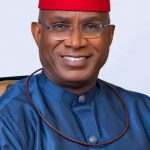

The governorship candidate of the African Action Congress (AAC) in Delta State, Engr. Isaac Eshor, has criticised the recent visit by a delegation of the state government to Ebu Community in Oshimili North Local Government Area, describing it as a political exercise lacking evidence of concrete commitment to development.
Eshor said the inspection of the badly deteriorated roads in the agrarian community appeared designed to calm growing public dissatisfaction rather than address the infrastructure challenges confronting residents.
He accused successive administrations in Delta State of neglecting Ebu and other rural communities, leaving residents to cope with poor roads, inadequate social amenities, weak healthcare infrastructure and limited economic opportunities.
“The government’s visit to Ebu was nothing more than political window dressing. Once again, the people have been given assurances that their roads will soon be fixed, but the question remains: why are these promises coming only after years of neglect?”»
Eshor argued that the condition of roads in Ebu reflects the wider infrastructure deficit across several rural communities in the state, despite Delta’s substantial revenue inflows.
He also called on the administration of Governor Sheriff Oborevwori to account for the utilisation of public funds, particularly federal allocations received by the state.
According to him, Delta State has received ₦4.119 trillion in federal allocations, excluding internally generated revenue, and residents deserve greater transparency on how the funds have translated into development projects.
“Deltans deserve to know how these resources have been spent and what direct impact they have had on the lives of ordinary citizens,” he said.»
The AAC candidate noted that poor road infrastructure was affecting agricultural production, restricting movement and undermining commercial activities in Ebu and neighbouring communities.
He urged residents not to judge government performance by official visits and promises but by completed projects and measurable improvements in their communities.
“Ebu deserves action, not endless inspections and assurances. Development must be visible, practical and impactful,” Eshor said.»
He identified functional roads, quality healthcare, potable water, improved educational facilities and sustainable economic opportunities as essential to transforming rural communities across Delta State.
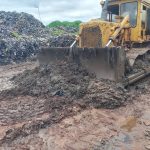
Eshor further expressed concern over the condition of the Ebu–Ezi–Ukala Road, which he described as an important link between the community, neighbouring towns and commercial centres.
He also drew attention to the deteriorating Ogbolu–Illah–Ebu Road, a federal route serving the area, saying the poor state of both roads had adversely affected transportation, commerce and agricultural activities.
The AAC governorship hopeful maintained that Delta State’s major challenge was not a shortage of resources but the failure to translate available revenues into tangible development.
He therefore called on the state and federal authorities to move beyond inspections and political engagements and commence the rehabilitation of the affected roads.
“The people have waited long enough. What they need now is action, not another cycle of political promises. Government must demonstrate its commitment through tangible projects that will improve the welfare of the people and stimulate economic growth,” Eshor added.»
He reaffirmed his commitment to rural development, transparency, accountability and equitable distribution of infrastructure across Delta State under an AAC-led administration.