
By Abdullahi Alhassan
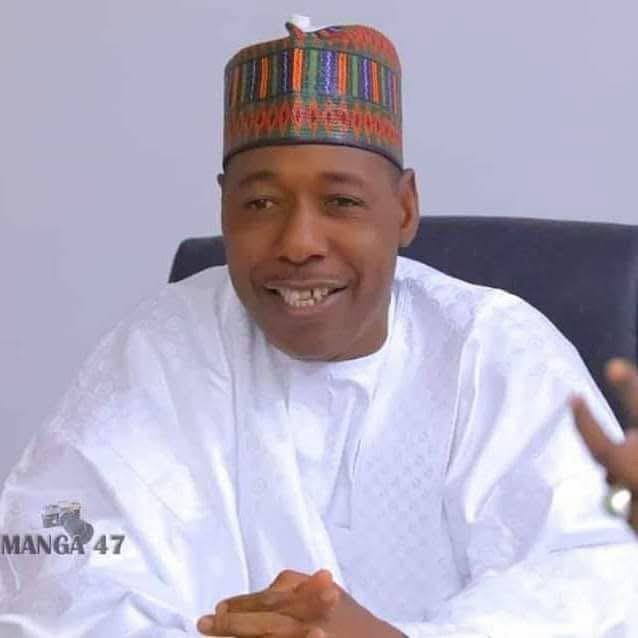
ABUJA — Borno State Governor, Prof. Babagana Umara Zulum, has called for an inclusive and transparent implementation of the Federal Government’s $1 billion Household Prosperity and Empowerment Social Protection Project (HOPE-SP), warning that social protection programmes must effectively reach the most vulnerable Nigerians.
Zulum made the call at the official launch of the HOPE-SP programme, organised by the Federal Ministry of Humanitarian Affairs and Poverty Reduction and unveiled by Nigeria’s First Lady, Senator Oluremi Tinubu, at the Banquet Hall of the State House, Abuja.
The Governor said poverty, illiteracy and social inequality were among the socio-economic factors capable of fuelling insecurity and instability, stressing that sustainable peace could not be achieved through military interventions alone.
He commended President Bola Ahmed Tinubu for introducing the initiative, describing HOPE-SP as an important step towards addressing the socio-economic conditions that contribute to vulnerability, insurgency and other forms of insecurity.
According to him, government must complement kinetic security measures with interventions that tackle the underlying economic and social challenges confronting vulnerable communities.
“The kinetic measures alone will not end the insurgency. Addressing the socio-economic and political dimensions of the crisis is critical to addressing insecurity challenges in Nigeria,” Zulum said.
Speaking on behalf of Nigerian governors, he assured the Federal Government of the commitment of subnational governments to supporting the implementation of the programme and ensuring that its objectives translate into tangible benefits for citizens.
However, the Borno governor identified ineffective implementation, particularly weaknesses in beneficiary selection, as a major challenge that could undermine the impact of social intervention programmes.
He therefore urged the Ministry of Humanitarian Affairs and Poverty Reduction and relevant implementing agencies to establish and adhere to clearly defined vulnerability criteria in identifying beneficiaries.
“I want to call upon the Ministry of Humanitarian Affairs to ensure that targeted beneficiaries are selected based on certain vulnerability criteria that will ensure inclusivity,” he said.
Zulum emphasised that transparency, fairness and inclusiveness must remain central to the implementation process to prevent deserving Nigerians from being excluded from the programme.
He congratulated the Federal Government, the Ministry of Humanitarian Affairs and Poverty Reduction and the implementing agencies on the launch, expressing confidence that HOPE-SP would provide sustainable support to vulnerable households.
The HOPE-SP initiative is designed to strengthen Nigeria’s social protection architecture by moving beyond short-term palliative measures towards sustainable economic empowerment and pathways out of poverty.
Zulum stressed that such a transition was particularly important in communities affected by conflict and socio-economic hardship, where immediate relief must be complemented by long-term opportunities for self-reliance and improved livelihoods.
He said sustained investment in social protection, economic empowerment and human development would contribute significantly to strengthening social stability and reducing vulnerability to insecurity.
The event was attended by the Minister of Humanitarian Affairs and Poverty Reduction, Dr. Bernard M. Doro; Minister of Budget and Economic Planning, Senator Abubakar Atiku Bagudu; and other government officials and stakeholders.