
By Abdullahi Alhassan, Kaduna
With the 2027 general elections drawing closer, journalists, civil society organisations (CSOs) and social media influencers have been urged to intensify efforts to combat misinformation, disinformation and other forms of information disorder capable of threatening Nigeria’s democratic process.
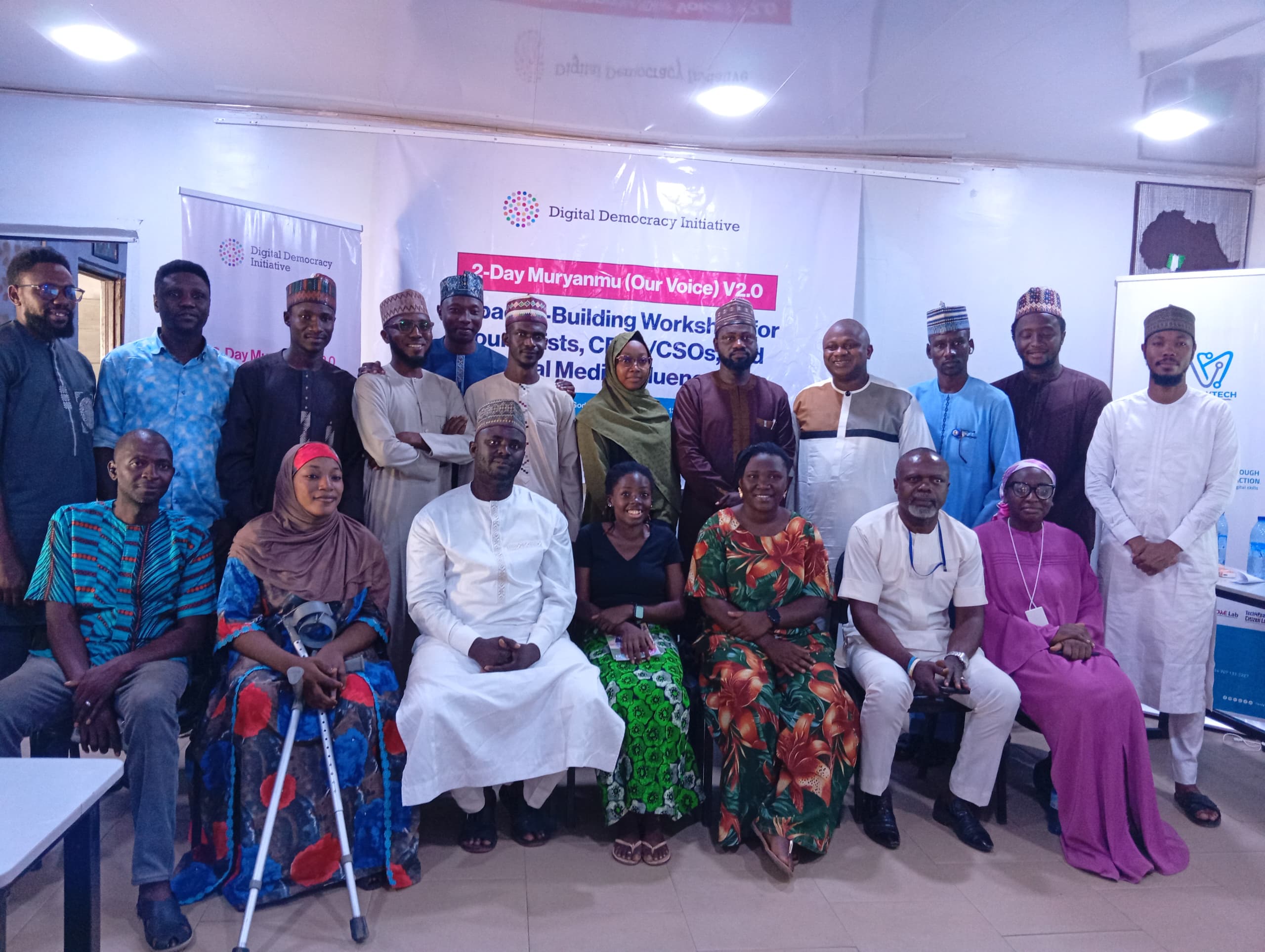
The call was made on Thursday at a capacity-building workshop organised by YandyTech Community in Kaduna, with support from the CIVICUS Digital Democracy Initiative under the Civic Tech Lab.
The workshop was designed to equip media practitioners, civic organisations and digital influencers with practical knowledge and tools to identify, verify and counter false information, particularly as political activities gather momentum ahead of the 2027 polls.
Speaking at the event, YandyTech’s Gender and Social Protection Officer, Hope Garba, warned that the consequences of false information go beyond online discussions, noting that misleading narratives could deepen existing societal divisions, fuel conflicts and undermine public trust.
Garba explained that while misinformation involves the unintentional sharing of false information, disinformation is deliberately disseminated to deceive, while malinformation involves the use of genuine information to cause harm.
She observed that the three forms of information disorder often exploit existing social tensions and leave damaging consequences within communities.
According to her, understanding the differences is essential for journalists and other stakeholders operating within the media and civic space, particularly in preventing the spread of hate speech, divisive narratives and public distrust.
Garba said the training was structured to provide participants with practical strategies for interrupting the circulation of false information within their respective areas of influence.
She urged journalists to subject information to proper verification before publication, while advising CSOs to adopt factual and sensitive communication approaches in their advocacy activities.
Social media influencers, she added, must demonstrate greater responsibility by ensuring that information is obtained from credible sources before sharing it with their followers.
“The expectation is that in the dispensation of their duties, they can stop the chain when it comes to them,” she said, stressing that responsible information sharing had become an important civic responsibility in the digital age.
She further challenged participants to prioritise accuracy over speed, avoid sensationalism and promote narratives capable of strengthening peaceful coexistence and national cohesion.
A major highlight of the workshop was the presentation of **Muryammu 2.0**, an artificial intelligence-assisted civic technology platform developed to promote voter education and provide citizens with access to credible electoral information ahead of the 2027 general elections and beyond.
Presenting the platform, YandyTech’s Monitoring, Evaluation and Learning Officer, Muhammad Idris Ibrahim, said Muryammu 2.0 was designed to make reliable election-related information easily accessible through a WhatsApp chatbot and a dedicated web portal.
He explained that the platform features sections providing electoral information, candidate profiles and election results, with its results component powered by data verified by the Independent National Electoral Commission (INEC).
Ibrahim said users could search for their polling units, obtain directions, access information about candidates and political parties, and review previous and forthcoming election results.
He also highlighted the platform’s ‘Hotzones’ feature, which maps reports of intimidation and other election-related incidents to help citizens identify potential security risks during the electoral process.
According to him, an integrated AI chatbot would also respond to election-related enquiries using verified information, thereby reducing citizens’ dependence on rumours and unsubstantiated claims.
Ibrahim said journalists, community-based organisations, CSOs and social media influencers were deliberately selected for the engagement because of their close relationship with communities and their influence on public information consumption.
He maintained that their adoption and promotion of the platform would significantly improve voter awareness and encourage responsible civic participation.
“If they can go out and tell citizens that these are verified platforms that we have crosschecked, it will go a long way in keeping voters informed and educated and making us responsible citizens. Informed citizens make an informed country,” he said.
Also speaking, YandyTech’s Programme and Resource Mobilisation Officer, Mandie Jeremiah, said the workshop, supported by Civic Hive through the Digital Democracy Initiative, was aimed at familiarising stakeholders with Muryammu 2.0 and encouraging its adoption as a reliable source of civic and electoral information.
Jeremiah explained that the engagement was intended to give participants firsthand experience of the platform and deepen their understanding of its features so they could effectively introduce it to their respective communities.
She disclosed that Muryammu provides information on political party manifestos, electoral procedures, polling unit locations using PVC data, candidate profiles, party affiliations and identified electoral flashpoints.
She added that another objective of the initiative was to establish a network of informed stakeholders committed to challenging fake news, hate speech and other forms of information disorder through the dissemination of verified electoral information.
Jeremiah urged participants to take ownership of the initiative by creating awareness about the platform, integrating its resources into their professional and community engagements, and encouraging citizens to utilise it.
She also emphasised the need for participants to exercise caution before forwarding or reposting information, insisting that verification must remain a priority in all forms of public communication.
The workshop underscored the growing importance of credible information, digital literacy and responsible public engagement in safeguarding Nigeria’s electoral integrity as political activities intensify ahead of the 2027 general elections.