
By Abdullahi Alhassan, Kaduna
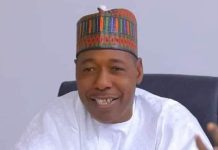
A chieftain of the All Progressives Congress (APC), security analyst and senatorial aspirant, Dr. Sani Abdullahi Shinkafi, has warned that worsening insecurity in Zamfara State could undermine the party’s electoral fortunes in the 2027 general elections.
Shinkafi, also known as Wamban Shinkafi, gave the warning while reacting to the reported attack on the convoy of the Zamfara State Deputy Governor in Bukkuyum Local Government Area, describing the incident as a disturbing indication of growing public anger over persistent banditry and the government’s handling of the security crisis.
Speaking in an interview in Kaduna, he said the ability of villagers to block roads and confront the deputy governor’s convoy despite the presence of security personnel underscored the depth of frustration among residents.
“That attack is a serious danger signal. It shows there is serious anger on the land,” Shinkafi said.
He added that the protesters’ actions, including blocking access routes and chanting slogans against the state government and the APC, reflected the extent to which insecurity had eroded public confidence.
Zamfara Roads Becoming Increasingly Dangerous
The security analyst linked the Bukkuyum incident to what he described as a broader deterioration of security across the state, alleging that bandits had expanded their activities across several local government areas.
He cited an incident in which, according to him, more than 10 security personnel were killed by bandits while escorting travellers to a market days before the attack on the deputy governor’s convoy.
Shinkafi expressed concern over the risks confronting motorists and other road users, listing several routes connecting Gusau with Tsafe, Anka, Kaura Namoda, Shinkafi, Zurmi and other communities as particularly dangerous.
“Zamfara, all the 14 local government areas are under siege,” he said, warning that residents travelling between communities faced serious security threats.
He also identified routes linking Shinkafi to Sokoto and Isa, as well as those connecting Gusau to Marafa, Nahuche, Mayanchi, Gummi, Bagega and Bukkuyum, among others, as areas requiring urgent security intervention.
‘Gusau Has Become a Supermarket for Bandits’
Painting a grim picture of life in the state capital, Shinkafi alleged that residents were increasingly exposed to killings, abductions and ransom demands, while insecurity continued to disrupt farming, trading and education.
According to him, many residents could no longer carry out their daily activities without fear, while some communities were struggling under alleged levies imposed by armed groups.
“People are killed on a daily basis. People are kidnapped from their homes. Payment of ransom is persistent. They cannot go to their farms, they cannot go to market, and all the schools are closed,” he said.
He further questioned the effectiveness of the security presence in Gusau, arguing that the continued attacks and abductions had left residents feeling vulnerable despite the deployment of military personnel.
“Gusau now feels like a supermarket for bandits,” he said.
Shinkafi acknowledged the efforts of frontline security personnel but maintained that they required greater institutional support to confront the scale of the challenge.
He alleged that security operatives were understaffed, inadequately equipped and insufficiently motivated, while questioning whether increased budgetary allocations for security had translated into measurable improvements on the ground.
“Government claims more budget has been proposed for security, but the performance does not match the figures appropriated,” he said.
Shinkafi Rejects Negotiations, Advocates Stronger Military Action
On measures to address the crisis, the APC chieftain advocated intensified military operations against armed groups, arguing that negotiations with bandits could encourage further criminality.
“The only way forward is to apply a total military approach against these bandits in their enclaves. If you say you want to negotiate with bandits, you are rewarding criminality,” he said.
However, he stressed that military action alone would not resolve the underlying factors contributing to insecurity.
He called for complementary socio-economic measures to tackle unemployment, poverty, drug abuse, weaknesses in the judicial system, inadequate infrastructure, the proliferation of small arms and the effects of climate change.
According to him, a sustainable response must combine effective security operations with interventions that address the conditions enabling criminal groups to thrive.
Appeals to Tinubu, Zamfara Governor
Shinkafi called on President Bola Ahmed Tinubu to intensify federal intervention in Zamfara through the deployment of additional troops and other necessary security resources.
He also urged Governor Dauda Lawal to remain in the state and give sustained attention to efforts aimed at restoring security and protecting residents.
“This is the time for Mr. President to sit up, and for the Governor to come back and stay at home to find a lasting solution. The time for junketing all over the world is over,” he said.
The APC chieftain warned that the party could face electoral consequences if the security situation remained unresolved ahead of the 2027 general elections.
He maintained that voters might use the government’s handling of insecurity to determine their choices at the ballot box, stressing that his criticism was informed by his experience as a party member and political aspirant.
“If care is not taken, God forbid, the electorate will use this insecurity as a yardstick to vote against APC. I am a member of APC and a senatorial aspirant, but I am telling you the truth,” he said.
Security Concerns Mount Ahead of 2027
The reported confrontation involving the deputy governor’s convoy comes amid continuing concerns over banditry, abductions and attacks on communities in Zamfara State.
Shinkafi’s remarks reflect growing concerns about the political implications of persistent insecurity, particularly in rural areas where residents depend heavily on farming, local markets and road transportation for their livelihoods.
While government officials have maintained that security conditions are improving in some areas and that additional resources are being committed to tackling the crisis, Shinkafi disputed that assessment, insisting that the experiences of residents presented a different picture.
The extent to which security interventions will improve conditions across the state is likely to remain a major issue for residents and political stakeholders as the 2027 elections approach.