By Abdullahi Alhassan, Kaduna
The German Embassy in Abuja has indicated plans to consider a second phase of its women’s interfaith leadership and peacebuilding project in Kaduna State in 2027, following the successful completion of a nine-month intervention that reportedly reached more than 5,000 direct beneficiaries.
The project, titled *“Strengthening Women Interfaith Leadership for Human Rights, Transitional Justice and Democratic Stability,”* was implemented by the Interfaith Mediation Centre (IMC), Kaduna, with support from the German Embassy.
The initiative officially ended on Thursday with a Human Rights Policy Advocacy Summit, which also featured the screening of a documentary, *“Bound by Faith and Driven by Justice.”*
Speaking at the closing ceremony, the Deputy Ambassador of the German Embassy, Mr. Johannes Lehne, described the intervention as impactful, noting that it had strengthened awareness of human rights, improved access to justice and promoted peaceful coexistence across communities in Kaduna State.
He explained that the programme equipped participants with practical competencies in mediation, restorative justice and the identification of early warning signs of conflict, while fostering stronger relationships between grassroots communities and government institutions.
Lehne disclosed that the embassy was exploring the possibility of supporting a second phase in 2027, citing the project’s emphasis on interfaith cooperation and women’s leadership as important components of sustainable peacebuilding.
“Women are central to sustainable peacebuilding. When women lead dialogue and mediation, communities are more stable,” he said.
The German diplomat commended the Kaduna State Government, traditional institutions, religious leaders and participating communities for their cooperation and commitment to the programme.
In her remarks, the Kaduna State Commissioner for Women Affairs and Social Development, Hajiya Rabi Salisu, underscored the indispensable role of women in peacebuilding, human rights protection and community development.
She advocated greater inclusion of women in governance and improved access to justice for survivors of violence, assuring that the state government remained committed to empowering women and other vulnerable groups.
The commissioner disclosed that Kaduna State currently operates four Sexual Assault Referral Centres to provide medical, legal and psychosocial support to survivors of gender-based violence.
She challenged stakeholders to move beyond discussions and translate the summit’s recommendations into actionable policies, enduring partnerships and programmes capable of strengthening women’s leadership and promoting peaceful coexistence.
Representing Governor Uba Sani, the Director-General of the Kaduna State Bureau of Interfaith, Barrister Tahir Umar Tahir, described the initiative as particularly significant ahead of the 2027 general elections.
He urged beneficiaries to deploy the knowledge and skills acquired to strengthen community relations, promote religious tolerance and prevent conflicts, stressing that the project covered the state’s three senatorial districts and expanded grassroots participation in peacebuilding.
Earlier, the Project Coordinator, Mr. Samson Auta, disclosed that although the initiative was initially designed to accommodate 120 participants, its reach expanded significantly, with more than 5,000 people benefiting directly and several others indirectly.
Auta said between nine and 12 activities were organised during the nine-month implementation period, focusing on mediation, restorative justice, constructive dialogue and conflict prevention.
According to him, the intervention helped bridge religious and ethnic divides, strengthened community relationships and improved collaboration between residents and government institutions.
He added that participating communities had become better equipped to recognise early warning signals of potential conflicts and promptly communicate emerging threats to relevant authorities.
Also speaking, the UN Peace Ambassador and General Overseer of Christ Evangelical and Life Intervention Ministry, Pastor (Dr.) Yohanna Buru, described the initiative as a valuable platform for deepening interfaith understanding and strengthening religious harmony.
Buru called for the expansion of the programme’s peacebuilding lessons beyond Kaduna State to other parts of Northern Nigeria, emphasising the importance of sustaining unity, mutual understanding and religious tolerance.
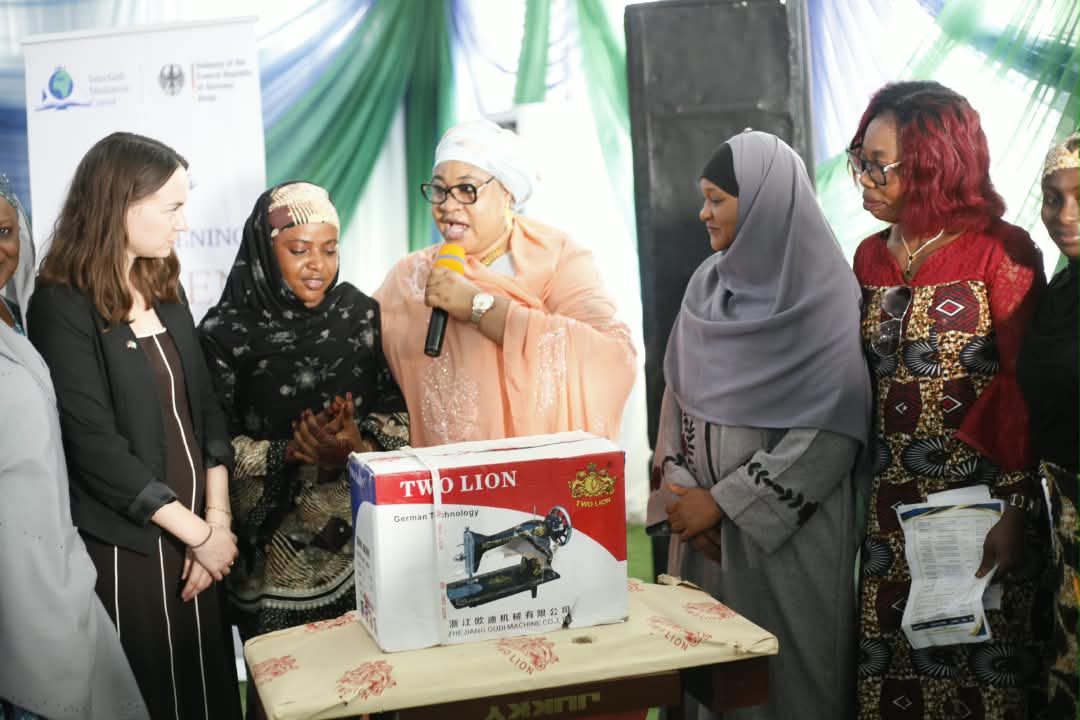
Highlights of the summit included traditional dance performances and the presentation of a sewing machine and a grinding machine to two beneficiaries, Khadijah Musa and Sarah Ibrahim, by the Commissioner for Women Affairs and Social Development.
The presentations were aimed at supporting the beneficiaries’ livelihoods and promoting economic empowerment as part of the broader objectives of the intervention.