
By Abdullahi Alhassan, Kaduna
Nashmir College, Kaduna, has called on the Federal and State Governments to introduce compulsory entrepreneurship education across Nigeria’s educational institutions, from primary to tertiary levels, as part of efforts to address the growing challenge of youth unemployment.
The institution made the appeal during its 2026 Student Entrepreneur Week, an initiative designed to equip students with practical skills, innovative thinking and the ability to identify societal challenges, develop solutions and transform them into sustainable business ventures.
The Principal of the college, Dr. Dina Isah, said Nigeria must move beyond an educational system that prepares young people exclusively for white-collar employment, particularly when available government and private-sector jobs cannot accommodate the increasing number of graduates entering the labour market.
Speaking at the event attended by parents, guests and members of the school community, Isah explained that the institution had, over the past six years, integrated entrepreneurship into its academic programme to prepare students for opportunities beyond the conventional classroom.
According to her, the objective is to raise a generation of young Nigerians who can identify business opportunities, create employment and become financially independent rather than depend solely on paid employment.
She cited China’s approach to innovation and business development as an example of how identifying everyday challenges could create economic opportunities.
Using Nigeria’s electricity challenges as an illustration, she noted that entrepreneurs had introduced generators as alternatives to unreliable power supply and subsequently developed inverter technology to provide more efficient solutions.
“That is entrepreneurial thinking. Think of a problem, bring a solution, and turn it into a business; turn that business into wealth,” she said.
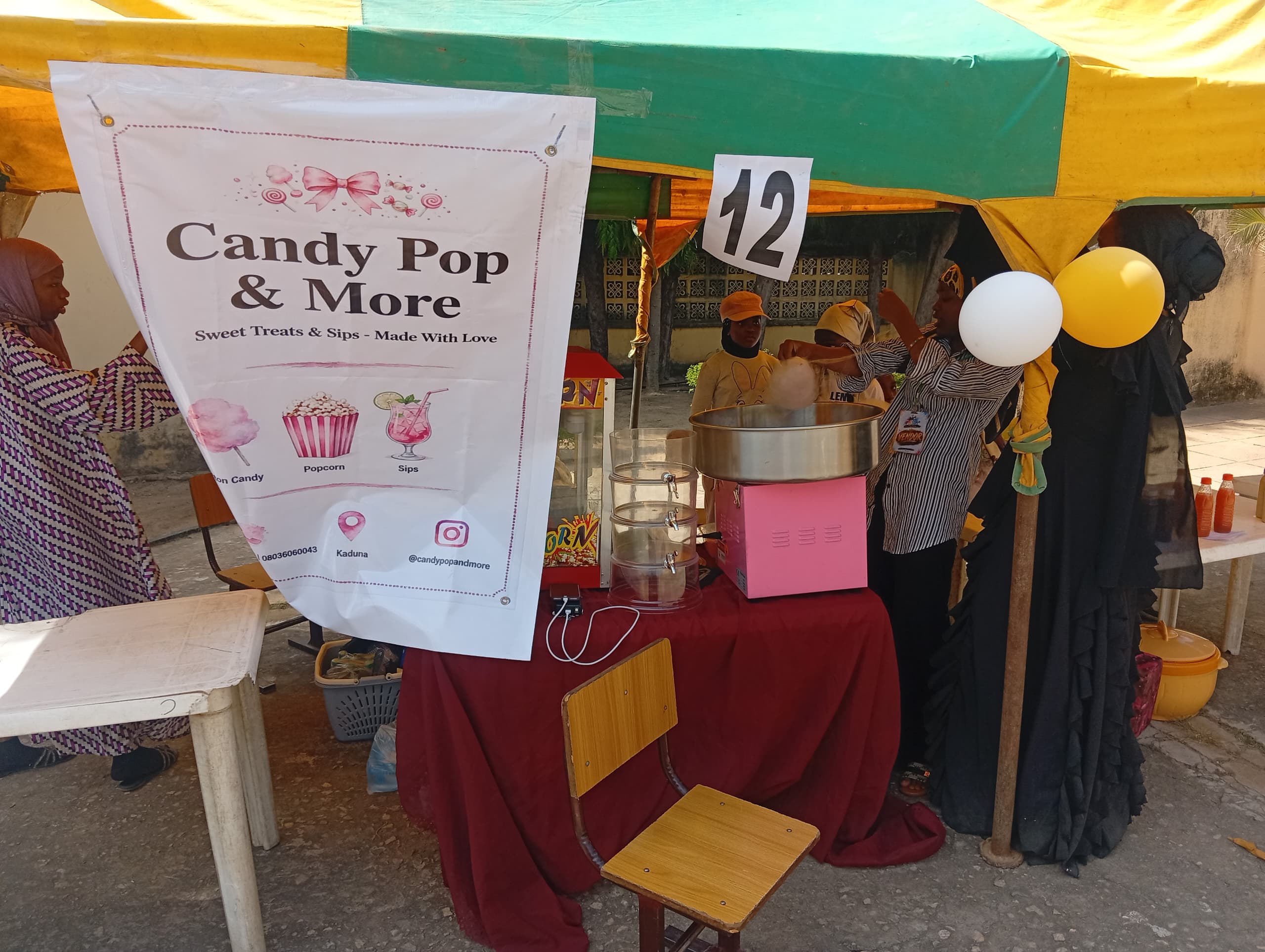
The week-long programme climaxed with the MTN Fiesta 1.0, during which students, organised according to their respective classes, pooled financial resources to produce and market different goods, including lip gloss, beverages, food items and other creative products.
Isah disclosed that the college’s six-year entrepreneurship programme had already produced more than 10 young business owners operating in different sectors, including tailoring, baking, catering, fashion design, fish farming and poultry production.
She said the benefits of the initiative had extended beyond the school environment, with some former students successfully deploying the skills acquired to generate income while pursuing higher education.
The principal recalled instances where university students who could no longer depend on regular financial support from their parents had leveraged their entrepreneurial experience to participate in exhibitions and business fairs, where they established stalls and generated income.
She added that the initiative had empowered several students, including her daughter, to develop financial independence at an early age.
Also speaking, a teacher at the college, Mrs. Blessing Bright, said the programme was designed to expose students to practical skills, arts, crafts and other productive ventures that could serve as alternative sources of livelihood after graduation.
Bright explained that the growing unemployment situation in Nigeria made it imperative for schools to prepare students not only for academic success but also for economic realities.
She maintained that entrepreneurship education would enable young people to become financially stable, diversify their sources of income and create opportunities for themselves, even when they eventually enter the competitive labour market.
The Head Boy of the college, Haruna Gambo, also encouraged students to embrace vocational and entrepreneurial skills as additional avenues for economic independence without compromising their academic pursuits.
Gambo argued that young people should understand that career success was not limited to securing conventional office employment, stressing that acquiring a practical skill could provide a reliable means of livelihood.
He distinguished entrepreneurship from ordinary buying and selling, explaining that genuine entrepreneurship involved identifying a problem, developing a solution and transforming that solution into a viable business.
Using barbing as an example, he observed that a young person who acquires the skill could eventually establish a business with the necessary capital, regardless of whether the initial investment was substantial.
However, he cautioned students against abandoning their academic responsibilities in pursuit of business interests, describing education as the foundation upon which practical skills and entrepreneurial ambitions should be built.
Similarly, an SS2 student, Oluwapelumi Grace Omisakin, who spoke at the grand finale, said entrepreneurship education was essential in preparing young people for a future where conventional employment opportunities were increasingly uncertain.
Omisakin observed that while schools taught important subjects such as Mathematics and Biology, students also needed practical knowledge and the confidence to create their own pathways to success.
She said entrepreneurship offered young people the opportunity to take responsibility for their future rather than depend entirely on the availability of office jobs.
In her closing remarks, Isah appealed to governments at all levels to consider adopting the college’s entrepreneurship model, particularly in public schools, where millions of young Nigerians could benefit from early exposure to business development and skills acquisition.
She maintained that with proper guidance, practical training and modest financial support, students could transform relatively small investments into substantial returns.
Citing examples from the school’s entrepreneurship programme, she disclosed that some students had reportedly turned an initial investment of ₦3,500 in lollipop production into between ₦30,000 and ₦40,000 within a school term.
She further argued that young people could achieve greater financial independence if they were taught to see business creation and innovation as viable alternatives to the traditional search for paid employment.
“If everybody changes the mindset of ‘I must look for a job’ and instead learns to turn ₦50,000 into ₦1 million, we will have more wealthy people and fewer beggars on the streets.
“There is nothing like skills, handwork and innovative thinking as a way out for Nigeria,” she said.