By Kenneth Orusi, Managing Editor
Delta State Governor, Rt. Hon. Sheriff Oborevwori, has said development becomes meaningful only when it reaches the grassroots and produces tangible improvements in the lives and working conditions of the people.
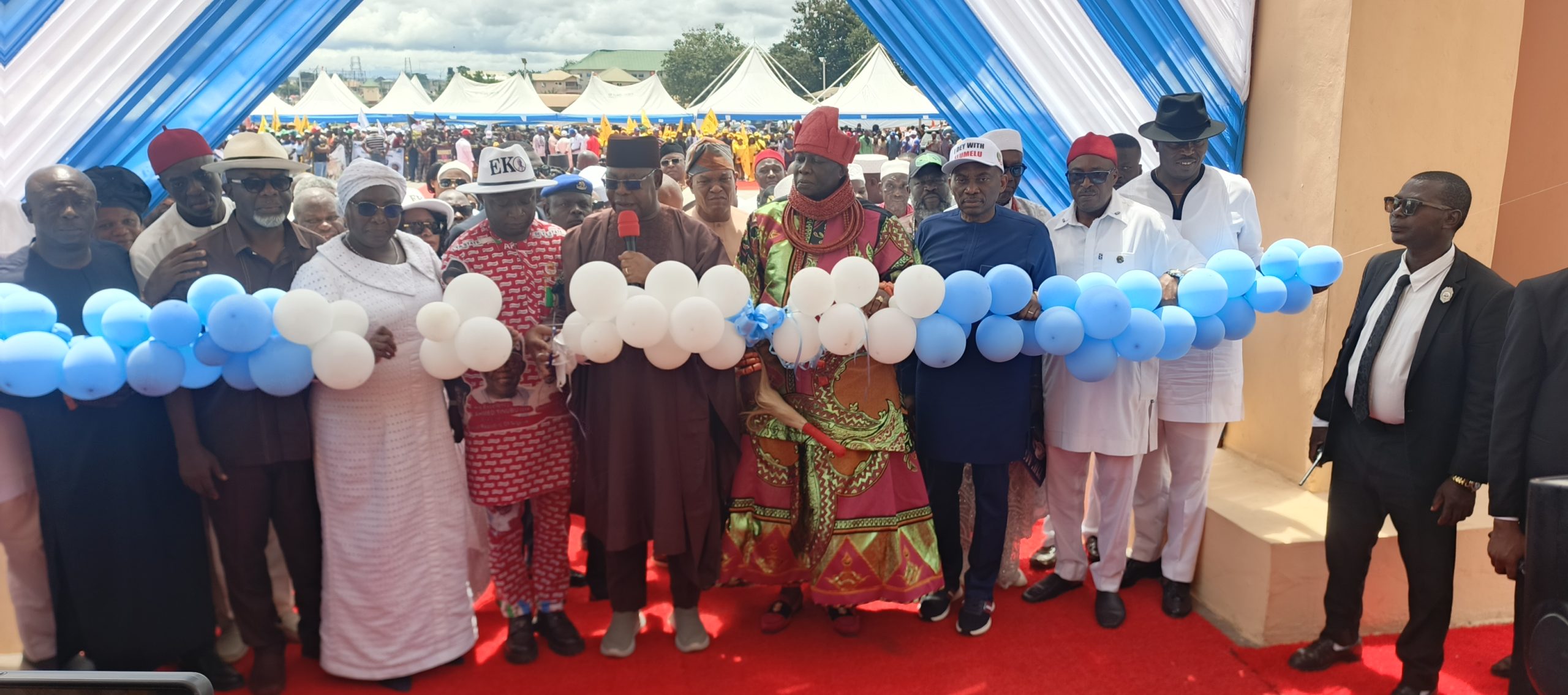
Oborevwori stated this on Thursday August 27, 2026, in Asaba while speaking at the commissioning of the newly completed administrative office complex and access road at the Oshimili South Local Government Council Secretariat.
Represented by his Deputy Governor, Sir. Monday Onyeme, the governor said his administration remained committed to providing infrastructure and public facilities that would strengthen governance and improve the quality of services available to residents across the state.
According to him, the projects at the Oshimili South Council Secretariat demonstrate the importance of providing standard infrastructure at the grassroots as a foundation for effective governance.
He noted that Oshimili South occupies a strategic position in Delta State, with Asaba serving as the state capital, an administrative hub, commercial centre and major gateway into the state.
Oborevwori said the newly completed office complex was designed to provide a modern and conducive working environment for council personnel, enhance administrative efficiency and improve staff productivity.
He added that the access road would improve accessibility to the council secretariat, ease traffic bottlenecks and strengthen connectivity within the surrounding community.
The governor commended the leadership of Oshimili South Local Government Council, contractors and engineers for delivering the projects to standard.
He also acknowledged President Bola Ahmed Tinubu for what he described as measures that had strengthened the financial capacity of local governments to meet their obligations to workers and execute development projects.
Oborevwori urged civil servants and other personnel who would use the new facilities to take ownership of the infrastructure and ensure its proper maintenance.
He said the state government would continue to execute projects across the 25 local government areas, particularly in areas capable of improving living conditions and strengthening public service delivery.
“Development is most meaningful when it reaches the grassroots and directly improves the lives and working conditions of our people,” the governor said.
Earlier, the Chairman of Oshimili South Local Government Council, Hon. Obi Exeyinli, said the new administrative complex was conceived out of the need to address the poor condition of offices occupied by legislators, civil servants and federal government agencies within the council secretariat.
He said the complex, which accommodates 110 offices, was designed to create a more functional and conducive environment for public administration.
Facilities within the complex include a modern Marriage Registry, Sick Bay, surveillance-equipped office, NYSC Secretariat and offices for the Nigeria Security and Civil Defence Corps, Nigeria Immigration Service, National Identity Management Commission, National Orientation Agency, Federal Road Safety Corps and National Population Commission.
The chairman also disclosed that space had been provided for a non-profit organisation specialising in the training and management of children with special needs, in line with the state’s “Every Child Matters” initiative.
He announced free marriage registration for the first 10 applicants following the commissioning of the facility.
The chairman said the newly constructed access lane, named after the Asagba of Asaba, H.R.M. Prof. Epiphany Chigbogu Azinge (SAN), would improve access to the secretariat and enhance the overall appearance and functionality of the council environment.
He described the projects as the fulfilment of a vision to provide workers and residents with facilities capable of supporting efficient public administration.
The council chairman urged personnel working in the new complex to uphold professionalism, integrity, accountability, discipline and dedication to duty, stressing that the ultimate value of the facility would be measured by the quality of services delivered to the people.
The event attracted government officials, traditional rulers, political leaders, community leaders, civil servants and other stakeholders.