By Norbert Chiazor, PhD
Delta North is arguably one of the most politically significant districts in Delta State, a compelling destination for political ambition and a constituency whose influence extends beyond its geographical boundaries.
Popularly known as Anioma, Delta North is home to Asaba, the state capital and a symbolic centre of Delta’s political identity. This makes the district’s 2027 senatorial contest particularly significant.
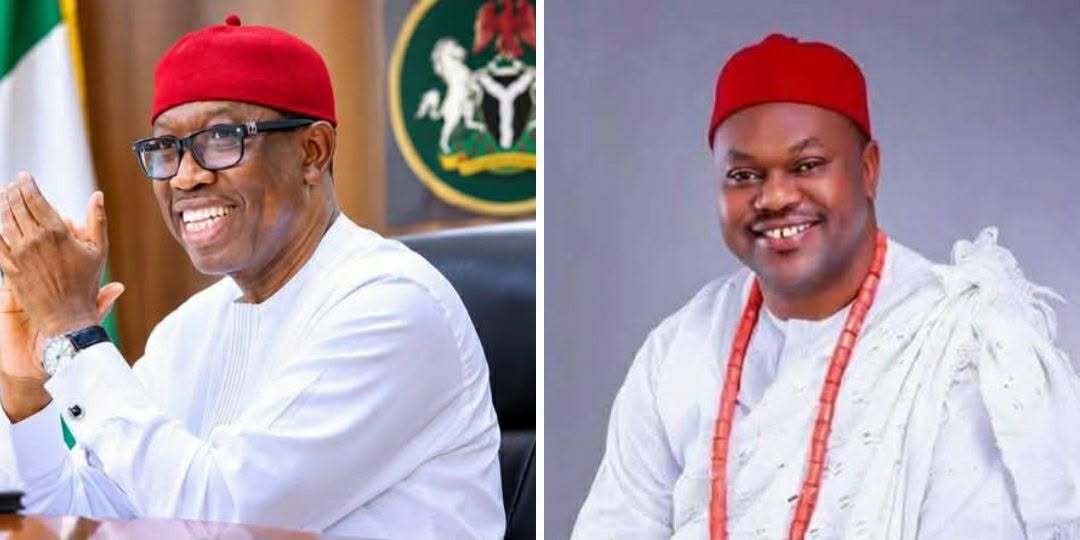
At the centre of the unfolding political equation is Dr Ifeanyi Arthur Okowa, the former governor of Delta State, who is associated with the All Progressives Congress (APC). His major challenger is expected to be former Speaker of the Delta State House of Assembly, Rt. Hon. Victor Ochei, who is associated with the Nigeria Democratic Congress (NDC).
The emerging contest presents an interesting chapter in Anioma’s political history. It is a moment of heightened visibility for Delta North, with two prominent political figures potentially seeking the mandate of the electorate.
Make no mistake about it: the Okowa-Ochei contest, as envisaged by this political analysis, is more than a clash of personalities. It is also a test of political experience, public recognition, established networks and individual records.
Both men have contributed to Anioma’s political history. Ochei has his credentials, but Chiazor argues that Okowa’s political experience and stature place him in a different category.
In contemporary Delta North politics, Okowa commands considerable recognition. His eight years as governor, political relationships and place in the district’s history have made him one of its most prominent political figures.
Like the colourful Ijele masquerade, Okowa remains a recognisable presence in Anioma’s political landscape, attracting admiration from supporters and criticism from opponents.
The 2014 Anioma Congress Factor
Okowa’s political journey received considerable attention in 2014 when the Anioma Congress, led by the late Asagba of Asaba, Professor Chike Edozien, undertook a screening exercise involving aspirants seeking the governorship of Delta State.
The exercise was reportedly intended to identify a suitable candidate who could represent Anioma’s interests in the governorship race.
The screening committee, chaired by respected technocrat Chief Philip Asiodu, was said to have considered Okowa’s personality, intelligence, political depth and acceptability in arriving at its assessment.
According to the account presented by Chiazor, the committee’s intervention was not intended to advance partisan interests but to help Anioma present a credible candidate for the governorship election.
Okowa subsequently became the first governor of Delta State from Anioma and served two terms between 2015 and 2023.
His tenure and political experience have since become important reference points in discussions about his standing in Delta North politics.
Politics, Experience And Political Pedigree
Politics, like many other spheres of public life, is influenced by experience, established relationships and previous accomplishments.
Chiazor illustrates this argument by comparing the political profiles of prominent figures in Delta North.
He suggests that a contest between Ochei and former House of Representatives member Ndudi Elumelu would invite consideration of their respective political records and levels of experience, particularly Elumelu’s established profile in the district.
The author also reflects on the 2023 House of Representatives election involving Elumelu and Ngozi Okolie, arguing that political experience and electoral circumstances can significantly shape the outcome of a contest.
Other political figures, including Dr Tony Nwaka, popularly known as Ide, and the political personality Chiazor describes as the elegant lioness of Ubulu-Uku, Ada Anioma, also feature in his broader reflections on political influence in the Aniocha-Oshimili axis.
The central point is that political prominence is rarely uniform. Different individuals command different levels of recognition, influence and organisational strength.
Every ladder has its levels, and every political journey has its peculiar milestones. While many may seek public recognition, their records and achievements differ.
In politics, as in life, track record matters.
Grassroots Support And The Weight Of Recognition
For Chiazor, the 2027 Delta North senatorial contest will be a test of political standing and the ability to translate established relationships into electoral support.
He identifies Okowa’s name recognition, organisational network and historical significance as important elements of his political profile.
Across Delta North and the wider state, Okowa’s years in public office have given him considerable visibility. His political relationships and experience in governance also form part of the profile that supporters may consider relevant to his senatorial ambition.
The author places particular emphasis on grassroots engagement, arguing that elections are influenced by the depth of a candidate’s connection with the electorate rather than campaign slogans, social media activities or sensational headlines alone.
In his assessment, Okowa’s established political network is a significant feature of the emerging contest.
However, the strength of that network and its eventual impact on the 2027 election will depend on several factors, including voter preferences, campaign organisation and the candidates’ engagement with constituents.
Ochei, meanwhile, brings his own political experience to the contest, particularly his tenure as Speaker of the Delta State House of Assembly.
His participation would ensure that the district’s voters have an opportunity to assess the records, proposals and leadership approaches of the contenders.
The Senate And The Expectations Of Anioma
Beyond the personalities and political calculations, the contest raises a fundamental question: what should Delta North expect from its next senator?
The Senate occupies a strategic position in Nigeria’s National Assembly, with responsibilities that include lawmaking, legislative oversight and the representation of constituent interests at the federal level.
The office demands sound judgment, legislative understanding, effective engagement and a commitment to advancing the interests of the people.
Chiazor argues that Okowa’s experience in governance and political negotiations could be valuable in the Senate.
He envisages a representative capable of engaging national institutions with restraint, dignity and a unifying disposition while advancing the interests of Anioma.
These expectations, however, extend beyond any individual candidate. The electorate will ultimately have to assess the candidates’ records, policy priorities and commitments to effective representation.
For Delta North, the contest is therefore not merely about political prominence. It is also about the quality of representation the district hopes to secure in the next National Assembly.
A Contest That Will Define Political Narratives
As preparations for the 2027 general elections gather momentum, the Delta North senatorial contest is attracting attention because of the political profiles of the figures associated with it.
Chiazor’s analysis places Okowa’s political legacy and established public profile at the centre of the discussion while recognising Ochei as a prominent political figure with his own credentials.
The eventual outcome, however, will be determined by the electorate rather than political reputation alone.
For Anioma voters, the contest offers an opportunity to examine the candidates’ experience, leadership records, policy commitments and capacity to represent the district effectively.
In a final reflection on Okowa’s public image, Chiazor invokes the Christian hymn On Christ the Solid Rock I Stand, written by British hymn writer Edward Mote and famously rendered by the former governor.
The hymn, the author suggests, captures a sense of confidence and hope associated with Okowa’s political outlook.
His concluding thought is that political ambition requires both conviction and courage.
For Delta North, the road to 2027 will ultimately be shaped by the candidates’ campaigns, the choices of voters and the district’s expectations of its next senator.
Norbert Chiazor, PhD
October 9, 2026.