By Daniel Othegbemeh
Politics in Delta North has reached a defining moment. What began as a contest for the All Progressives Congress (APC) senatorial ticket has evolved into one of the region’s most consequential political battles ahead of the 2027 general elections.
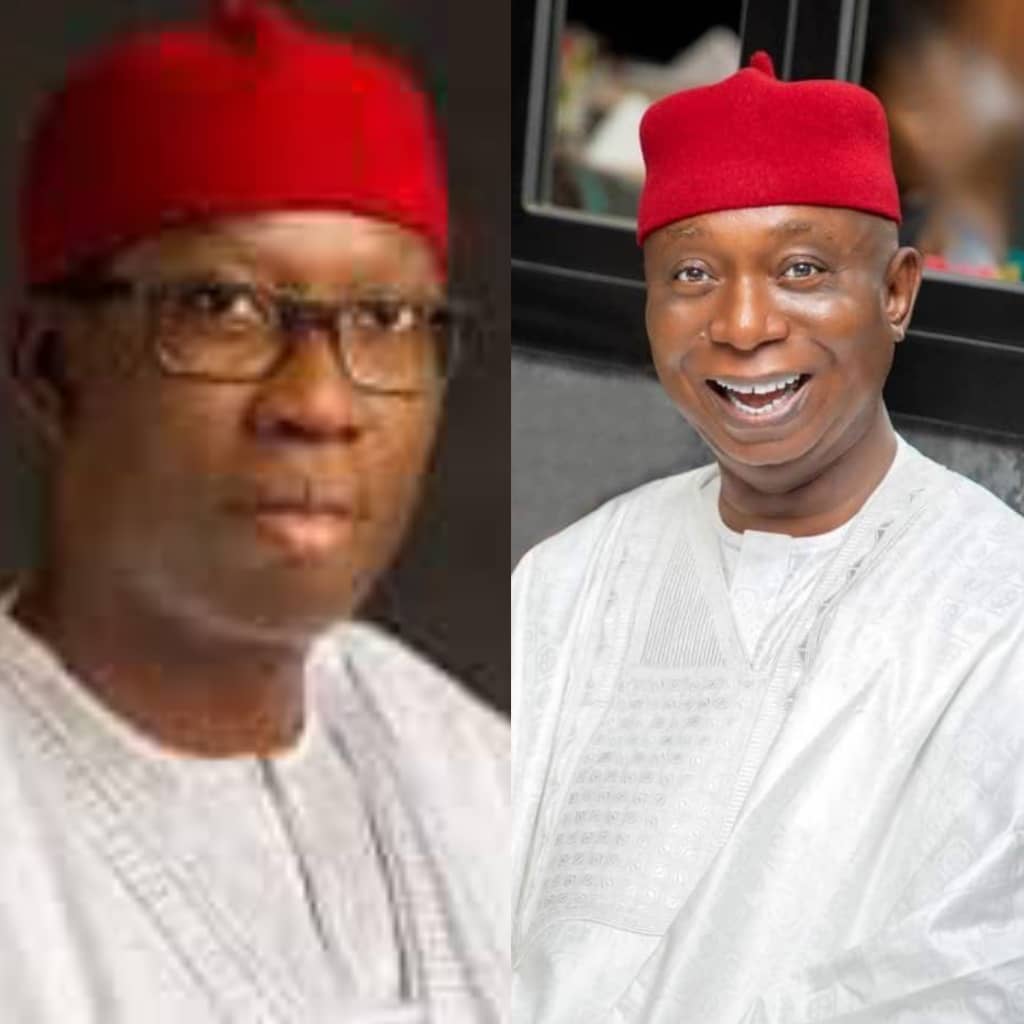
At the centre of the contest are two of Anioma’s most influential political figures—former Governor Ifeanyi Okowa and incumbent Senator Ned Nwoko.
While the immediate issue is the APC’s candidate for the Delta North Senatorial District, the implications extend far beyond a party primary.
The contest underscores the changing dynamics of politics in Delta North, where established alliances are being reshaped, new political calculations are emerging and influence within party structures is increasingly being tested.
Although both politicians eventually found themselves in the APC, they arrived through different political journeys.
Senator Nwoko first gained national prominence after representing the Aniocha/Oshimili Federal Constituency in the House of Representatives between 1999 and 2003.
Following a lengthy absence from elective office, he returned to the National Assembly after winning the Delta North Senate seat in the 2023 general elections.
Okowa’s political trajectory took a different path. After occupying several strategic public offices, he represented Delta North in the Senate from 2011 to 2015 before serving two terms as Governor between 2015 and 2023.
His national profile expanded further when he emerged as the Peoples Democratic Party (PDP) vice-presidential candidate in the 2023 presidential election.
For years, both men operated within the PDP without being direct political rivals. That changed following the political realignment that brought them into the APC. With two formidable political structures now existing within the same party, a contest for leadership in Delta North became almost inevitable.
The rivalry came to the fore during the APC Delta North senatorial primary in 2026. The party declared Okowa winner of the exercise, a decision that immediately generated widespread political attention. Senator Nwoko rejected the outcome, alleging irregularities in the conduct of the primary and challenging the result through the party’s internal appeal mechanism.
To Okowa’s supporters, however, the outcome reaffirmed his enduring political relevance after decades in public service. They argued that his experience, political network and long-standing relationship with party members positioned him as the preferred choice of delegates and the strongest candidate to lead the APC into the 2027 elections.
Momentum appeared to shift further in Okowa’s favour after reports indicated that the APC National Working Committee upheld his candidacy and forwarded nomination documents bearing his name to the Independent National Electoral Commission (INEC).
Within party circles, the development was widely interpreted as a significant endorsement of his emergence as the APC’s Delta North senatorial candidate.
Among those who welcomed the development was the Pan-Anioma socio-political group, Agugu Anioma, which described Okowa’s emergence as “a victory for Ndi Anioma.”
In a statement signed by its National Convener, Hon. Chief Louis Ogugua Ndukwe, the group described the submission of the party’s nomination list to INEC as the final validation of his candidacy.
It attributed his success to his record in public office, political experience and enduring connection with party faithful across Delta North, while urging APC stakeholders to unite behind all the party’s candidates ahead of the 2027 polls.
Supporters of Senator Nwoko, however, maintained that the incumbent lawmaker deserved a fair opportunity to seek re-election. They questioned the credibility of the primary and insisted that the exercise failed to reflect the true wishes of party members, arguing that the outcome deserved further review through the party’s internal dispute resolution process.
Beyond the competing claims lies a more fundamental question: what does this political contest mean for Delta North and its future?
Political observers have consistently maintained that internal party democracy remains one of the greatest tests confronting Nigeria’s political parties.
Primary elections are designed to provide transparent and credible platforms for selecting candidates. Whenever that process is disputed, the consequences often extend beyond a single election, affecting party cohesion, public confidence and future political alignments.
The APC’s handling of the Delta North contest has therefore become an important measure of its internal democratic processes.
Following the conclusion of the party’s appeal procedure, the National Working Committee retained Okowa as the party’s candidate and forwarded the nomination documents to INEC.
Although debate surrounding the primary may continue, the latest developments appear to have strengthened his position as attention gradually shifts towards the 2027 general election campaign.
Another major dimension of the unfolding political narrative is the agitation for the creation of Anioma State.
Senator Nwoko has made the campaign one of the defining causes of his political career, consistently presenting it as a constitutional pathway to addressing the long-standing aspirations of the Anioma people.
His sustained advocacy has kept the issue firmly within the national conversation and earned him considerable support among proponents of state creation.
Former Governor Okowa has equally expressed support for the creation of Anioma State, maintaining that the aspiration is legitimate and should be pursued through constitutional procedures and broad political consensus.
Although Senator Nwoko has remained the most visible face of the campaign in recent years, Okowa’s emergence as the APC candidate has introduced a new political dimension.
Should he return to the Senate, many supporters expect him to build on the existing momentum and continue advancing the campaign through legislative engagement.
While the Anioma State campaign has become an important part of political discourse in Delta North, there is no clear evidence that it directly triggered the rivalry between the two politicians.
The dispute that unfolded publicly centred primarily on the APC senatorial primary and the competing claims arising from its outcome.
For many residents of Delta North, however, the issues of greatest concern extend beyond internal party contests. Employment opportunities, infrastructure, healthcare, education, security and economic development remain the priorities that shape public expectations.
Ultimately, whoever represents the district in the Senate will be judged not merely by political influence within the party but by the capacity to deliver effective representation and measurable development.
As preparations for the 2027 general elections gather momentum, the battle for Delta North has become far more than a contest for a Senate seat.
It has evolved into a test of political influence, party cohesion and leadership within the APC, while also reflecting the evolving character of politics across Delta North.
Recent developments within the party appear to have strengthened Okowa’s position following the conclusion of the APC’s internal processes and the submission of its nomination documents to INEC.
Even so, the events surrounding the primary have reinforced the importance of transparent internal party processes in sustaining party unity and public confidence.
At the same time, expectations surrounding the Delta North senatorial seat have grown beyond electoral victory. Among the issues many constituents will continue to monitor closely is the campaign for the creation of Anioma State.
While Senator Nwoko has played a leading role in bringing the agitation to the forefront of national discourse, recent political developments have shifted attention towards Okowa.
Should he eventually return to the Senate, many supporters will expect him to sustain the campaign and collaborate with other stakeholders to advance the aspiration through constitutional and legislative means.
Whatever the outcome of the 2027 general elections, the APC senatorial primary has already left an enduring imprint on politics in Delta North.
It has highlighted the changing balance of political influence within the district, underscored the significance of internal party democracy and amplified the expectations of the Anioma people.
Ultimately, the true measure of political leadership will not rest solely on electoral success, but on the ability to convert political influence into meaningful development and effective representation.
Daniel Othegbemeh is a public affairs analyst and writes from Abraka.