
By Reen Chidi
Delta State Governor, Rt. Hon. Sheriff Oborevwori, has called on local and international investors to explore the state’s vast economic opportunities, highlighting its natural resources, strategic location, industrial potential and $100 million Viability Gap Funding established to de-risk private-sector investments.
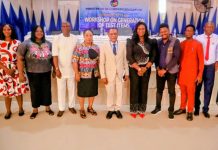
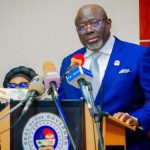
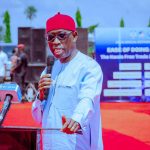
Oborevwori made the appeal at the 6th African Sub-Sovereign Governments Network (AfSNET) Investment Conference 2026 in Calabar, Cross River State, where he was represented by the Chairman of the Delta State Investment Development Agency (DIDA), Olorogun Lucky Oghene-Omoru.
The conference, which runs from November 12 to 14, is themed, “The Role of Sovereigns in Catalysing Development through Trade and Investments.”
The governor said his administration had identified several bankable investment opportunities across the industrial, maritime, energy and agricultural sectors, assuring prospective investors of the state’s commitment to providing an enabling environment for sustainable business growth.
He disclosed that Delta State had established two economic free zones in Kwale and Koko, positioning the areas for gas-based industries, manufacturing and other industrial ventures.
Highlighting specific opportunities, Oborevwori listed a proposed ceramics raw materials plant requiring an estimated €50 million investment and a glass manufacturing facility with projected capital requirements ranging from $50 million to $200 million, depending on its production capacity. Another industrial project, he said, would require approximately €19 million.
According to him, preliminary studies on the projects had been completed, with the ceramics venture advancing towards commencement, while a leading German glass manufacturer had indicated interest in the proposed glass production facility.
On maritime development, the governor identified the proposed Burutu Seaport as a major investment opportunity, citing its strategic position and access to inland waterways connecting Onitsha, Lokoja and other commercial centres.
He explained that the port secured a 40-year concession in 2023, adding that its second phase was designed to accommodate a depth requirement of 41 metres. The project, he noted, had also obtained approvals from the Federal Executive Council and the Infrastructure Concession Regulatory Commission.
He further identified the ports in Warri, Sapele and Koko, alongside several jetties across the state, as viable assets for maritime investments, including shipbuilding and related businesses.
However, Oborevwori acknowledged that the silting of waterways remained a major challenge to maritime activities, calling on the African Export-Import Bank (Afreximbank) and other development finance institutions to support dredging projects to improve navigation and boost commercial activities.
Providing an overview of Delta’s economic profile, he put the state’s population at an estimated 6.7 million, its Gross Domestic Product at approximately $1.7 billion and its 2026 budget at about N1.72 trillion.
The governor recalled that his administration committed an initial $100 million in Viability Gap Funding at the Delta State Economic and Investment Summit in August 2026 to reduce investment risks and attract private capital into strategic projects.
He cited the acquisition of 100 hectares of land by multinational agribusiness firm, Olam, for a proposed $70 million agro-processing facility as evidence of growing investor confidence in the state’s economy.
He also highlighted the government’s one-stop-shop investment framework and other incentives designed to simplify business registration and approval processes, eliminate unnecessary bottlenecks and reduce the cost of doing business.
In the power sector, Oborevwori disclosed that electricity generation plants in Sapele, Ughelli and Okpai had a combined installed capacity exceeding 3,500 megawatts, making Delta a significant contributor to Nigeria’s electricity generation capacity.
He said his administration was pursuing legal and administrative reforms to address challenges associated with electricity transmission and distribution, while creating opportunities for private-sector participation in power infrastructure.
The governor added that the state was exploring investments in gas-based industries, particularly liquefied natural gas (LNG) and compressed natural gas (CNG), as part of efforts to maximise its energy resources and stimulate industrial development.
Reaffirming his administration’s commitment to attracting investments, Oborevwori said: “Delta State has the natural resources, strategic location, infrastructure and investment opportunities to support profitable businesses. We are inviting local and international investors to partner with us.
“Our message is simple: Delta State is ready for business.”
Members of the Delta delegation at the conference included the Chief Economic Adviser to the Governor, Dr Barry Gbe; Director-General of DIDA, Hon. Anthony Elekeokwuri; Special Adviser on Finance, Investment and International Development, Barr. George Orogun; and Executive Assistant to the Governor on Media, Dr Nelson Egware.