
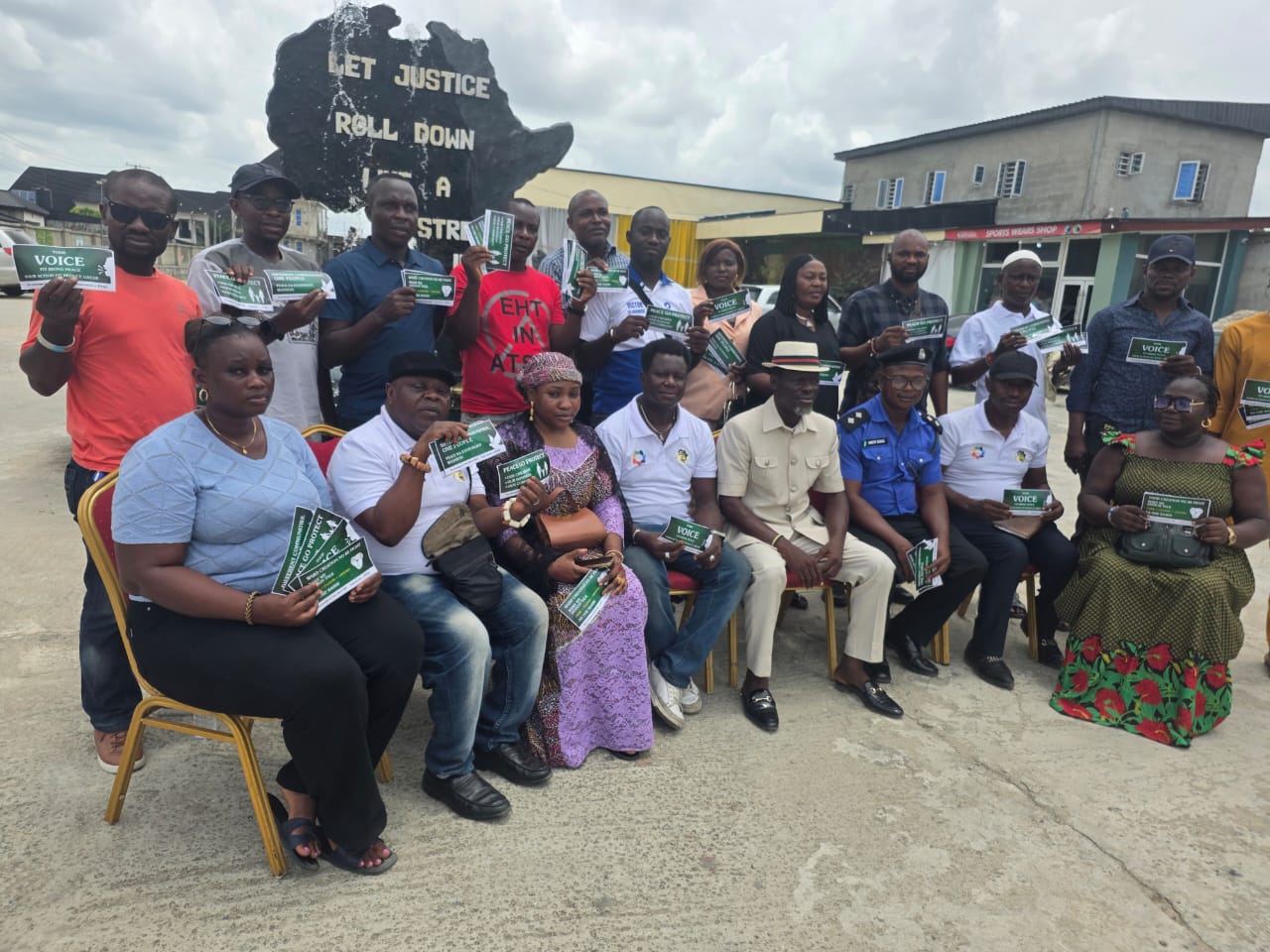
The Center for Peace and Environmental Justice (CEPEJ) has intensified efforts to promote stability in Warri with the inauguration of the Warri Indigene and Residents Peacebuilding Committee, alongside the unveiling of community-focused programmes designed to foster unity among the Ijaw, Itsekiri, and Urhobo ethnic groups.
The initiative, unveiled during the organisation’s inaugural peacebuilding meeting, brought together a diverse spectrum of stakeholders, including community leaders, government officials, market unions, civil society organisations, security agencies, and non-indigenous residents.
The gathering underscored a collective commitment to preventing conflict and rebuilding trust across the oil-rich city.
Speaking at the event, CEPEJ National Coordinator, Sheriff Mulade, emphasized that sustainable peace in Warri requires deliberate and inclusive strategies.
He noted that de-escalating tensions, maintaining neutrality, and enhancing information-sharing mechanisms are critical to achieving lasting harmony, urging stakeholders to adopt advocacy-driven approaches that encourage coexistence.
A seven-member executive committee was inaugurated to drive the initiative, with Chuks Awogu named Chairman. Other members include Toriitseju Igbiaye, Eburu Emuaghogho, Erediegha Precious, Comrade Hilda Amogha, and Mrs. Hajara Abubakar.
Mulade charged the committee to uphold fairness and inclusivity, urging members to rise above ethnic affiliations in the discharge of their responsibilities. He reiterated that peace remains a cornerstone for sustainable development.
He also acknowledged the efforts of the Delta State Government under Sheriff Oborevwori, noting that a stable environment is essential for attracting investment and stimulating economic growth.
In his remarks, Abbey Kalio, Coordinator of SID Warri, encouraged the committee to remain focused on its mandate and avoid distractions that could undermine its objectives.
As part of its broader intervention, CEPEJ introduced a suite of capacity-building initiatives, including stakeholder training sessions, community engagement forums, advocacy campaigns, and inter-ethnic exchange visits.
These programmes, Mulade explained, are structured to deepen dialogue and strengthen mutual understanding among residents.
He further cautioned individuals and groups who benefit from or instigate crises to desist, urging them instead to channel their energies into ventures that create employment opportunities for youths.
“No amount of crisis can displace the Ijaw, Itsekiri, and Urhobo from Warri,” Mulade stated, stressing that conflict only results in avoidable losses, while peace creates opportunities for collective progress.
He also called on traditional and political leaders to actively support and promote peaceful coexistence as a pathway to development.
Earlier, CEPEJ Administrative Manager, Tina Agidi, outlined the meeting’s agenda, presenting a structured roadmap of programmes aimed at strengthening social cohesion.
Similarly, Senior Programme Officer, Samuel Ideh, reminded participants of Warri’s enduring legacy of inter-ethnic cooperation, noting that unity remains beneficial to all.
With the inauguration of the committee and the rollout of targeted grassroots programmes, CEPEJ’s intervention is widely regarded as a timely and pragmatic step toward easing tensions and laying a solid foundation for enduring peace in Warri.