By Uche Okporie
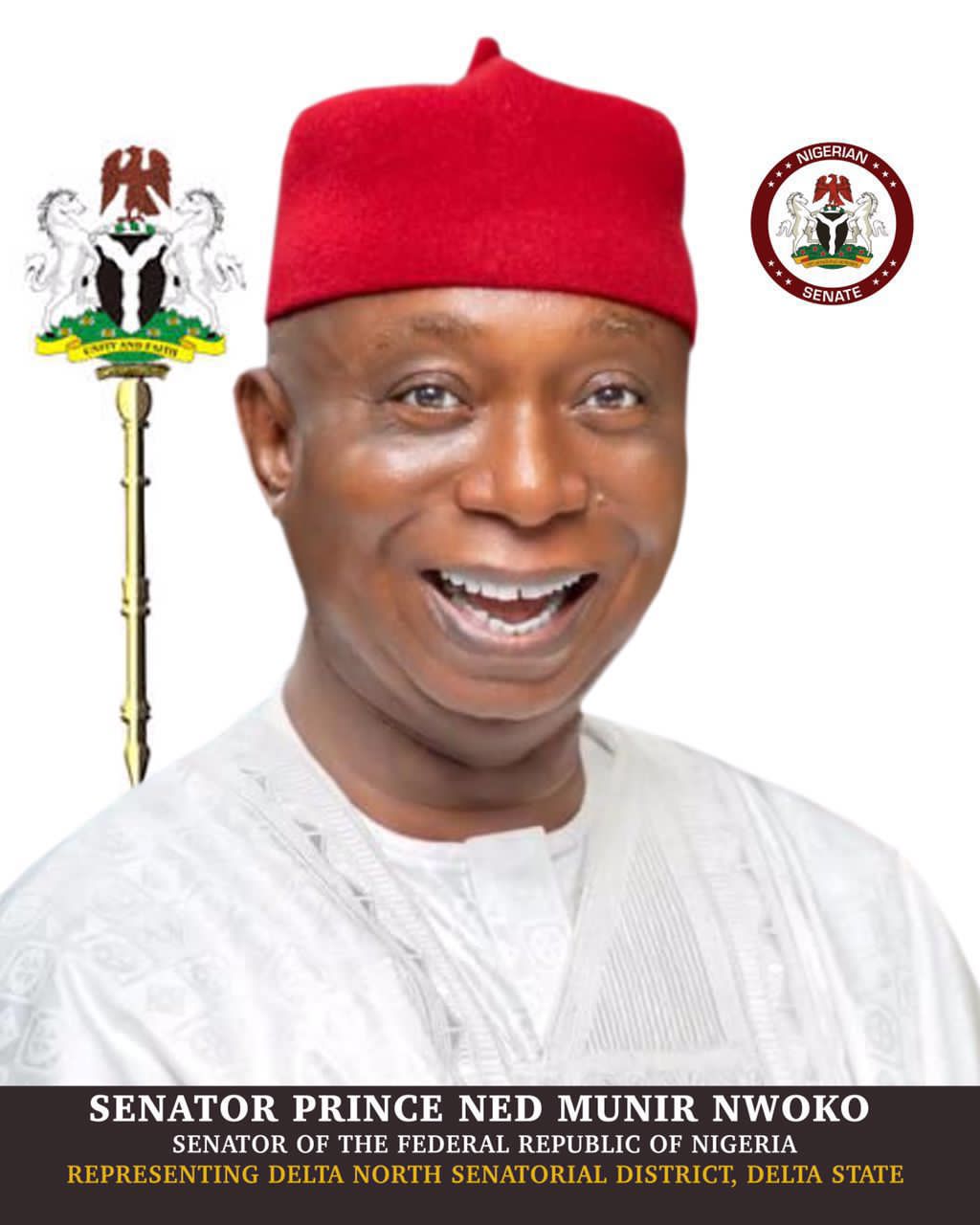
Senator Ned Nwoko’s legislative footprint in the National Assembly has become one of the defining features of his tenure as representative of Delta North Senatorial District.
Since his inauguration in 2023, his profile has been shaped by an expansive legislative agenda that cuts across constitutional reform, social policy innovation, institutional restructuring, constituency development, and national governance standards.
Within three years in office, Senator Nwoko has sponsored between 31 and 34 bills, alongside 20 to 25 motions on the floor of the Senate, placing him among the more active members of the Upper Chamber in the current legislative cycle.
The scope of these legislative interventions spans economic reform, welfare policy, governance architecture, and constitutional adjustments, reflecting a deliberate effort to confront structural challenges rather than pursue symbolic motions.
A central pillar of his agenda is institutional and constitutional reform.
Foremost among his proposals is the Constitutional Alteration Bill for the Creation of Anioma State, an initiative aimed at addressing long-standing geopolitical concerns by carving a new state out of Delta North.
The proposal situates his legislative activism within broader national conversations on federal equity, representation, and structural balance.
Beyond constitutional matters, Senator Nwoko has advanced bills designed to strengthen Nigeria’s social policy framework.
These include proposals for a Nigerian Youth Entrepreneurship Grant Programme, the establishment of a National Social Security Agency, and a Waste Management and Malaria Eradication Agency.
Collectively, they underscore a focus on youth empowerment, structured welfare systems, and public health reform.
His One-Month Rent Limitation and Landlord Registry Bill has also drawn public attention for its attempt to regulate advance rent payments and create a national tenancy database, an intervention targeted at addressing urban housing pressures and protecting tenants from exploitative practices.
In the economic and regulatory sphere, Senator Nwoko has championed measures intended to enhance transparency and monetary discipline.
The proposed Cashless Asset
Acquisition framework seeks to mandate traceable mechanisms for high-value transactions in order to curb illicit financial flows.
Similarly, an amendment to the Central Bank Act aimed at prohibiting the payment of salaries and fees in foreign currencies reflects concerns about monetary sovereignty and economic stability.
Security and governance remain prominent within his legislative portfolio.
His Self-Defence and Firearm Ownership Regulation Bill seeks to define clearer parameters for civilian firearm ownership, while other motions have addressed crude oil theft, private security regulation, and the urgent challenge of rising kidnappings across the country.
These initiatives signal engagement with strategic security issues affecting both local communities and the nation at large.
Education and capacity development also feature strongly. Senator Nwoko has advocated for the upgrade of tertiary institutions in Delta North, including proposals to convert the College of Education (Technical), Asaba, into a Federal University of Technology.
In addition, he has sponsored constitutional adjustments promoting compulsory First Aid, CPR, AED, and Good Samaritan training, reflecting an interest in strengthening emergency response capacity nationwide.
Beyond legislative chambers, his tenure has been marked by constituency-focused interventions.
Across communities in Delta North, projects reportedly facilitated under his watch include solar-powered street lighting, medical outreach programmes, classroom construction, electrification initiatives, and agricultural support schemes for farmers.
These projects align with his stated commitment to people-centred representation.
Senator Nwoko’s governance philosophy consistently emphasises responsibility in public office and measurable service delivery.
His legislative record, in both scope and ambition, reflects that orientation.
As Delta North looks ahead to 2027, supporters argue that his policy depth, legislative productivity, and constituency engagement distinguish him within the political landscape.
They contend that continuity would consolidate ongoing reforms and sustain the momentum already established.
In their view, Senator Ned Nwoko has earned his place in the unfolding political conversation—not merely through rhetoric, but through demonstrable legislative action and community impact.