By Emmanuel Onwubiko
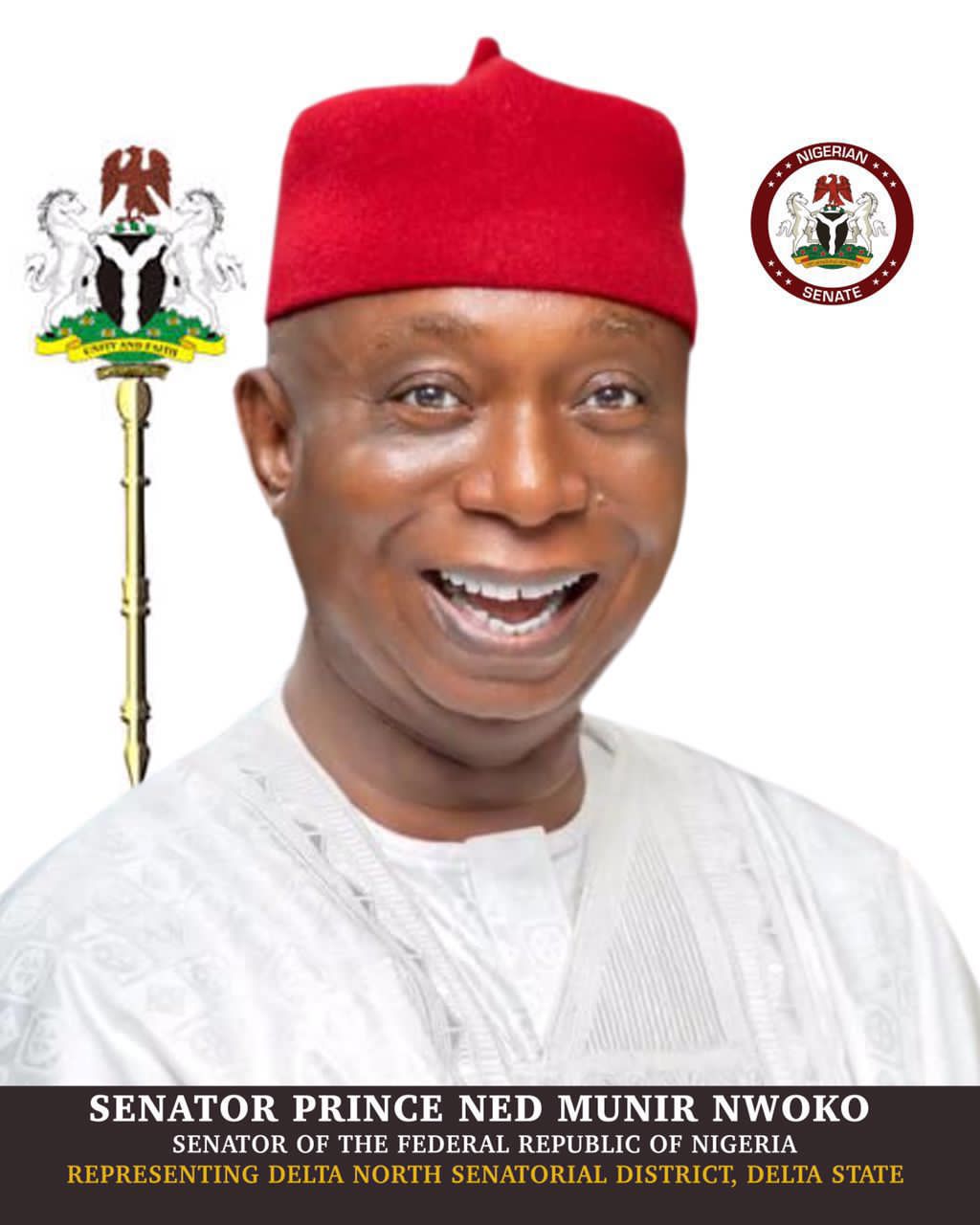
When Senator Prince Ned Munir Nwoko took his oath of office in June 2023, he arrived at the Red Chamber with more than a mandate from Delta North, he came armed with a strategic vision.
In under two years, that vision has materialized into over 30 bills, 20+ motions, and 50 completed constituency projects, making him one of the most productive lawmakers in the 10th National Assembly.
But productivity alone doesn’t set Nwoko apart, it is the thematic coherence of his legislative and development agenda that is fast redefining what purposeful representation should look like in Nigeria.
In a Senate often criticized for inertia and performative grandstanding, Nwoko has charted a different course. His bills span constitutional reform, economic sovereignty, social protection, and digital governance.
From the creation of Anioma State, a response to long-standing calls for federal equity in the Southeast, to the diaspora voting bill aimed at integrating millions of Nigerians abroad into the democratic process, each initiative is grounded in a broader, inclusive vision of a united and progressive Nigeria.
His legislative courage is evident in proposals like the Central Bank Act amendment, which mandates the exclusive use of the naira in domestic transactions, asserting Nigeria’s monetary independence.
He has also introduced landmark bills for a Social Security Agency, designed to establish a national safety net, and a Waste and Malaria Eradication Agency, targeting grassroots environmental and public health concerns.
On digital sovereignty, Nwoko has been both strategic and assertive. A proposed amendment to Nigeria’s Data Protection Act would compel foreign tech giants operating in Nigeria to set up local offices and data servers, ensuring domestic data control and compliance with national laws.
His firearms regulation bill, though controversial, signals a willingness to explore creative legislative responses to Nigeria’s growing insecurity.
Beyond legislative theory, Nwoko delivers on the ground. His over 50 completed projects across Delta North are not symbolic gestures; they are practical interventions in the lives of constituents, solar-powered streetlights, boreholes, upgraded schools and clinics, vocational training centers, and agricultural support programs.
His governance model fuses national policymaking with community-level impact, bridging the widening trust gap between citizens and elected officials.
As chair of two pivotal Senate committees, Crude Oil Theft, and Reparations and Repatriations, Nwoko is directly confronting some of Nigeria’s most entrenched challenges.
These are not ceremonial assignments; they are high-stakes platforms involving economic justice, historical accountability, and national integrity.
What strengthens his political architecture is consistency. His rhetoric on diaspora inclusion is matched by filed legislation.
His calls for economic self-reliance are backed by concrete proposals. His concern for grassroots development is evidenced by solar lights and boreholes, not just talking points.
In a nation where bills often die in committee and motions gather dust, Nwoko’s dual-track approach, legislation paired with implementation, is unusual, and significant.
While many legislators retreat after bill submission, Nwoko advances, touring oil installations, inspecting projects, engaging stakeholders, and documenting impact.
That said, the road ahead is not without obstacles. Constitutional amendments demand two-thirds support from both federal and state legislatures.
The naira-only proposal may encounter pushback from state actors and vested interests. The Anioma State initiative risks being caught in ethnic and geopolitical crossfires.
Foreign digital platforms may lobby against local data hosting laws.
The real test lies not just in passing bills, but in sustaining the political capital, coalition-building, and bureaucratic will needed to translate policy into systemic reform.
Yet, even as these hurdles loom, Nwoko’s strategy stands out. He is not chasing headlines; he is curating a governance doctrine.
His policy map touches Nigeria’s deepest fractures: insecurity, digital dependency, regional imbalance, economic fragility, and mass poverty.
He tackles them with a legislative toolkit in one hand and a constituency progress chart in the other.
At a time when national institutions face crisis of confidence, when citizens feel alienated from their representatives, Nwoko’s work offers a template for renewal.
Not through empty populism, but through aligned action: policy linked to outcome, rhetoric linked to results, office linked to service.
Critics may rightly ask: Will he maintain this momentum? Will bold bills survive institutional inertia? Will implementation match ambition? Those are valid questions.
But what is already clear is that Nwoko has disrupted the default script of senatorial lethargy. He has shown that coherence, competence, and courage can coexist in public service.
In a country desperate for direction, where democracy often feels distant from the people it purports to serve, Senator Nwoko offers a glimpse of what responsive, strategic, and visionary leadership might look like.
He is not immune to critique, nor should he be, but he is undeniably raising the bar.
As Nigeria navigates a complex future, economically fragile, politically fragmented, and socially strained, leaders who combine institutional strategy with grassroots empathy will be indispensable.
Nwoko, with his comprehensive blueprint and measurable impact, is making the case that governance can still be intentional, and transformative.
Nigeria should not only watch. Nigeria should take notes.
Emmanuel Onwubiko is the founder of the Human Rights Writers Association of Nigeria (HURIWA) and a former National Commissioner of the National Human Rights Commission of Nigeria.