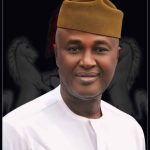
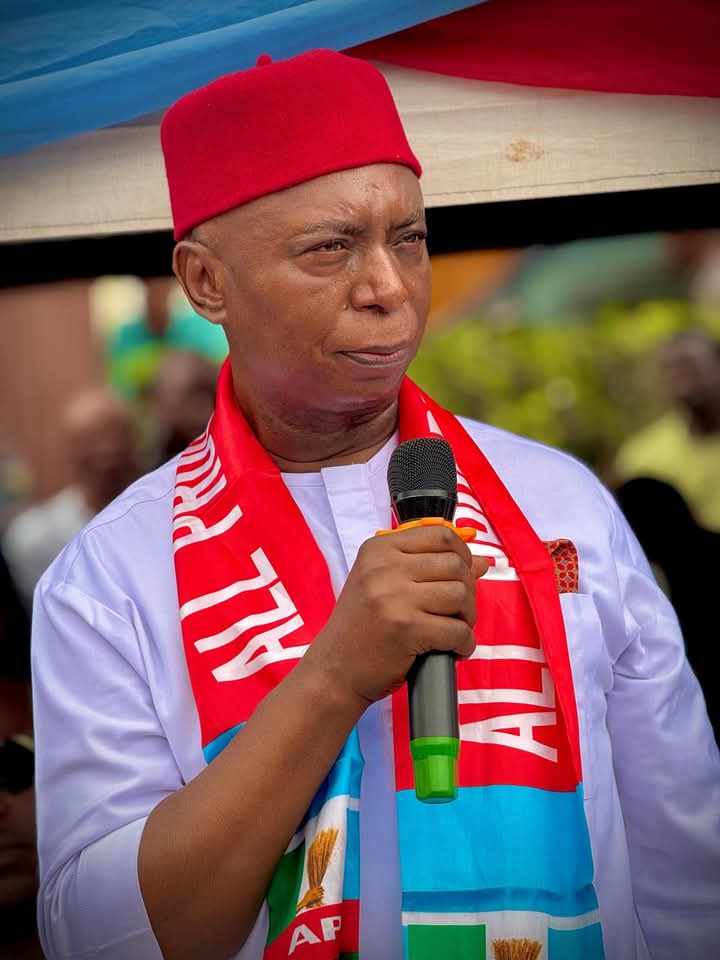
Senator Ned Nwoko has addressed the ongoing developments regarding the push for the establishment of Anioma State, amidst unverified reports that the movement is gaining traction within the National Assembly.
In a recent phone conversation, Senator Nwoko acknowledged the unwarranted resistance from certain political figures who stand to benefit if the state is created, but emphasized that the proposal has attracted considerable backing.
He noted that what was once dismissed by many in the region as impractical has now emerged as a significant national issue. Despite initial skepticism from members of the Delta State House of Assembly and the House of Representatives from the area, he remains steadfast in his commitment to advancing the bill.
“They told me it wouldn’t be feasible and that state creation was unattainable,” Senator Nwoko remarked. “Nevertheless, I maintained my focus, and now Anioma State is a topic of national discourse.”
The senator expressed his concern regarding statements from political actors in Delta North who oppose Anioma State’s inclusion in the South East geopolitical zone. While critics assert that the proposed state should belong in the South South, he pointed out their failure to take concrete legislative actions toward that claim.
“If they advocate for Anioma to be in the South South, why have they not initiated any relevant bills?” he questioned. “One cannot simply make assertions without accompanying action. If an alternative is believed in, one must take the initiative to lead the process.”
He argued that the absence of formal legislative efforts by opponents, particularly among House of Representatives members from Delta North, weakens their stance and hinders a cause deeply rooted in the historical aspirations of the Anioma people.
In his update on the legislative process, Nwoko reported a robust show of support for Anioma State during voting among the South East caucus in the National Assembly. Several states expressed their backing, positioning Anioma favorably against other proposed states.
Following initial voting, which saw support from Ebonyi, Abia, Imo, and Anambra states for Anioma, a subsequent round further solidified its position, aided by sustained lobbying efforts over the past two weeks that garnered majority support among senators.
“During the first day of voting, several states voted for Anioma State. In the subsequent round, many of those same states reaffirmed their support for Anioma as their second choice,” he explained.
Senator Nwoko alleged that two members of the House of Representatives from Delta North have been obstructing the voting process, with one purportedly casting a vote for Adada State instead.
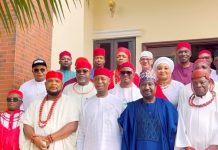
In response to claims that stakeholders were not properly consulted, he insisted that extensive dialogues took place prior to and during the legislative proceedings. He referenced meetings with traditional leaders, cultural organizations, and community groups throughout Anioma land, as well as with various Anioma factions in Abuja.
“We held a summit at the Grand Hotel last August and have engaged with kings from multiple regions, including Owa, Obior, Okpanam, Asaba, Ndokwa East and West, as well as Ika,” he stated.
Senator Nwoko also welcomed the increasing participation of youth in the advocacy for Anioma State, viewing their engagement as a refreshing development that adds energy to the movement.
He reiterated that his bill explicitly proposes Anioma State within the South East, with Asaba designated as its capital and encompassing nine local government areas. He downplayed concerns regarding zoning, emphasizing that the establishment of the state itself remains the primary objective.
“Zoning is secondary,” he remarked. “The creation of the state is the foremost priority.”
As the National Assembly prepares for its resumption in January 2026, Nwoko and other advocates for Anioma State remain optimistic and realistic about the challenges and opportunities that lie ahead.