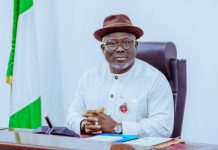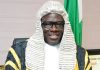

Delta State Governor, Rt. Hon. Sheriff Oborevwori, has called for strong legislative backing to promote local manufacturing, infrastructure funding, and skill development in alignment with the Executive arm’s commitment to policy consistency, ease of doing business, and protection of indigenous industries.
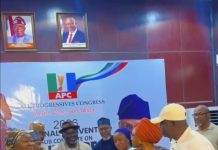
Governor Oborevwori made the appeal on Monday in Asaba while declaring open a four-day retreat for members and staff of the House of Representatives Committee on Industry, themed: “Building a Globally Competitive Automotive Sector in Nigeria through Effective Executive-Legislative Partnership.”
Represented by his Chief of Staff, Hon. Prince Johnson Erijo, the Governor emphasized that Nigeria has the capacity and responsibility to develop a sustainable, globally competitive automotive industry capable of empowering the youth, conserving foreign exchange, and fostering national pride.
He noted that sub-national governments must complement the Federal Government’s industrialization efforts by creating investor-friendly environments through land reforms, simplified regulatory approvals, and social stability.
“Under the MORE Agenda of this administration, we are deliberately creating the enabling environment for industries to thrive through massive infrastructure renewal, robust public-private partnerships, decentralized power distribution, and sustained peace and security,” Oborevwori stated.
Highlighting Delta’s industrial potential, the Governor said the state’s educated, vibrant, and highly motivated youth population positions it as a hub for industrial growth and technology transfer.
He further noted that Delta is not only rich in oil and gas but also endowed with kaolin, silica, industrial clay, and other solid minerals vital for manufacturing and automotive production.
“Our coastal location and the presence of four seaports offer immense logistical advantages for component fabrication and export-oriented production.
“Beyond that, Delta’s strategic geographic position connecting the South-South, South-East, and South-West regions makes it a natural gateway for commerce and industry in Nigeria,” he said.
Oborevwori described the global automotive sector as a major employer of labour and a key driver of innovation and economic growth, with multiplier effects across several industries, including steel, petroleum refining, glass, ICT, finance, and mobility services.
He commended the House Committee on Industry and the National Automotive Design and Development Council (NADDC) for organizing the retreat, describing it as timely in view of Nigeria’s ongoing drive to diversify its economy, revive local manufacturing, and strengthen collaboration between policymakers and regulators.
In his remarks, the Chairman, House Committee on Industry, Hon. Enitan Dolapo Badru, stressed the need for effective Executive-Legislative collaboration to build a competitive automotive sector.
He lamented the sector’s challenges, especially the high interest rates on credit facilities, which hinder local manufacturers and vehicle buyers.
“We want a situation where loans can be accessed at single-digit interest rates for investment in the automotive industry. The Central Bank of Nigeria and other financial institutions should work towards this to make our automotive sector globally competitive,” Badru said.
Also speaking, the Director General of the NADDC, Mr. Oluwemimo Osanipin, urged the National Assembly to legislate policies that would stimulate investment in the automotive industry, describing the sector as vital to Nigeria’s industrial and economic development.
In goodwill messages, the Director General of the Africa Parliamentary Resource Centre, Dr. John Mutu, and the Clerk of the Committee, Dr. Usman Ibrahim (Esq.), said the retreat aimed to deepen participants’ understanding of the NADDC’s mandate and strengthen the Committee’s role in shaping effective industrial policies.
They added that the engagement would produce a roadmap to guide the Committee’s activities over the next two years, ensuring sustained collaboration between key stakeholders in driving Nigeria’s automotive development agenda