
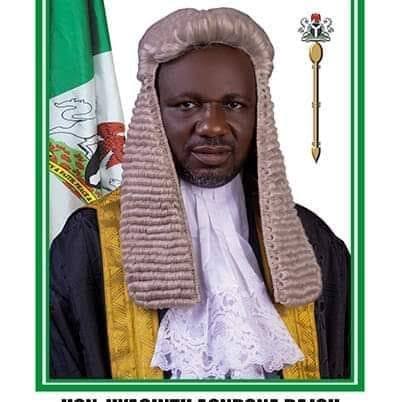
In a development that sent ripples through the corridors of power in Benue State, Rt. Hon. Aondona Dajoh has resigned as Speaker of the Benue State House of Assembly.
His resignation, conveyed through a handwritten letter dated August 24, cites the action as “done in good faith and in the best interest of the state” .
Addressed formally to the clerk of the assembly and publicly shared, the letter underscores Dajoh’s gratitude to his peers for the “opportunity… to be the first among equals” and reaffirms his commitment to continuing as a legislator representing Gboko West State Constituency .
However, beneath this seemingly dignified exit lies a political tinderbox.
Just one day prior, the Assembly had suspended four members, Alfred Berger (Makurdi North), Terna Shimawua (Kian), Cyril Ekong (Obi), and James Umoru (Apa), alleged to have plotted Dajoh’s impeachment.
The House majority leader labeled their action a destabilizing move against the legislature.
The fallout was swift. In an emergency session chaired by Deputy Speaker Lami Ogenyi, the House set aside its rules to reinstate Alfred Berger, who had just been suspended, as the new Speaker, citing his backing by Governor Hyacinth Alia.
This controversial move raises serious questions about procedural integrity and executive-legislative interference.
Governor Alia has since publicly denied any involvement in the events leading up to Dajoh’s resignation.
But his opponents suggest otherwise, with online discussions hinting at broader power realignments within the ruling APC .
Further adding complexity, just 24 hours before the resignation, the Assembly refused to confirm a commissioner nominee amid allegations of academic misconduct, intensifying the political storm engulfing the State House.
Analysis & Implications
Concern Explanation
Democratic Integrity The swift switch, from suspension to reappointment, of key players raises doubts about the legitimacy of the Assembly’s internal processes.
Political Instability The rapid escalation, from impeachment plot to resignation, suggests an unstable political climate marked by backdoor lobbying and factional infighting.
Executive Influence Although officially denied, Governor Alia’s influence appears palpable, fueling concerns over separation of powers.
Public Perception A resignation under such fraught circumstances risks eroding public trust in state institutions.
Bottom Line
Speaker Dajoh’s exit is more than a handwritten note, it’s a symptom of deeper, systemic troubles undermining legislative autonomy in Benue State.
Whether the House can restore credibility or become a puppet of political maneuvering, remains the critical question.
It would be recall that The Story, had earlier reported that the Benue State House of Assembly last week suspended six of its members for a period of six months following an alleged plot to impeach the Speaker, Hon. Aondona Dajoh.