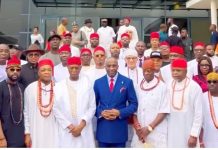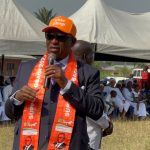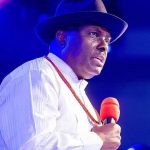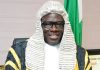

Nearly six decades after one of the darkest chapters in Nigeria’s history, the Asagba of Asaba, His Royal Majesty, Obi (Prof.) Epiphany Azinge, SAN, has called for renewed national recognition and justice for the victims of the 1967 Asaba massacre.
The monarch made the passionate appeal on Monday in Asaba during a solemn ceremony marking the 58th anniversary of the tragic event, where hundreds of Asaba indigenes were executed during the Nigerian Civil War.
He urged President Bola Ahmed Tinubu to immortalize the victims through the establishment of a Federal University in Asaba and a formal presidential apology to the people of Asaba for the injustice suffered.
Leading thousands of indigenes in the emotional remembrance at exactly 12 noon, the Asagba observed a minute of silence in honour of the victims, describing them as “martyrs whose blood gave life to the city’s growth and resilience.”
“From a once quiet riverside town, Asaba has evolved into one of the fastest-growing capitals in sub-Saharan Africa,” he said.
“That transformation came at a price, the blood of our forebears. Today, as we pour libations, we honour them as our closest ancestors, whose sacrifice must never be forgotten.”
The monarch reaffirmed that the Asaba people deserve a fitting national monument and an official apology from the Nigerian government.
“We must have a memorial that speaks for them. We deserve a presidential apology, and the establishment of a Federal University here in their memory would be a worthy national gesture,” he stated.
Also speaking at the ceremony, the Isama Ajie of Asaba, Chief Chuck Chukwuemeka Nduka-Eze, described the remembrance as “a sacred act of collective honour and healing.”
He announced that henceforth, Asaba would observe a one-minute silence every October 7 at noon, accompanied by a 21-gun salute, as a permanent tradition to honour the victims.
“From today, this remembrance becomes an annual event in our cultural calendar. We remember not with bitterness, but with reflection, because remembrance is what the living owe the dead,” he said.
The ceremony, which featured traditional music, dances, and the pouring of libations, reflected the rich heritage and enduring spirit of the Asaba people, an Igbo-speaking subgroup in Delta State.
With the Asagba’s renewed call, the demand for justice, recognition, and closure for the victims of the Asaba massacre once again resonates across the nation, reigniting the conversation about reconciliation and historical accountability.