
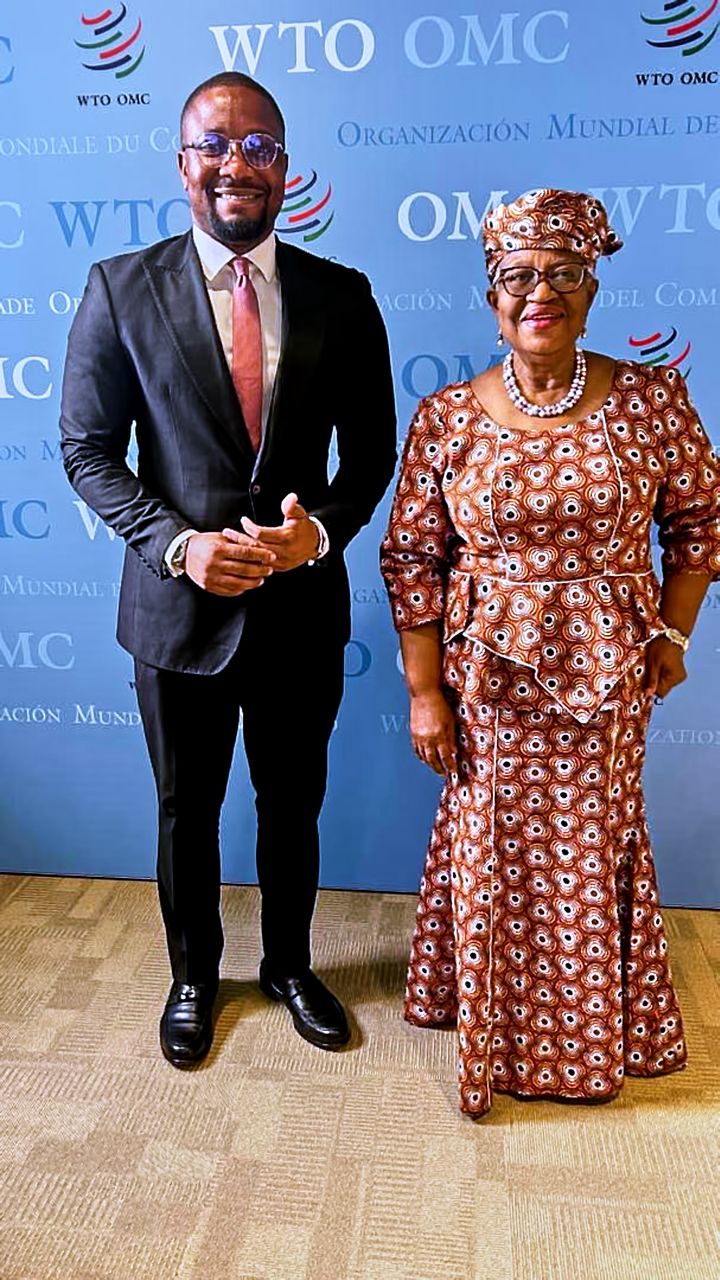
In a strategic move to position Nigerian businesses for greater global relevance, the Director-General/CEO of the Small and Medium Enterprises Development Agency of Nigeria (SMEDAN), Charles Odii, held high-level talks with World Trade Organization Director-General, Ngozi Okonjo-Iweala, in Geneva, Switzerland, to explore pathways for integrating Nigerian small and medium enterprises into the global marketplace, with a focus on strengthening value chains, removing trade barriers, and enhancing competitiveness.
The engagement held on Wednesday March 18, 2026, underscored a shared commitment to repositioning Nigeria’s small and medium enterprises (SMEs) as central drivers of economic growth and global competitiveness.
Both leaders emphasized the critical role of SMEs in Nigeria’s economy, noting that across diverse sectors, from agriculture and manufacturing to digital innovation, entrepreneurs continue to demonstrate resilience and ingenuity despite prevailing challenges.
Central to the discussions was the need to dismantle structural barriers inhibiting business growth, expand access to international markets, and align Nigerian enterprises with global best practices and standards.
Reflecting the tone of the meeting, participants highlighted that with the right policy frameworks and institutional support, the productivity and resilience of Nigerian entrepreneurs can translate into sustained economic growth and increased global relevance.
“The objective is not just participation in global trade, but ensuring Nigerian businesses are competitive and well-positioned to thrive within it,” the dialogue conveyed.
The meeting also explored coordinated strategies to strengthen Nigeria’s value chains, from local production to international distribution, thereby enhancing export potential and fostering long-term economic sustainability.
Reaffirming a people-focused development approach, Odii stressed the importance of creating an enabling environment where innovation is nurtured, effort is rewarded, and entrepreneurs are given equitable opportunities to succeed.
With deliberate leadership and a growing base of youthful, enterprising talent, Nigeria continues to position itself for a future shaped by strategic planning, inclusive growth, and purposeful economic reforms.