
The Odu Oma Club has called on all stakeholders in the Anioma State creation movement to avoid divisive politics and focus on the shared goal of achieving statehood.
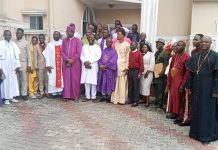
In a statement signed by its President General, Eze Odu Oha, Patrick Ogbogu Okenyi, and Secretary General, Okwelegwe Oha, Uche Emma Aboh, the group commended recent milestones achieved during the Senate Committee on Constitutional Review’s public hearings in Ikot Ekpene and Enugu.
According to the club, submissions from various Anioma groups were well-prepared, transparent, and inclusive, providing a platform for all voices to be heard.
However, the organization expressed concern over “unhelpful narratives” emerging in the media, particularly the ongoing debate about Anioma’s geo-political alignment.
“At this critical stage, historical debates over ethnic origins should not overshadow the central goal of Anioma State creation. This cause should unite, not divide, men and women of goodwill,” the statement read.
Historical Context and Identity
Tracing Anioma’s roots, the club highlighted the shared heritage of the Enuani, Ika, and Ndokwa people, three Igbo-speaking groups west of the River Niger, whose unity of purpose was evident during the Ekumeku War against British colonial rule.
The group recalled colonial-era boundary manipulations that excluded Anioma communities from the Eastern Region in 1947, sparking resistance from traditional rulers.
Despite setbacks, political leaders coined the name “Anioma” in the 1980s from the acronym of its four local government areas, Aniocha, Ndokwa, Ika, and Oshimili, giving the people a unified identity.
This identity, the club noted, is deeply tied to the Igbo nation, with Anioma sons and daughters historically participating in Igbo socio-political bodies such as the Ibo Union, NCNC, and Ohaneze Ndigbo.
South-South vs. South-East Debate ‘Misplaced’
Odu Oma Club stressed that the geo-political debate over whether Anioma belongs in the South-South or South-East is irrelevant to governance and should not derail the movement.
The group emphasized that geo-political zones have no constitutional authority over states, adding that Anioma’s cultural and linguistic ties to the Igbo nation are well-established.
They recalled that the National Assembly in 2006 recommended a sixth state for the South-East, and Ohaneze Ndigbo had identified Anioma as a viable option, before the process was stalled by political controversies.
Warning Against Obnoxious Politics
The statement condemned recent political distractions, including allegations of forged documents and disagreements over regional alignment, describing them as unpatriotic and detrimental to progress.
“Anioma’s interest must come first. The state is large enough to accommodate everyone. Those opposing South-East inclusion should reconsider, given our deep linguistic, cultural, and familial ties,” the club said.
Call to Action
The Odu Oma Club called on all stakeholders to rally behind Senator Prince Ned Nwoko, who is spearheading the current push for Anioma State creation in the National Assembly.
The group noted that statehood would unlock new political and economic opportunities, including increased representation in the Senate, House of Representatives, State Assembly, and local government leadership.
The club concluded with a reminder that the choice before Anioma people is clear:
“Let us choose Anioma State and reject politics of bitterness and sabotage. God has given us the freedom of choice, but not freedom from the consequences of our choice.”