
…Says Infrastructure Drive Is Reshaping Delta’s Coastal Economy
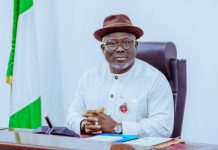
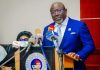
Delta State Governor, Rt. Hon. Sheriff Oborevwori, has reiterated his administration’s resolve to transform the development trajectory of riverine communities through sustained infrastructure investment and inclusive governance.
The Governor made this known on Tuesday during the commissioning of the reconstructed 31-kilometre Ohoror–Bomadi Road, a vital link connecting Ughelli North, Ughelli South, Patani, Burutu and Bomadi Local Government Areas.
Describing the project as a landmark achievement, Oborevwori said it reflects his administration’s determination to bridge development gaps and extend the dividends of governance to historically neglected riverine areas.
He stressed that his government remains focused on delivering sustainable and equitable development across all parts of the state, irrespective of geographical challenges.
According to him, the newly completed road will stimulate socio-economic growth by enhancing connectivity, easing movement, boosting trade and improving access to essential services for residents across the benefiting communities.
The Governor noted that the project is expected to impact no fewer than five local government areas, significantly reducing travel time while unlocking economic opportunities within the region.
He further emphasized that strategic infrastructure development remains central to economic expansion, explaining that improved road networks would facilitate the movement of agricultural produce, attract investments and strengthen rural-urban linkages.
Providing insight into the technical scope of the project, Oborevwori disclosed that the construction involved specialized engineering solutions suited to the swampy terrain, including sand filling, soil stabilization, reinforced concrete works, embankment protection and asphalt surfacing.
He added that the road varies in width between 6.5 and 10.3 metres, with hard shoulders provided in selected sections.
The Governor also highlighted ongoing and completed projects in road construction, bridges and education, reaffirming his administration’s commitment to the MORE Agenda, anchored on equity, justice and inclusive growth.
He revealed that the State Executive Council recently approved projects valued at over N400 billion across key sectors, including infrastructure, healthcare, education, power, judiciary and security.
On electricity, Oborevwori stated that deliberate interventions are being implemented to improve power supply through policy reforms and infrastructure upgrades, including the extension of transmission lines and installation of transformers in underserved communities.
He added that several communities previously without electricity for over a decade have now been reconnected to the national grid, thereby enhancing living standards and economic productivity.
The Governor further disclosed plans to strengthen security architecture across the state, including the establishment of police divisions in all 25 local government areas and the creation of a Special Protection Base.
Earlier, the Commissioner for Works (Rural Roads) and Public Information, Mr. Charles Aniagwu, noted that the road project cuts across multiple communities and incorporates modern engineering techniques designed for durability in challenging terrains.
In his welcome address, Chairman of Bomadi Local Government Council, Hon. Dagidi Andaye, described the project as a historic milestone, observing that the area had not witnessed such a major intervention in over 16 years.
He said the road would significantly reduce accidents, improve economic activities and ease the transportation of people and goods.
Speaking on behalf of the people, prominent stakeholders including Hon. Nicholas Mutu, Senator James Manager, Hon. Oboro Preyor, HRM Pere Luke Kalalanama, First Vice Chairman of the Delta State Traditional Rulers Council, and Mrs. Flora Brisibo, commended the Governor for his inclusive leadership and developmental strides.
They also pledged continued political support for the Governor and President Bola Ahmed Tinubu ahead of the 2027 general elections.
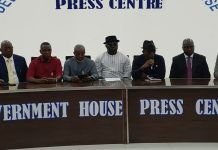
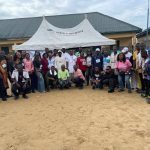
The commissioning ceremony attracted a large turnout of residents, political leaders and traditional rulers, underscoring widespread appreciation for the project and optimism about its long-term benefits to the region.