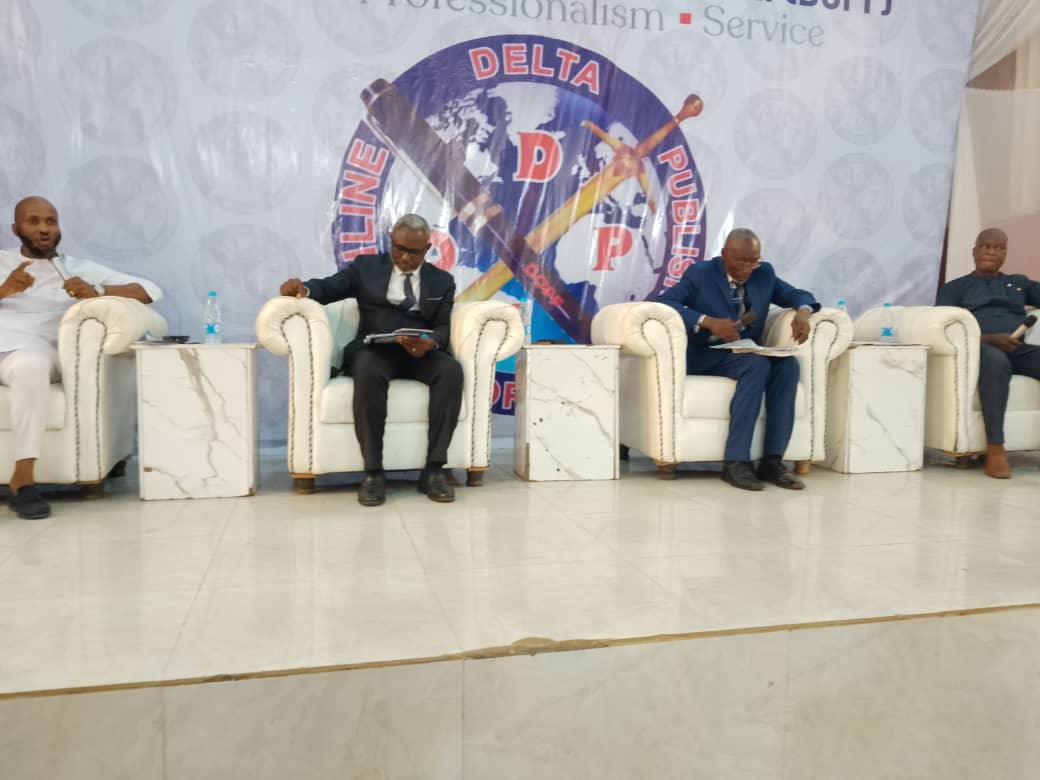
Delta State Governor, Rt. Hon. Sheriff Oborevwori; Chairman of the 2025 Annual Lecture of the Delta Online Publishers Forum (DOPF), Mr. Edward Obiefuna Martyns; and the Forum’s Chairman, Mr. Emmanuel Ochonogor Enebeli, have emphasized that Nigeria’s newly enacted tax law must deliver transparency, accountability and measurable development outcomes to gain public trust.
Speaking in Asaba during the Forum’s Annual Lecture, the three leaders stressed that the success of the reform hinges on how effectively government manages tax revenues and how clearly the benefits translate into improved infrastructure, public services and economic resilience.
Governor Oborevwori, represented by the Commissioner for Information, Mr. Charles Aniagwu, noted that Nigeria urgently requires a stronger and more reliable revenue base to drive sustained human and capital development.
He cautioned, however, that the credibility of the new tax regime depends on responsible and accountable management.
“It is not about collecting money; give the people value for their money,” he said, urging Nigerians not to dismiss the reform. “Do not say it does not concern you,.this policy affects everyone.”
Chairman of the event, Mr. Martyns, observed that the tax reform would influence business operations, public expectations and the benchmark for assessing government performance.
He urged journalists and media organisations to intensify scrutiny of public spending and ensure accurate reporting on how tax revenue is utilised.
“The Forum has a role in shaping society. As journalists, ensure proper reportage of government activities and insist that revenue is channelled toward improving infrastructure, healthcare, education and the wider business environment,” he stated.
In his address, DOPF Chairman, Mr. Enebeli, emphasised that taxation must directly enhance public service delivery if the reform is to achieve meaningful results.
He said citizens expect visible improvements in their daily lives once the new tax regime takes effect.
“It is not just about taxation; Nigerians expect better roads, safer communities and a business-friendly environment,” he said.
“As Nigeria enters this new era of tax reforms, it becomes even more important for government to demonstrate value for revenue collected.”
Enebeli acknowledged progress on the Ughelli–Kwale–Asaba Road but urged the Delta State Government to prioritise repairs on other major routes, including the Agbor–Asaba–Onitsha Road and the Effurun–Sapele–Benin corridor. He also highlighted the deplorable state of the Agbor–Umutu–Obiaruku–Abraka–Eku–Sapele Road, noting that years of abandonment have triggered unemployment, business closures and worsening hardship for residents who rely on the corridor.
He further underscored the link between security and economic prosperity, commending the establishment of the Delta State Security Trust Fund and encouraging swift assent and implementation of the newly passed State Community Security Bill.
He called on corporate bodies and citizens to support government efforts to strengthen public safety and investor confidence.
The Annual Lecture, themed “Nigeria’s New Tax Law: Implications and Opportunities for Businesses and Society,” attracted wide participation and offered insightful perspectives on how the legislation will reshape governance, business operations and public expectations as Nigeria transitions into a new tax-driven economic framework.