…reaffirms Delta’s commitment to federal collaboration on works, transport network
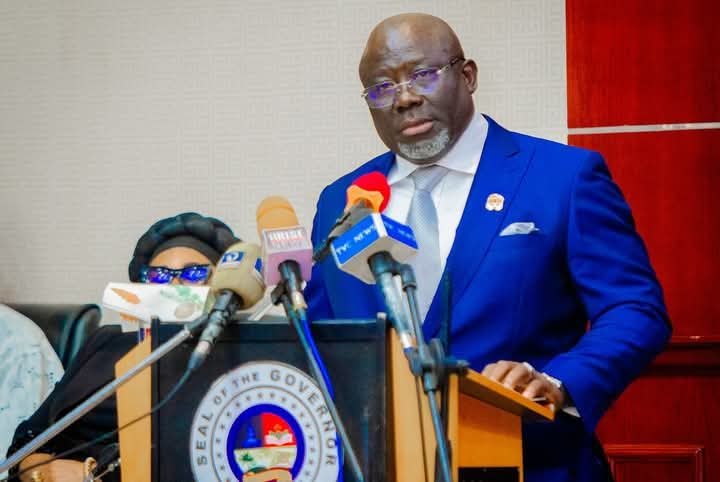
Delta State Governor, Rt. Hon. Sheriff Oborevwori, has emphasized the need for innovation, sustainability, and equity in the planning, financing, and implementation of Nigeria’s infrastructure projects, asserting that meaningful national development can only be achieved through robust intergovernmental collaboration and active private sector participation.
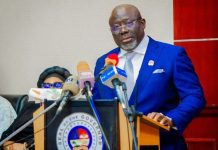
The Governor made the call on Thursday at the 30th Meeting of the National Council on Works, held in Ado-Ekiti, Ekiti State, where he was represented by the State Commissioner for Works (Highways and Urban Roads), Comrade Reuben Izeze.
Oborevwori described the annual gathering as more than a meeting of professionals and policymakers, but as “a reaffirmation of Nigeria’s shared commitment to building a resilient, inclusive, and sustainable infrastructure landscape.”
Highlighting Delta State’s ongoing efforts in infrastructure-driven socioeconomic transformation, the Governor reiterated his administration’s commitment under the MORE Agenda, which prioritizes the expansion of rural road networks, modernization of urban infrastructure, and improved connectivity across the state.
“From the creeks and coastal communities of the Niger Delta to the bustling urban centres of Asaba, Warri, and Ughelli, our people understand that roads, bridges, and public works are not merely physical structures, they are lifelines of opportunity, access, and unity,” Oborevwori stated.
He noted that his administration continues to uphold continuity in governance by completing inherited projects while initiating new ones that align with the evolving aspirations of Deltans.
The Governor commended the Federal Ministry of Works for its proactive funding strategies, particularly the continuation of NNPCL-funded projects under the Road Infrastructure Development and Refurbishment Investment Tax Credit Scheme, which he described as “a pragmatic and forward-looking initiative essential to unlocking Nigeria’s road network potential.”
Oborevwori further called for innovative financing models that integrate public investment with private capital to ensure efficiency, transparency, and value for money.
He also underscored the importance of sustainability in project conception and execution, advocating for climate-resilient and environmentally sound infrastructure adaptable to the nation’s changing needs.
Emphasizing equity in infrastructure distribution, the Governor maintained that all regions of Nigeria, irrespective of geography or population size, deserve fair access to quality infrastructure that fosters inclusive growth and development.
Reaffirming Delta State’s readiness to collaborate with the Federal Government and other states, Oborevwori assured that Delta would continue to contribute its experience and commitment to advancing national infrastructure goals that improve lives and strengthen unity.
He expressed optimism that the 30th Council Meeting, themed “Discipline, Transparency, and Innovation in Engineering Practice,” would mark a defining step forward in Nigeria’s infrastructure development journey.
In his remarks, Ekiti State Governor, Mr. Biodun Oyebanji, welcomed delegates and expressed delight at the convergence of experts and policymakers to share ideas shaping the nation’s infrastructural future.
He reaffirmed Ekiti’s dedication to promoting engineering-driven economic growth through sustained investments, strategic partnerships, and innovation.
“Engineers are the backbone of progress. Their creativity and expertise will help us build a brighter, more prosperous Nigeria,” Oyebanji said.
The Ekiti Governor also appreciated President Bola Tinubu for ongoing federal interventions in state road projects and assured continued collaboration on the rehabilitation of other critical transport infrastructure.
In his welcome address, Minister of Works, Engr. David Umahi, represented by the Minister of State for Works, Bello Muhammad Goroyon, Esq., commended President Tinubu for his steadfast commitment to infrastructure renewal under the Renewed Hope Agenda.
Umahi emphasized that the Council remains a strategic platform for shaping infrastructure policy and engineering practice nationwide, urging adherence to discipline, transparency, and innovation in public works delivery.
“Discipline ensures professionalism and ethical conduct. Transparency builds trust and strengthens public confidence. Innovation empowers us to meet modern infrastructure demands through technologies such as drone mapping, geotechnical analysis, and climate-resilient materials,” the Minister noted.
Delegates at the Council meeting included federal and state government officials, engineers, policymakers, and representatives of professional bodies such as the Council for the Regulation of Engineering in Nigeria (COREN) and the Nigerian Society of Engineers (NSE).