By Nelson Egware
With the appointment of new technical leadership in the Delta State Ministry of Works (Highways and Urban Roads), the Oborevwori administration is tightening its grip on infrastructure delivery, placing renewed emphasis on durability, quality and value for money.
The emergence of seasoned engineers to head the Departments of Highways and Urban Roads signals a deliberate move to strengthen supervision, deepen professional standards and ensure that road projects across the state stand the test of time in line with the Governor’s MORE Agenda.
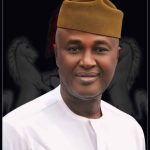
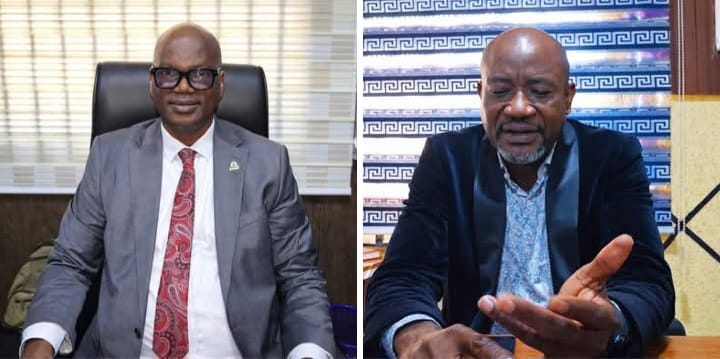
Engr. Solomon Aghagba, the new Director of Highways, and Engr. Victor Oputa, Director of Urban Roads, arrive at their new responsibilities with deep professional pedigrees, institutional memory and a shared resolve to raise standards.
Incidentally, both men are princes of revered Delta communities, Irri Kingdom in Isoko South Local Government Area and Aboh Kingdom in Ndokwa East Local Government Area, bringing to their offices a blend of royal heritage, public service ethos and engineering expertise.
They will operate under the supervision of the Commissioner for Works (Highways and Urban Roads), Comrade Reuben Izeze, whose reform-oriented leadership, guided by the administrative clarity of His Excellency, Rt. Hon. Sheriff Oborevwori, has prioritised professionalism, rigorous oversight and continuous capacity building.
The team will also work closely with the Permanent Secretary, Engr. Juliet Aboloje, widely respected for her administrative finesse and technical expertise.
At a recent strategic meeting with Directors, Zonal and Superintendent Engineers, Commissioner Izeze laid out the philosophy guiding the ministry’s operations.
He underscored continuous training and professional development as indispensable to delivering high-quality, durable and sustainable infrastructure.
With engineering practice evolving rapidly, he noted, constant learning is no longer optional but unavoidable, equipping engineers with emerging technologies, global best practices and innovative methods required to meet modern standards.
The commissioner reaffirmed the Oborevwori administration’s commitment to professionalism, efficiency and value for money, stressing that these goals rest on a skilled, motivated and competent workforce.
Strategic investment in human capacity, he said, would translate into timely project delivery, improved durability, enhanced safety and cost-effectiveness, all in alignment with the Governor’s MORE Agenda.
He also charged engineers to prioritise physical, on-site inspections over sole reliance on GPS data, ensure the timely completion of projects, particularly as the election year approaches and noted that improved staff welfare would further boost productivity.
For Engr. Solomon Aghagba, the transition into the office of Director of Highways is both familiar terrain and a new responsibility. With nearly five years spent in the Highways Department, including periods when he effectively functioned as director in an acting capacity, Aghagba brings continuity and confidence to the role.
“This is something worth doing, and I intend to give the very best,” he said. Having served as Assistant Director, Deputy Director and later as Director of Infrastructure in the Ministry of Special Infrastructure during the Emmanuel Uduaghan era, he has been involved in several landmark projects across the state from bridges, major junctions and arterial roads that define Delta’s transport network.
Beyond project delivery, the office of Director of Highways also carries a symbolic and administrative weight. It confers on its occupant the status of the most senior civil engineer in the Delta State Civil Service. In that capacity, Aghagba heads the civil engineering family across the Ministries of Works, presides over long-established engineers’ meetings and helps shape professional conduct, responsibility and training within the service.
His immediate focus, he explained, will be strengthened supervision and quality service delivery.
On the challenge of federal highways in poor condition across the state, Aghagba was pragmatic. While acknowledging that such roads fall under federal jurisdiction, he noted that the state government has often intervened, citing projects like the dualisation of the Ughelli–Asaba Road.
Going forward, he intends to engage proactively with the Federal Controller of Works in Delta to draw attention to critical routes requiring intervention, while also advising the state government where necessary.
Completion of ongoing projects is another priority. In line with the commissioner’s directive, Aghagba said bridges and roadworks facing delays would receive renewed attention, backed by site visits and technical problem-solving. “With God’s grace, we will bring experience to bear and deliver,” he affirmed.
For Engr. Victor Oputa, the newly appointed Director of Urban Roads, continuity, quality and meticulous planning define his approach. To him, movement between departments is not a disruption but part of a unified engineering mission.
“Government is continuous,” he noted. “Our duty is to maintain and even improve on the standards and quality already established.”
Oputa emphasised that regardless of whether an engineer is posted to highways, urban, rural or riverine roads, the processes remain the same, thorough investigation, proper design, accurate quantification and strict supervision.
What differs is scope and scale. The Oborevwori administration, he stressed, has zero tolerance for roads that fail prematurely. Designs must achieve their intended lifespan, whether ten, twenty or more years, reflecting the investment made by government.
Urban roads, however, present unique challenges. Rapid urbanisation, hilly terrain, complex drainage patterns and historical design gaps mean that roads in areas like Okpanam and surrounding satellite towns demand more than routine resurfacing.
Oputa acknowledged that while significant work has been done, such as the ongoing Okpanam–Ugbolu Road, much remains, especially in addressing flooding and erosion.
“Roads do not exist in isolation,” he explained. “If adjoining roads and drainage channels are not properly considered, floodwater will find its way back and destroy new infrastructure.”
His vision involves comprehensive investigations, terrain-sensitive designs and integrated stormwater management systems.
Drawing on specific examples around central Okpanam, Oputa described how incomplete drainage provisions and past interventions have redirected floodwater in destructive ways, leaving gullies, abandoned roads and threatened homes.
His proposed solution includes extending major underground stormwater channels, such as the Jeremiah Ebo drainage, to collect and reroute water through a connected system that ultimately discharges safely, protecting roads and properties alike.
Such interventions, he said, are critical not only for infrastructure longevity but for community safety and accessibility. “People are being displaced. Properties are inaccessible. These are not abstract problems, they affect lives daily.”
Together, Engr. Aghagba and Engr. Oputa represent a renewed technical backbone for the Ministry of Works. Guided by the policy clarity of Commissioner Reuben Izeze and the administrative steadiness of Permanent Secretary Juliet Aboloje, their appointments signal a decisive push toward engineering excellence, disciplined supervision and infrastructure that truly lasts.
In Delta State, the road ahead may be demanding, but with experienced hands on the wheel, it is increasingly well-mapped.