
By Kenneth Orusi
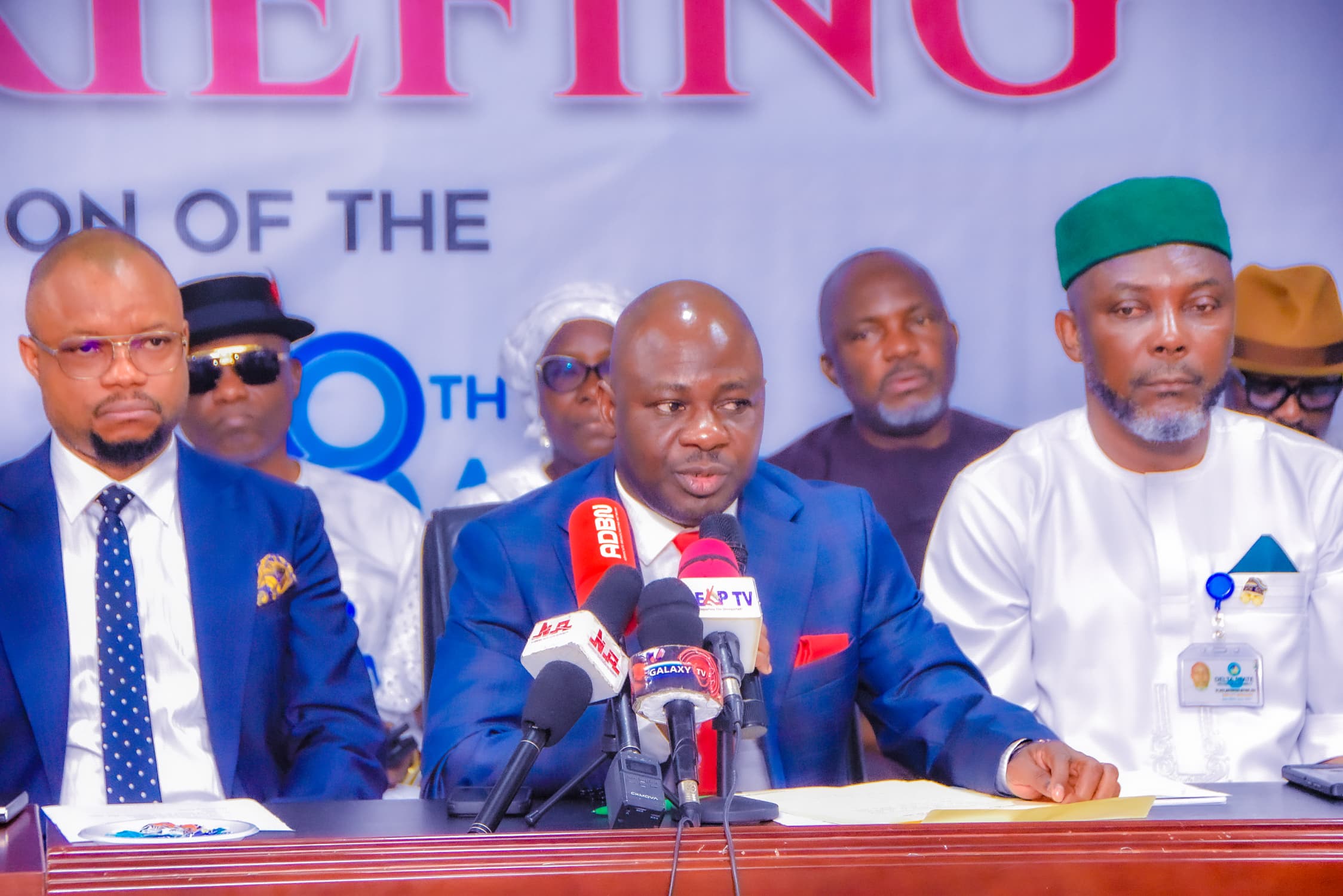
Speaker of the Delta State House of Assembly (DTHA), Rt. Hon. Guwor Emomotimi Dennis, has offered a robust defense of the legislative strides of the 8th Assembly as it marks its second anniversary, insisting the House remains a beacon of responsible governance, transparency, and synergy with the Executive under the M.O.R.E Agenda.
Speaking on Friday June 13, 2025, during a press briefing at the Assembly Press Centre in Asaba, Guwor reaffirmed the commitment of the legislature to its constitutional responsibilities, lawmaking, representation, and oversight, while acknowledging the prevailing challenges of insecurity and ethnic tensions in parts of the state.
A Legislative Agenda Anchored on Accountability
In what he described as a “veritable opportunity” to engage Deltans and the media, the Speaker emphasized that the Assembly’s work is guided by the “8th Assembly Legislative Agenda” tagged “Our Bond with Deltans”, a blueprint that outlines the legislature’s vision for governance built on transparency and public service delivery.
He stated, “Our agenda is not a document for the shelves, it is a living commitment. It continues to drive our policy choices, shape debates, and define our legacy.”
Bills, Motions and Impactful Laws
The 8th Assembly, according to the Speaker, received a total of 16 bills during the second session, eight from the Executive and eight from private members.
Of these, seven were passed, with six already assented to by Governor Sheriff Oborevwori, and one awaiting assent.
An additional nine bills inherited from the first session were passed and assented to within the current legislative year.
The laws span critical sectors including education, child rights, urban planning, electricity, anti-human trafficking, and health, reflecting a comprehensive attempt to strengthen governance and citizen welfare.
Among the landmark laws passed are:
Delta State Child Rights’ (Amendment) Law, 2024
Delta State Electricity Power Sector Law, 2024
Delta State Human Trafficking (Prohibition) Law, 2024
Delta State Urban and Regional Planning Law, 2024
The House also considered 72 motions, approving 69 after what Guwor described as “robust debates” that reflect the Assembly’s “unity of purpose.”
Oversight, Petitions, and Service Delivery
Guwor highlighted the Assembly’s proactive oversight role, particularly through budget scrutiny and project inspections.
He praised the Assembly’s role in interrogating the 2025 Appropriation Bill and ensuring funds were aligned with the state’s development priorities.
Additionally, six petitions from citizens concerning injustices in civil service appointments, unlawful dismissals, and land disputes were thoroughly reviewed by the House’s Public Petitions Committee, with resolutions passed to redress cases found meritorious.
Capacity Building and Staff Welfare
On internal reforms, the Speaker boasted of extensive capacity-building efforts involving committee clerks, legislative aides, PASAN executives, and members, all trained on legislative best practices.
He acknowledged Governor Oborevwori for approving the long-awaited CONLESS salary structure, significantly boosting staff morale.
“We believe a trained and motivated workforce is critical to legislative excellence,” he said.
Security Woes and Legislative Response
The Speaker expressed condolences to families affected by recent security breaches and assured the public that the House is not indifferent.
“A bill to amend the Delta State Community Security Corps Agency Law is already in progress, with provisions to recruit local indigenes for grassroots intelligence gathering and security coordination”, he disclosed.
Warri Ward Delineation: Call for Peace
On the contentious issue of ward delineation in the Warri Federal Constituency, Guwor appealed for restraint, warning against ethnic division.
“Delineation is a democratic process, not a tribal contest,” he cautioned. “Let maturity, dialogue and the rule of law guide us. Whether Ijaw, Itsekiri, or Urhobo, our strength is in unity.”
Gratitude and Outlook
The Speaker credited the successes of the 8th Assembly to cooperation among members, the leadership of Governor Oborevwori, and support from constituents and the media.
He promised that as the Assembly enters its third session, it would remain focused on “legislating for the development, peace, and progress of Delta State.”
The anniversary celebration continues with a novelty football match on June 21 and a thanksgiving service on June 22.
“We are not just lawmakers; we are the conscience of the people,” Guwor added. “And we will not rest until every Deltan feels the impact of good governance.”
KEY HIGHLIGHTS FROM THE 2ND SESSION:
16 bills received, 7 passed, 6 assented by Governor
72 motions received, 69 approved
6 petitions handled, with merit-based resolutions
Extensive staff training and welfare improvements (CONLESS implemented)
New security bill introduced to counter rising insecurity
Strong call for ethnic unity over Warri ward delineation