
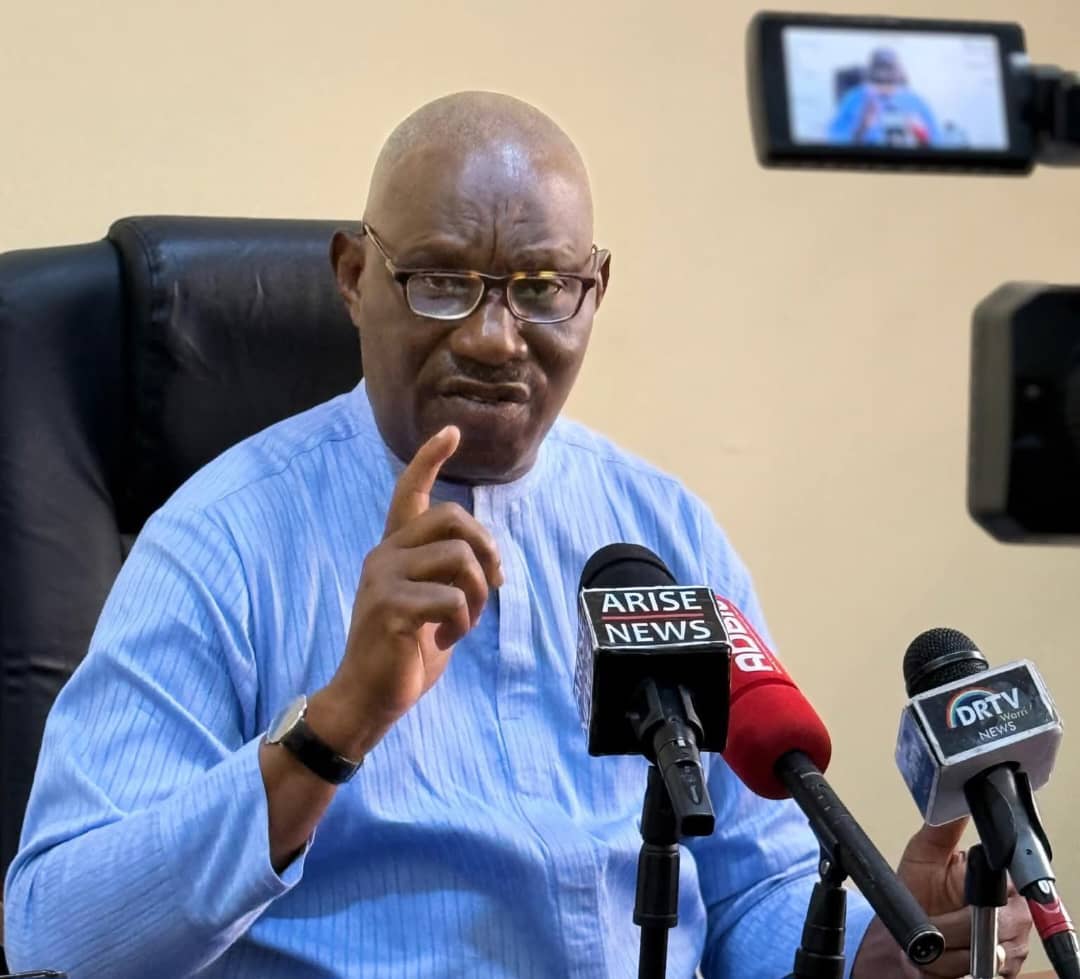
The Executive Assistant to the Governor of Delta State on Public Enlightenment (Projects and Policies), Mr. Olisa Ifeajika, has hailed the state’s whistle-blowing policy as a game-changing governance tool that has strengthened transparency, accountability, and value-for-money delivery under the administration of Governor Sheriff Oborevwori.
Speaking during a live interview on Niger Delta Today on Advocate Broadcasting Network (ADBN) on Friday, Ifeajika described the policy as a participatory governance innovation that empowers citizens to monitor public projects and report irregularities directly to government authorities through official communication channels.
“The essence of whistle-blowing is to ensure that citizens get full value for every naira the government spends on their behalf,” he explained.
“These projects are built for the people, in their communities. The governor cannot be everywhere, so the people themselves have now become part of the inspection process.”
According to the governor’s aide, the initiative aligns with Governor Oborevwori’s commitment to inclusive governance and his culture of personal project inspection, ensuring that every public investment translates into meaningful impact for Deltans.
He revealed that since the policy’s introduction, compliance levels among contractors had improved significantly, with many now adopting stricter quality control standards due to heightened community scrutiny.
“Even the contractors are now cautious,” he said.
“They don’t know who among the residents might report irregularities. Everyone wants to do better. It has created a healthy competition to deliver quality projects.”
Ifeajika assured that the system includes robust confidentiality measures to protect whistle-blowers from harassment or victimization.
“No one will be punished for offering developmental information,” he emphasized.
“This is public ownership in action. The infrastructure belongs to all Deltans, not the governor or the commissioner. Everyone is a stakeholder.”
He further explained that reports received through the whistle-blowing channels are promptly verified before any action is taken.
The mechanism, he said, primarily targets visible infrastructure such as roads, schools, hospitals, and public utilities, as well as issues of administrative misconduct within the civil service.
“We’ve had cases where engineers and supervising officials were sanctioned for negligence or complicity in substandard work,” Ifeajika disclosed.
“Some have been reprimanded for looking the other way. The goal is simple — public funds must deliver durable infrastructure so we don’t keep revisiting the same projects.”
Highlighting the growing acceptance of the initiative, he noted that the whistle-blowing policy had become one of the most popular governance innovations in the state, with residents increasingly embracing it as part of their civic responsibility.
“Our style in Delta is different,” he remarked. “We’ve turned governance into a collective enterprise. When people see that their feedback is valued, they become more protective of public assets.”
Expressing optimism about the policy’s sustainability, Ifeajika said the success and wide acceptance of the initiative would ensure its continuity beyond the present administration.
“This is one legacy that will endure,” he affirmed. “Future administrations will continue with it because it works. It’s not about politics, it’s about accountability, good governance, and ensuring that Delta remains on the path of progress.”
Ifeajika concluded by commending Governor Oborevwori for pioneering a citizen-driven accountability model that places the people at the heart of development monitoring, guaranteeing transparency from project conception to completion