…foreign loan revaluation, pension arrears and rising obligations trigger late 2025 fiscal overhaul
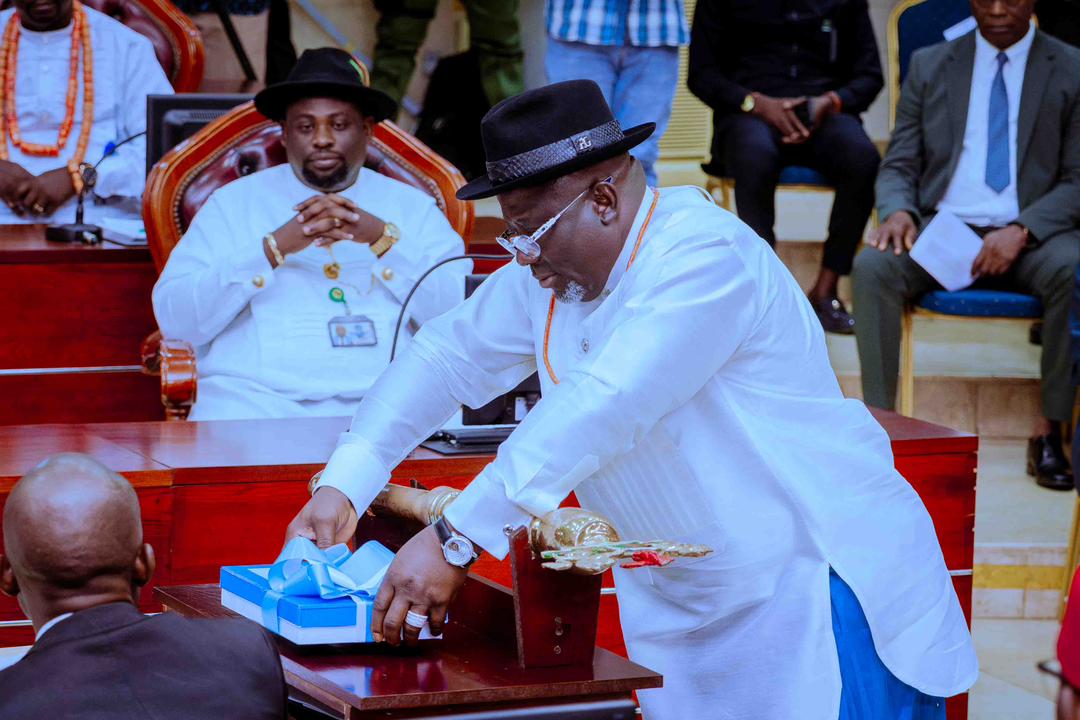
Fresh concerns over Delta State’s fiscal sustainability have emerged following a Supplementary Appropriation Bill 2025 transmitted by Governor Sheriff Oborevwori to the Delta State House of Assembly, citing a sharp rise in foreign debt servicing costs and other mounting liabilities as a key driver of the request.
The document, dated January 2026 but rooted in fiscal decisions taken in December 2025, provides new insight into how the 2026 Appropriation Law, already assented to by the governor, was shaped by late-emerging financial pressures carried over from the 2025 budget cycle.
FOREIGN DEBT REVALUATION AT THE HEART OF THE CRISIS
In the official correspondence addressed to the Speaker, the Oborevwori administration admitted that a “huge increase in the debt service amount, especially on the inherited foreign loans” followed the re-translation of the debt stock using the newly realigned exchange rate.
This development, the government said, significantly altered its fiscal projections and made additional spending unavoidable.
“The huge increase in the debt service amount, especially on the inherited foreign loans occasioned by the re-translation of the debt stock using the current realigned exchange rate,” the letter stated, listing it as one of the core justifications for the supplementary budget.
The admission places debt servicing, rather than fresh capital expansion, at the centre of Delta State’s latest fiscal adjustment, raising questions about exposure to foreign exchange volatility and the long-term burden of inherited loans.
₦979BN BUDGET PROVES INSUFFICIENT
Recall that the Delta State Appropriation Law 2025 was originally passed with a total size of ₦979.23 billion, made up of ₦348.77 billion for recurrent expenditure and ₦630.46 billion for capital projects.
However, the government now concedes that improvements in revenue streams, combined with obligations that crystallised late in 2025, forced a rethink.
“Although the Budget Estimates for the 2026 Fiscal Year were presented in November 2025, subsequent improvements in the State’s revenue streams, coupled with the need to sustain the delivery of this administration’s M.O.R.E. Agenda, necessitated additional expenditures,” the governor explained.
₦200BN EXTRA — WHERE THE MONEY WILL GO
The supplementary bill seeks legislative approval to withdraw ₦200 billion from the Consolidated Revenue Fund of the state.
The breakdown shows:
₦140.65 billion for recurrent expenditure, and
₦59.35 billion for capital expenditure.
Beyond foreign debt servicing, the government identified several pressure points: Lump-sum payments to defray accumulated pension arrears, described as an attempt to “ameliorate the plight of pensioners.”
Increased state contribution to the Delta State Health Insurance Scheme, driven by a surge in enrolment.
Statutory payment of 10% of Internally Generated Revenue (IGR) to local government councils that exceeded projections.
Additional community projects in areas said to have “genuine and pressing needs.”
REVISED 2025 BUDGET NEARS ₦1.18 TRILLION
If approved, the revised appropriation for 2025 would rise to ₦1.179 trillion, comprising: ₦489.42 billion recurrent expenditure, and ₦689.81 billion capital expenditure.
While the administration frames the move as necessary fiscal housekeeping before the end of the 2025 budget year on 31 January 2026, analysts say the figures underscore how debt service and legacy obligations are squeezing fiscal space.
IMPLICATIONS FOR 2026 AND BEYOND
The significance of the supplementary bill goes beyond 2025. It provides context for the 2026 Appropriation Law, which the governor assented to in December 2025, suggesting that the new budget was crafted against the backdrop of debt pressures already straining the outgoing fiscal year.
With recurrent spending once again dominating adjustments, concerns are mounting that capital investment, often touted as the engine of development, may be increasingly subordinated to servicing debts and meeting legacy costs.
As the House of Assembly considers the request, the central question remains whether Delta State’s revenue growth can sustainably absorb rising debt service obligations, or whether future budgets will continue to be rewritten under the weight of exchange-rate-driven liabilities.
For now, the Oborevwori administration is asking lawmakers to act swiftly, but the numbers reveal a deeper fiscal story that Delta State cannot afford to ignore