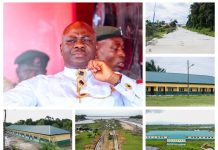
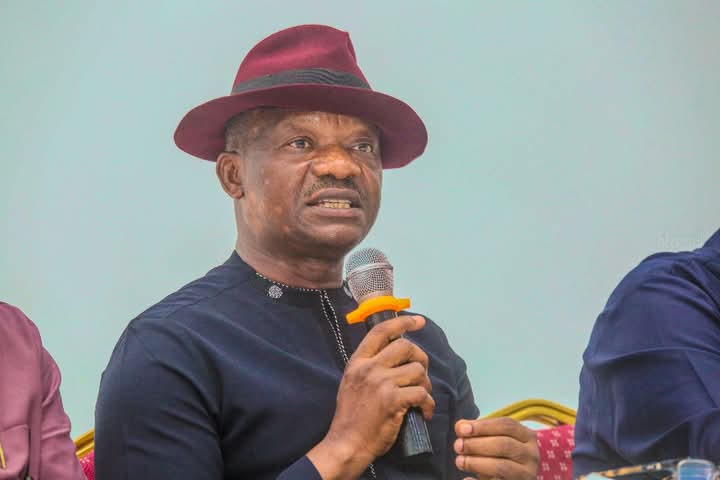
Delta State Commissioner for Works (Rural Roads) and Public Information, Mr. Charles Aniagwu, has emphasized that the revitalization and expansion of port infrastructure across Nigeria is critical to unlocking the full potential of the country’s blue economy and accelerating national development.
Speaking during an interview on ADBN Television on Friday, Aniagwu said that strategic investment in port infrastructure would not only enhance economic growth but also create employment opportunities and improve Nigeria’s maritime logistics and trade competitiveness.
He noted that the South-South region, with all its states bordering the Atlantic Ocean, is naturally positioned as the nucleus of Nigeria’s blue economy. However, the over-reliance on Lagos’ Apapa Port, he argued, has stifled the broader development of the maritime sector.
“To fully harness the potential of the blue economy, we must decentralize port operations and develop the underutilized ports in the Niger Delta and beyond,” Aniagwu said.
He called on the Federal Government to prioritize the development of Nigeria’s aquatic assets, particularly in the Niger Delta region, noting that Delta State, under Governor Sheriff Oborevwori, is already creating a conducive environment for investment in the maritime and related sectors.
Aniagwu highlighted key infrastructural developments in the state, including improved road networks linking urban and rural areas. He referenced the construction of a new access road in Asaba leading to the River Niger, which he described as the foundation for the ambitious Asaba Waterfront City project.
“Today, you can drive from Asaba to Warri in just one hour and fifty minutes on a fully completed dual carriageway—free of potholes. That’s more than convenience; it’s a strategic enabler for trade, investment, and economic integration,” he said.
Aniagwu stressed the urgent need to fully operationalize the ports in Warri, Koko, Sapele, and Burutu (Delta State), the Ibom Deep Seaport in Akwa Ibom, the Onne Port in Rivers State, and the Calabar Port in Cross River. These, he said, can serve as viable alternatives to the congested Lagos ports and position Nigeria as a major maritime hub in West Africa.
He also advocated for the dredging of the River Niger and the establishment of a functional port in Lokoja to facilitate cargo movement to the Middle Belt and Northern Nigeria, reducing pressure on Lagos and boosting regional trade efficiency.
“Reviving and expanding these ports will not only enhance Nigeria’s global maritime competitiveness but also diversify our economy beyond oil,” Aniagwu stated. “We’ve talked for too long about the importance of maritime development. Now is the time to act.”
He reaffirmed that modern port infrastructure—capable of handling large vessels and heavy-duty cargo—is fundamental to improving the country’s import-export capacity and attracting foreign direct investment.
“Imagine the economic impact if ports in currently underutilized locations operated at full capacity, complemented by free trade zones and industrial clusters,” he noted.
Aniagwu urged port managers, government agencies, and private investors to embrace bold reforms and significantly scale up investments in port development and logistics infrastructure.
He further pointed out that strengthening port operations would have a positive knock-on effect on road infrastructure, reducing the burden of high-tonnage trucks and thereby extending the lifespan of critical road assets.
“Addressing these bottlenecks through smart infrastructure and high-speed connectivity will break the cycle of underperformance that has held back our maritime sector for decades,” he concluded.