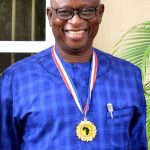

By Abigail Ogwezzy-Ndisika
The renewed advocacy for the creation of Anioma State has ignited robust national conversations, about linguistic identity, geopolitical alignment, and the socio-economic possibilities of statehood.
As an Ukwuani native speaker, linguist, development expert, and communication scholar, I see Anioma State not merely as a political project, but as a historic and transformative idea, anchored in language, heritage, and the pursuit of progress.
This movement is more than a redrawing of borders; it is the convergence of language and legacy, a chance to affirm Anioma’s rightful place in Nigeria’s federation, and an opportunity to embody the principle of unity in diversity.
Anioma State: Seizing a Defining Moment
Throughout Nigeria’s history, the most transformative changes have been driven by bold ideas—ideas that reimagine boundaries, empower communities, and propel progress.
The call for Anioma State is one such idea: fresh, rooted in history, forged through cultural and linguistic unity, and positioned to open a new chapter for Anioma and Nigeria at large.
This vision is about recognition, justice, and sustainable development. For those apprehensive about Anioma being placed in the South East geopolitical zone, history, linguistic evidence, and pragmatic foresight offer clarity: such alignment not only honours historical and cultural truths, it strengthens Nigeria’s unity.
A History of Persistent Aspiration
The Anioma statehood movement is no fleeting campaign, it is the continuation of decades of determined advocacy. Since independence, the Anioma people, geographically in Delta North yet culturally resonant with their Igbo kin, have pressed for a state that reflects their identity, aspirations, and needs.
From early petitions to sustained political mobilisation, these efforts tell a story of a people united in their quest for autonomy, fair resource distribution, and effective self-governance.
Anioma State is thus not just a political demand; it is a reaffirmation of dignity, heritage, and the right to self-determined progress.
The Linguistic Case: An Unbreakable Bond
Linguistic scholarship by Joseph Greenberg, Kay Williamson, and John Bendor-Samuel leaves no doubt: Anioma dialects are firmly within the Igboid language family.
Williamson’s lexico-statistical survey shows high lexical similarities, Ukwuani at 73%, Igbo at 79%, Ogbah at 77%, Ikwerre at 72%—underscoring deep linguistic unity.
Greenberg’s classification situates Anioma dialects in the Volta-Niger subgroup of the Niger-Congo family alongside Igbo, while Bendor-Samuel’s fieldwork confirms shared phonological, lexical, and syntactic traits. This is not an administrative coincidence—it is a birthright.
To exclude Anioma from the South East on the basis of selective dialect claims would ignore overwhelming scholarly consensus and centuries of lived cultural experience.
Geopolitical Flexibility: Learning from History
Nigeria’s geopolitical map has never been static. From the colonial Northern and Southern Protectorates, to the three regions of the First Republic, to the creation of the Mid-West, and now six zones, our boundaries have always evolved in response to shifting realities.
Anioma’s acceptance of its geopolitical placement, wherever that may be, demonstrates political maturity. What matters most is seizing the opportunity for statehood, rather than allowing disputes over zones to derail progress. In the end, state creation is about governance autonomy, recognition, and unlocking development, not about rigid boundaries.
Development Promise: Economic, Social, and Political Gains
Anioma State would unlock underutilised economic resources, mobilise cultural capital, and deliver governance tailored to local realities.
It would mean infrastructure built to local needs, education shaped by indigenous priorities, and an enabling environment for targeted investments.
Politically, Anioma would gain a stronger, more direct voice in Nigeria’s federal system, federalism at its best: diverse peoples steering their own destinies within one nation.
A Call for Unity and Resolve
Anioma State is not just a regional aspiration, it is a national imperative supported by history, language, and development logic. The siting of Anioma in the South East is historically, linguistically, and democratically justified.
To those who fear division, history’s lesson is clear: no force can stop an idea whose time has come. This is a peaceful, democratic, and inclusive movement, rooted in lawful advocacy and guided by the vision of a stronger, united Nigeria.
Let us not “throw away the baby with the bathwater.” Let us embrace this as an opportunity to show Nigeria’s strength, diverse yet cohesive, where every citizen’s identity and aspirations are recognised. Anioma’s time is now.
Abigail Ogwezzy-Ndisika is an Ukwuani native speaker, linguist, development expert, and communication scholar. She writes from Lagos.