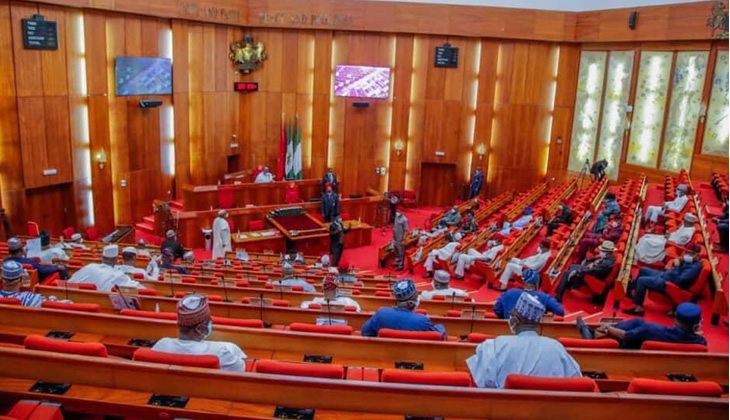
The long-standing aspiration for the creation of Anioma State has taken a decisive step forward following reports that the National Assembly Joint Committee on Constitutional Amendment has approved the creation of one additional state for the South-East geopolitical zone, a development many believe strongly favours Anioma.
At the forefront of this historic advancement is Senator Ned Nwoko, representing Delta North Senatorial District, whose consistent advocacy, legislative precision, and strategic political engagement have placed the Anioma cause firmly on the national agenda.
A Long-Awaited Dream Nearing Fulfilment
For over a year, Senator Nwoko has vigorously championed the recognition of the Anioma people through statehood.
His argument has been both logical and compelling: the South-East remains the only geopolitical zone with five states, while others have six or more, creating disparities in representation, federal allocation, and political influence.
His proposed Anioma State Creation Bill aims to correct this imbalance by carving Anioma State out of the nine local government areas of Delta North and integrating it into the South-East zone.
With the constitutional review committee’s approval of a new state for the South-East, Nwoko’s long-held vision appears closer to realisation than ever before.
Ned Nwoko’s Strategic Advocacy and Consensus Building
Senator Nwoko’s pursuit of Anioma State has blended grassroots mobilisation, legislative diplomacy, and broad-based consensus building.
Within the Senate, he has reportedly secured the signatures of over 90 senators supporting the Anioma cause, a rare show of bipartisan backing.
Beyond the chambers, he has engaged governors, traditional rulers, and civil society organisations across Nigeria, presenting Anioma’s quest not as an ethnic demand but as a national call for fairness and equity.
According to Nwoko, “If Nigeria truly believes in equity and justice, the South-East must be brought at par with other regions. Anioma provides the perfect answer culturally connected to the Igbo nation, economically viable, and administratively ready.”
Why Anioma Leads Among Other Statehood Agitations
While other proposed states such as Aba, Adada, Orashi, and Etiti have featured in discussions, emerging consensus points to Anioma as the most viable and unifying option.
Key factors include:
1. Zonal Equity: Anioma’s inclusion as the sixth South-East state directly addresses the long-standing imbalance in Nigeria’s geopolitical structure.
2. Cultural Alignment: Anioma communities share deep linguistic and cultural ties with the Igbo nation, ensuring a seamless integration into the South-East.
3. Economic Viability: The area boasts rich natural resources, fertile agricultural land, and a dynamic human capital base — ingredients for a self-sustaining state.
4. Population Boost: Unlike other proposals that would split existing South-East states, Anioma’s addition would expand the region’s population and political influence.
With the Joint Committee’s recommendation favouring a new state for the South-East, analysts predict that other agitations within the zone may step aside in solidarity with Anioma, recognising it as the most realistic and nationally acceptable option.
Political and National Implications
Should Anioma State be created, it would represent a major milestone in Nigeria’s federal evolution.
For the South-East: It would bring parity in representation at both the National Assembly and in federal appointments.
For Delta State: It would ease administrative pressures and empower the Anioma region to directly steer its development.
For Nigeria: It would serve as a model of peaceful, consensus-driven reform, reaffirming faith in dialogue and democratic process.
Beyond political restructuring, the creation of Anioma State would also carry deep symbolic significance, a gesture of inclusion and justice for Igbo-speaking communities west of the River Niger, long perceived as marginalised.
The Road Ahead
Although the approval marks a major breakthrough, several procedural steps remain, including ratification by two-thirds of State Houses of Assembly and presidential assent.
Nevertheless, with the National Assembly Joint Committee’s endorsement and the Anioma proposal emerging as the front-runner, momentum clearly favours Senator Nwoko’s vision.
He has pledged to sustain stakeholder engagement, ensuring the legal, cultural, and administrative foundations for Anioma State are firmly established.
A Triumph of Persistence and Vision
From early advocacy to legislative progress, Senator Ned Nwoko’s determination has been pivotal. What began as a regional aspiration has evolved into a national movement for equity and balance.
If Anioma State ultimately becomes a reality, it will stand not only as a testament to Nwoko’s leadership and persistence but also as a historic correction in Nigeria’s federal structure, fulfilling a dream cherished by generations of Anioma sons and daughters.
As the process advances in Abuja and across the federation, one sentiment resonates widely:
Anioma State is no longer a distant dream, it is a reality in waiting.